Supreme Court Case Could Place Restrictions on Employment Decisions by Religious Groups

By JACOB BERKMAN
Contributor
May 15, 2011 | Read Time: 4 minutes
Religious charities for decades have had a longer legal leash than other employers when it comes to making decisions about hiring, firing, and other employment practices.
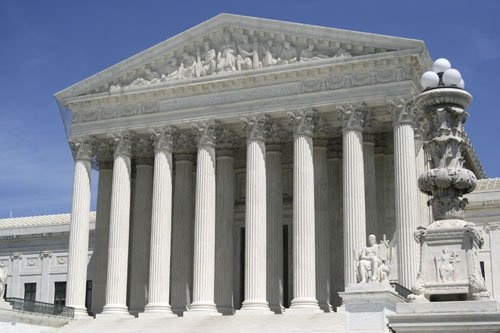
But a case to be reviewed by the U.S. Supreme Court later this year raises questions about just how much leeway they will continue to have.
At issue is a provision in the 1964 Civil Rights Act that excuses religious organizations from following federal anti-bias laws when they are making employment decisions about clergy members.
The idea behind the exemption was to promote separation of church and state—and make sure that a conservative religious organization couldn’t be forced to hire a woman as its congregation leader if that goes against its theological philosophy, for example.
While the exemption from federal civil-rights laws is known as the “ministerial exception” in religious and legal circles, some religious groups consider many of their employees to be covered by it, not just clergy members. They say they consider it unconstitutional for the courts to decide who is a clergy member and who is not.
How to Define Clergy
The question before the Supreme Court was sparked by a schoolteacher who says she was improperly fired by a Lutheran school in Michigan because of a physical disability.
The school says its actions were covered by the exemption from the civil-rights law because she was involved in religious instruction, but if it loses, many institutions may have to change their approach.
“The question in this case is where to draw the boundary between clergy and nonclergy employees,” said Marci Hamilton, a professor at Cardozo Law School, in New York, who has argued several cases seeking to narrow the exemption to explicitly cover clergy members.
Religious Obligations
According to court papers filed as part of the lawsuit the Supreme Court will review, Cheryl Perich, a teacher, was fired by Hosanna-Tabor Evangelical Lutheran Church and School, in Redford, Mich., in 2005 after she was diagnosed with narcolepsy, a sleep disorder. The school had urged Ms. Perich to resign, citing student safety.
When she refused and returned to work, school officials told her she no longer had a job, the lawsuit says.
In making its decision, Hosanna-Tabor noted that Ms. Perich was hired initially as a substitute teacher for secular subjects but was eventually promoted to full-time and designated a “called” teacher, who also had occasional religious obligations such as leading her students in prayer.
The school says that because she was a called teacher, she was akin to a member of the clergy and therefore her employment was not governed by federal civil-rights law.
But Ms. Perich and the Equal Employment Opportunities Commission sued Hosanna-Tabor in a Michigan District Court, saying that most of her teaching duties had nothing to do with religion and that Hosanna-Tabor used too broad a definition of the exemption from civil-rights law.
A ‘Pollyanna Attitude’
Hosanna-Tabor won the case in 2009, but an appeals court reversed the ruling last year. In March, the United States Supreme Court said that it would review the case in the fall term, which starts in October.
Ms. Hamilton, who has represented several employees in court challenges to groups that relied on the ministerial exception, says she hopes the Supreme Court makes it clear that the exemption is supposed to apply solely to clergy members.
“Our culture has kind of a natural acceptance of the argument that religious groups should be protected from the law,” she says. “It’s a Pollyanna attitude toward religion that protects the religious institutions even when engaging in bad behavior.”
But Hosanna-Tabor argues that its teachers play a central role in teaching religious values to students and that attempts to govern these decisions blurs the line between church and state.
“Called teachers are the primary means by which the church communicates religion to students,” the school said in a February court filing. “Forced retention of a religion teacher deemed unfit undoubtedly affects in a significant way the church’s control of its religious message to children.”
The exemption from civil-rights laws that religious groups receive has not faced a serious court challenge since 1972, when the Supreme Court ruled in favor of the Salvation Army after it was sued by a former officer who said that she had been passed over for promotions and raises because of her gender. Ultimately, the court supported the Salvation Army’s right to do so, saying she was not covered by federal civil-rights law
The Supreme Court case is Hosanna-Tabor Evangelical Lutheran Church v. the Equal Employment Opportunities Commission.