
Survival Tactics for the Scouts: Blending New and Old Traditions

By MAUREEN WEST
Contributor
January 9, 2011 | Read Time: 8 minutes
At a Boy Scouts of America 100th birthday celebration last year, Bob Mazzuca, chief scout executive of the national group, was speaking to 15,000 scouts when he noticed how many were taking video and photos of him with their phones. He stopped to take a picture of them.
“This is a new day,” he told them as he uploaded the shot to the Scouts’ Facebook page.
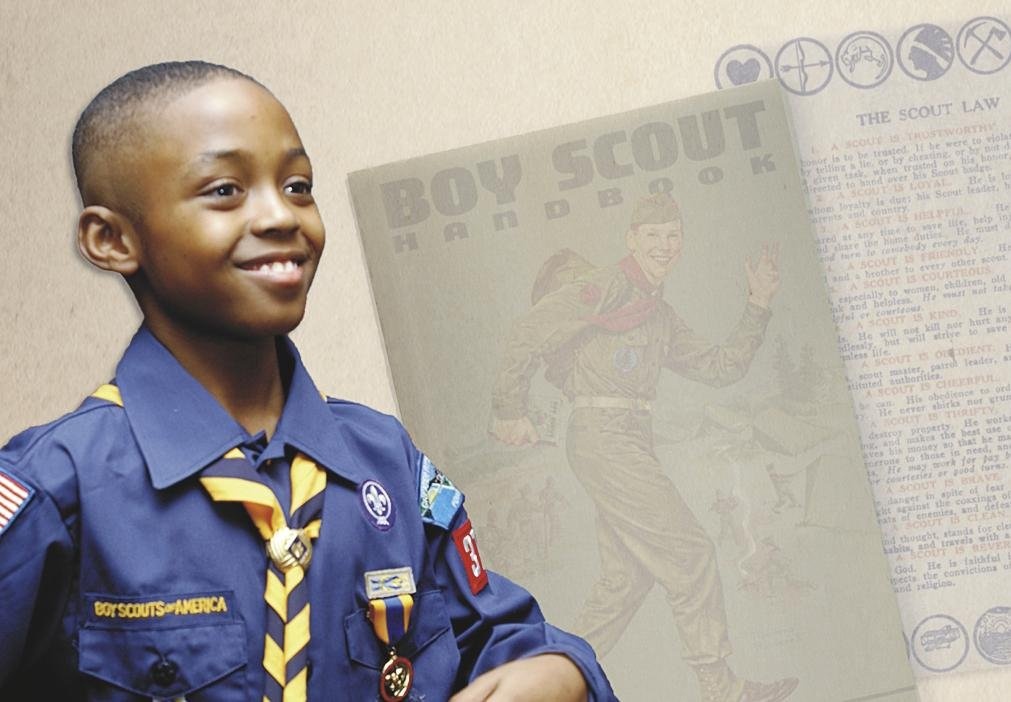
Embracing technology is one way that scouting—both the Boy Scouts of America and the 99-year-old Girl Scouts of the USA—is changing as those organizations enter a second century.
The new Boy Scout uniform includes a smartphone pocket, now that phones can navigate the deep woods and be used to look online for details about poisonous spiders and to call in GPS coordinates to rescuers.
“They are learning to use today’s tools,” Mr. Mazzuca says.
But scouting today also emphasizes the importance of century-old values, one of which—the Boy Scouts of America’s ban against gay leaders or volunteers in scouting—has been controversial. The stand has led to years of skirmishes with both government agencies and private donors and even to a Supreme Court ruling.
Girl Scouts of the USA has a different take on the issue: The group prohibits discrimination based on sexual orientation.
Changing Times
Despite controversies and competing demands for family time, scouting activities continue to attract plenty of youngsters.
Even so, the number of Boy Scouts has fallen from a high in 1973 of 4.8 million to about 2.8 million today. Girl Scouts of the USA has 2.4 million members, and it has also faced a decline in the past decade. And both organizations struggle to involve their Scouts’ busy parents.
Both groups are trying to fill the gaps in their ranks through aggressive marketing, especially in neighborhoods with large numbers of Hispanic children. They are casting their nets wider than in previous generations: For example, Girl Scout troops can be found in juvenile detention centers and in inner cities where scouting would have been unimaginable a century ago.
Self-reliance, respect, adventure, and friendship are still the big draws that scouting offers young people, Mr. Mazzuca says.
Unlike the video games to which so many of today’s kids are addicted, the experiences are real. When a tornado destroyed Iowa’s Little Sioux Scout Ranch in June 2008, killing four Boy Scouts and injuring 48 others, dozens of Scouts, even before adults arrived, lived up to their motto of “be prepared” by setting up a triage system, providing first aid, and saving many lives.
One proud 13-year-old boy told reporters that, if the disaster had to happen at all, it is good it happened at a Boy Scout camp, because Scouts are indeed prepared.
Girl Scouts, meanwhile, have increasingly focused on turning girls into leaders, says Kathy Cloninger, chief executive of Girl Scouts of the USA, whose headquarters is in New York.
Even Girl Scout cookie sales, she says, train girls to run their own businesses. Her organization is making a major push to encourage girls to embrace science and math.
Thin Mints and Fat Cats
As the Boy Scouts and Girl Scouts enter a second century, both charities are attracting corporate sponsors and seeking gifts from former scouts, who, in years past, were asked only to volunteer their time and homes.
While the Girl Scouts have their Thin Mints (cookie sales produce about $411-million, mostly for the charity’s local affiliates), the Boy Scouts have their fat cats: They raised more than $100-million from former scouts in the past two years for the new Summit Bechtel Family National Scout Reserve, opening in 2013 in West Virginia.
Stephen Bechtel Jr., retired chairman of the Bechtel Corporation, an engineering company, gave $50-million. A $25-million gift came from Walter Scott Jr., former CEO of Kiewit, a construction and mining corporation with headquarters in Omaha. Several other donors each gave $10-million.
“There are folks who can’t see giving $50-million to a local Scout council but are willing to donate to a national gathering place for Scouts,” Mr. Mazzuca says.
The Girl Scouts—which raised $109.5-million from private sources in 2009—compared with the Boy Scouts’ $375.1-million—hope to catch up in gifts from former scouts.
In November the Girl Scouts hired Timothy Higdon, who had been working as a senior fund raiser at Amnesty International, as chief of external affairs, to help with that goal.
“We are currently raising only 40 percent of what Boy Scouts are raising in individual gifts,” Mr. Higdon says. He sees a big opportunity with the Girl Scout’s 100th birthday looming.
“The girls are going to get their fair share,” he says.
Cultural Challenges
The rivalry is not new: In the 1920s, the Boy Scouts threatened to sue the Girl Scouts over the use of the word “scouts,” according to Susan A. Miller, author of Growing Girls: The Natural Origin of Girls’ Organizations in America. The Girl Scouts’ founder, Juliette Gordon Low, of Savannah, Ga., did not back down, Ms. Miller says.
Both scouting organizations can be traced to Robert Baden-Powell, who, as a British officer in African battles in the 19th century, learned backwoods survival techniques from the American military scout Frederick Russell Burnham and condensed them into a guide to scouting for young men. The book became a bestseller and inspired the rise of youth scouting groups in Britain and America.
William D. Boyce, of Chicago, started Boy Scouts of America in 1910, at a time when some people feared that young men would not learn patriotism or rugged individualism as more families moved from farms to cities.
The original concept of scouting has changed very little over the years, says Jay Mechling, author of On My Honor: Boy Scouts and the Making of American Youth.
According to Mr. Mechling, Boy Scouts got stronger each decade during its first half-century, reaching its height of social influence in the 1950s and early 1960s.
Then, Mr. Mechling says, the counterculture of the 1960s and ’70s questioned the conventional values that are the basis for scouting.
But the biggest change he sees is that Boy Scouts, which had many churches as local sponsors, got entangled in the culture wars of the 1980s that continue today. The organization allowed women to be scoutmasters but fought lawsuits from atheists and openly gay members who had been excluded from membership. In 2000 the Boy Scouts won a U.S. Supreme Court that allowed the exclusion of gay scout leaders.
He believes that to thrive during the next century, the organization needs to focus on self-reliance and brotherhood and drop the more controversial expectations that have chased some people away.
Mr. Mazzuca, a veteran Scouting official who was appointed chief executive in 2007, is aware of some of those issues and trying to return the organization to its original nonpartisan, nonsectarian mission, though it won’t be easy, Mr. Mechling says.
Deron Smith, a Boy Scouts spokesman, said the organization considers Mr. Mechling’s suggestions “interesting” and believes “the keys to success in the second century are to capture the imagination of young people—amid changes in the family unit, technology, and society in general—and to inspire them to live extraordinary lives.”
Nearly from the start, girls were as attracted to scouting as boys were.
The charity’s founder “wanted girls to know that accomplishing things is a good thing and that they should do things and do them well,” Ms. Miller says.
The Girl Scouts organization grew sixfold during World War I, she says, in part because Girl Scouts got attention when it created “liberty gardens,” growing food so that other food could go to the troops. They also sold war bonds door-to-door.
The Girl Scouts adapted over the decades to the changing role of women in society, Ms. Miller says. In the 1920s, the era immediately after American women got the vote, the organization pushed self-reliance and patriotism. In the 1950s, programs had a more domestic slant. Today, scouting helps girls develop career skills.
Holding On to Volunteers
One of the biggest second-century challenges for both scouting groups is finding parents with enough time to volunteer as leaders. More of today’s kids than in decades past are growing up in single-parent or two-earner families.
“Most people want to volunteer in quick and easy ways, but kids need people to care about them long enough to really get to know them,” Ms. Cloninger says.
Girl Scouts is experimenting with volunteer job sharing—in which, for example, five women might take turns leading a troop.
Ms. Cloninger retires in November and Girl Scouts is seeking a new chief executive who can build volunteerism, enhance leadership opportunities for girls, and recruit more minorities. The organization is seeking someone who can help the Girl Scout image stay relevant as the organization turns 100 in 2012.
While the Girl Scouts may be more progressive than Boy Scouts in some areas, the Boy Scouts seem to be more willing to break the gender barrier.
The Boy Scout program for teenagers, Venturing, now includes girls. There is no equivalent plan to bring boys into the Girl Scouts’ programs.
“It is discussed often,” says Ms. Cloninger, but she believes there is credible evidence that girls have more leadership opportunities in an all-girl organization.
So for now, and perhaps well into their second century, some things may stay comfortably the same.
KEYS TO SUCCESS
Diversifying fund raising: Rather than relying largely on dues or cookie or popcorn sales, both scouts groups are increasingly reaching out to companies and former scouts as potential big donors.
Aggressively promoting their work: Both organizations use sophisticated campaigns to reach out to minorities and to reflect their roles in modern society.
Emphasizing tradition: While both groups are eager to embrace new strategies to attract a new generation of scouts, they still rely on traditions and ideals established by their founders a century ago.





