Tech Nonprofit Pursues Internet Access as ‘Fundamental Human Right’

By NICOLE WALLACE
Features Editor
February 13, 2018 | Read Time: 1 minute
Detroit was once a mecca for cutting-edge technology, but the Motor City has fallen behind. Four in 10 households have no internet access, according to the Federal Communications Commission. High-speed broadband isn’t available in some parts of the city, and even where it’s an option, many residents can’t afford it.
To bridge the digital chasm, the Detroit Community Technology Project is working with three neighborhood groups to train residents to build and maintain low-cost community wireless networks.
“It’s a social-justice issue,” says Diana Nucera, the project’s director. “We believe that communication is a fundamental human right.”
The work started with six small community networks that allowed residents to share internet connections. But now the project is stepping up its game with its Equitable Internet Initiative: Residents are installing high-speed internet that sends out a shared gigabit connection in each of three underserved neighborhoods.
The Detroit Community Technology Project and its partners also run education programs that teach residents computer skills and how to stay safe on the internet. If residents encounter a problem with their service, a ticketing system notifies trained community volunteers — “digital stewards” — who take care of the issue.
Fast, reliable internet service makes it easier for residents to apply for jobs, pay bills, and take care of myriad other tasks, says Anderson Walworth, the project’s IT coordinator. But there are less tangible benefits as well, he says: “It can serve a purpose in people being able to tell the stories of their communities, to get it out in the world and combat the narratives that go on about Detroit.”
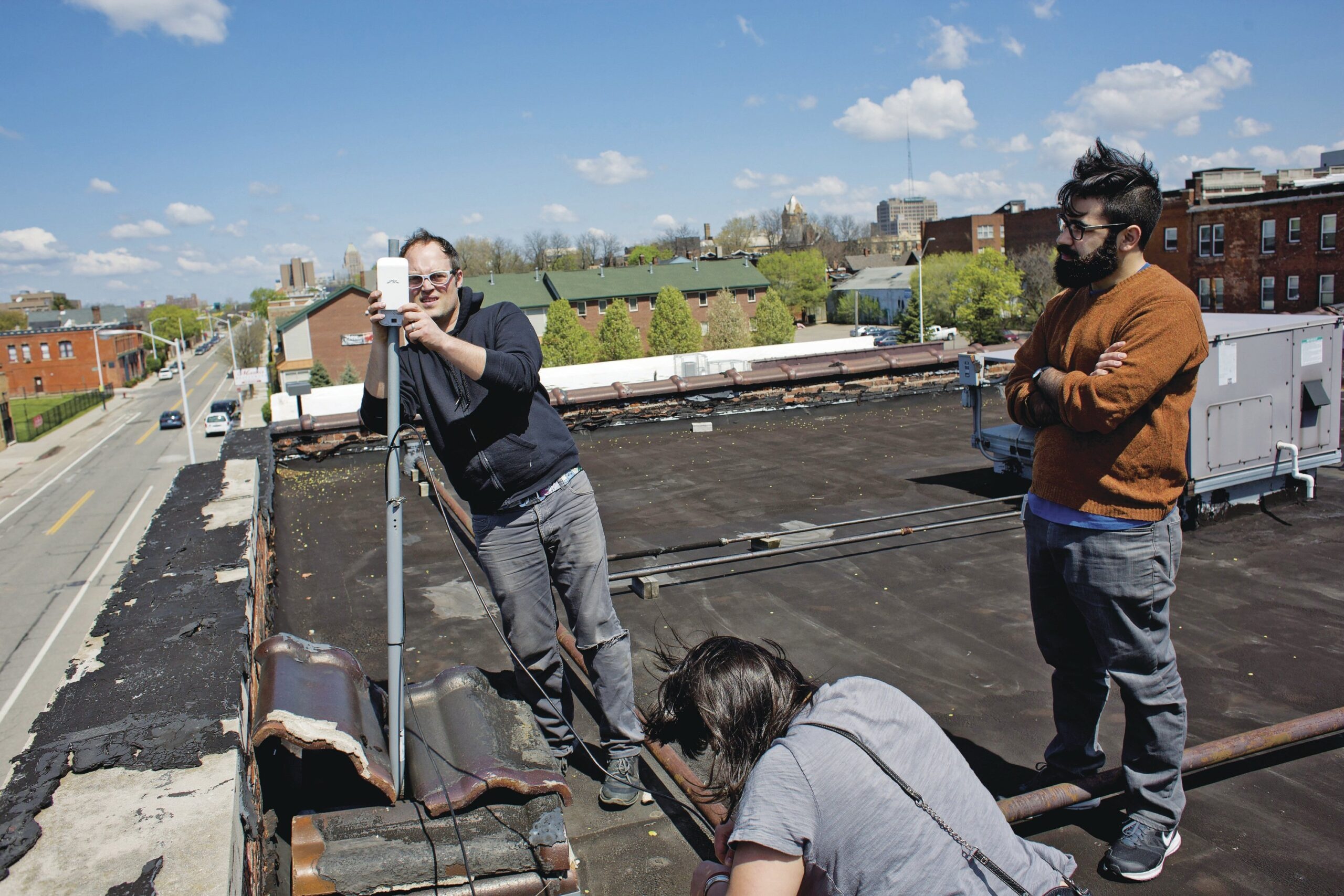
Here, Mr. Walworth (left) helps set up wireless internet service for a neighborhood.