September 5, 2002 | Read Time: 11 minutes
In the two months following the terrorist attacks last September, 650 psychiatrists, working through
ALSO SEE:
Rockefeller September 11 Fund Focused on Support for Poor and Excluded
Learning the Lessons of September 11: Charities Reassess How They Handled Aid
42% of Americans Say Relief Effort Damaged Faith in Nonprofit Groups
Family of Slain American Journalist Promotes Peace Through Charity
Nonprofit Groups Search for Better Ways to Manage Disaster Volunteers
More about September 11: One Year Later
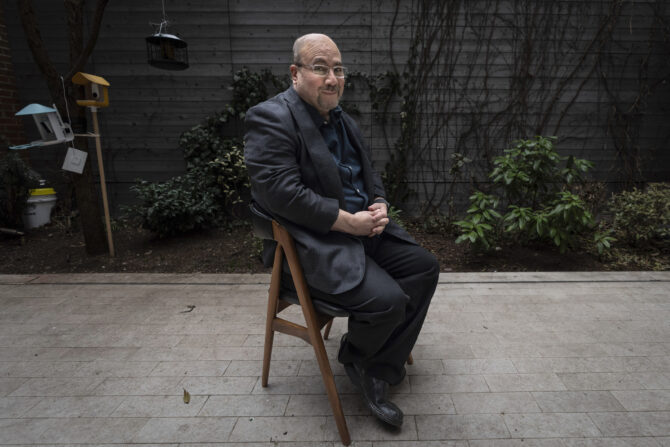
the nonprofit group Disaster Psychiatry Outreach, logged more than 7,500 volunteer hours comforting relief workers and relatives of victims at ground zero. The group’s president, Craig L. Katz, is grateful for the $445,000 in donations that flowed in as word of its good work spread.
But he says his organization could have been even more effective had it received such generous support before the attacks. The group could afford to maintain only a small staff, which had to scramble last fall to coordinate volunteers flocking to Manhattan from all over the country.
Now the organization’s revenue sources are drying up once again, leaving it ill-prepared to respond to another attack, or any other disaster that would cause significant emotional stress. The Robin Hood Foundation is supporting a mental-health screening project that the group is conducting among New York residents, but the foundation has made clear that the money is a one-time grant tied to September 11. And though the Red Cross promised last month to spend $133-million on long-term needs, including mental-health services, for those affected by the attacks, none of that money will go to Dr. Katz’s group, which specializes in the acute care required immediately after a tragedy.
“We’re worried that we’re back to where things were before,” he says. “People lose that sense of adrenaline.”
Private and family foundations contributed roughly $200-million to the September 11 relief effort, according to the Foundation Center, and corporate and community foundations provided an additional $700-million.
Many observers of the nonprofit world expected that, once initial relief efforts had ended, foundations would shift their support to areas like bioterrorism research, homeland security, and international peace efforts. But, in the past year foundations have, for the most part, made only modest changes.
A survey of 333 foundations by the Foundation Center to be released this month found few strategic changes among foundations following September 11. The study did find greater interest among foundations in disaster preparedness, in keeping nonprofit groups financially afloat, and in reevaluating their own budget plans so that emergency funds would be in place to respond to disasters, according to Loren Renz, the center’s vice president for research.
“Essentially, many of them said, ‘We’ll stick to our present priorities because the nonprofits we traditionally support are hurting,’” Ms. Renz says. “That’s because of the fallout in state and local funding, and the economy.”
Some charities like Disaster Psychiatry, which had hoped to benefit from the anticipated shift, say they are disappointed that foundations remain averse to change, even after such a momentous event.
For example, the Century Foundation, an operating foundation in New York that gathers diverse groups in an effort to reach consensus on timely public-policy topics, found it far easier to raise money in early 2001 for a study of election overhaul than for its latest project on homeland security.
“The issues related to homeland security are more diffuse, more intractable,” says Greg Anrig Jr., the foundation’s vice president of programs. “If you’re the head of a major foundation, you’re thinking, ‘How can we really help with this debate?’”
‘A Full Plate’
Some foundation officials maintain that it is too soon to say whether a shift in spending will take hold. “It’s a little early to be able to tell what major long-term changes might come from this,” says Barbara Bryan, president of the New York Regional Association of Grant Makers.
“Everyone has been responding to the immediate needs, and that’s still a very full plate.”
Reinforcing Priorities
Many foundation leaders say that September 11 reaffirmed the importance of their existing efforts. The Rockefeller Foundation is still spending 70 percent of its grants internationally, with a focus on eradicating poverty and disease in Africa and Asia. That humanitarian effort will also make the world a safer place, argues Rockefeller’s president, Gordon Conway.
“I would not argue that poverty breeds terrorism, but there is no doubt that terrorists believe that they get their justification from poverty and exclusion,” he says. “A world that is poor and hungry and ridden with disease is inevitably an unstable one.”
Others believe that some of the thorny policy questions thrust into the limelight by the terrorist and anthrax attacks are being adequately financed by the federal government. The California Endowment, which focuses on health, considered making some grants to deal with the bioterrorism threat, but abandoned the idea after witnessing the huge sums being put toward the effort by the federal government. “We actually became concerned about other areas that might get ignored as a result,” says Robert K. Ross, the endowment’s chief executive officer.
But some nonprofit officials argue that greater strategic changes are needed.
The Nuclear Threat Initiative, founded by Ted Turner, is now spending roughly $10-million a year — more than a quarter of its grant-making budget — on biological-weapons deterrence. Margaret A. Hamburg, vice president for biological weapons, notes that many other large foundations are slowly reviewing their strategies in this area — perhaps too slowly, she says, given that deterring bioterrorism requires an altogether different approach than thwarting nuclear attacks.
“The foundation world really can and should do more,” she says. “There needs to be new thinking and new strategies for addressing the problem. That’s where I think foundations can really play a critical role.”
Criticism Over Grants
Even the initial foundation efforts aimed at getting nonprofit groups in New York City back on their feet have generated controversy. The Andrew W. Mellon Foundation was among the most generous, awarding $50-million to cultural and arts organizations affected by the attacks through a special grants program that ended in May. Some museums below Canal Street, close to the World Trade Center site, say they were perplexed by the grant-making process that Mellon employed.
One museum that is close to ground zero received a small sum from Mellon in May, during its fourth and final round of special grants. The museum’s director, who asked that neither he nor the institution be identified, says the museum drew few visitors until March, while some of the other cultural groups that received much larger grants from Mellon were farther from ground zero and less affected by September 11.
But the biggest concern, he says, was simply being left off Mellon’s list of grantees until May; that delay made the museum’s regular donors skeptical about its degree of need. Mellon’s president, William G. Bowen, has said he intended for the foundation’s grants to have a “signaling effect,” alerting other donors to organizations in need.
“When you’re overlooked by someone who carries the stature of the Mellon Foundation, what’s the collateral damage?” the museum director asks.
David G. Marwell, chief executive officer of the Museum of Jewish Heritage: A Living Memorial to the Holocaust, the only New York museum forced to close because of physical damage, said he was extremely grateful that his group received $140,000 from Mellon in January. But he too was perplexed by some of Mellon’s selections.
“It wasn’t always apparent what the logic of the distribution was,” he says. “It was hard to connect the dots.”
Officials at Mellon declined to comment on such criticisms.
Meanwhile, a few nonprofit organizations that moved quickly to revamp their grant making after September 11 have encountered criticism. The Global Fund for Children, in Washington, which has traditionally made grants to help young girls in developing countries, decided after the terrorist attacks to commit more of its grant-making budget to issues affecting boys.
The organization had supported secret schools for girls in Afghanistan during the Taliban’s reign. After September 11, Maya Ajmera, the fund’s president, became concerned that too many boys in Afghanistan and Pakistan were being recruited into madrasas, Islamic religious schools that often prepare students for war.
The organization received complaints from some other leaders of nonprofit groups when word got out that it had given $10,000 to the Afghan Institute of Learning to open 20 schools for a minimum of 600 boys in United Nations refugee camps. The critics worried that the fund was abandoning its focus on girls. Ms. Ajmera says that’s not true — and she has sharp words for her critics. “It’s not a zero-sum game,” she says.
International Grants
Despite the concern that the foundation world as a whole is not moving quickly enough, exceptions exist. Some large foundations are making changes to their international grant-making programs, for example, in response to the terrorist threat.
The Ford Foundation is creating a new program-officer position that will award roughly $5-million a year to groups seeking to reduce or eliminate conflicts within a country’s own borders. “We’re not creating a terrorism program, but we are creating a program that deals with armed conflict within state borders,” says Bradford K. Smith, vice president for Ford’s peace and social justice program. “That destroys states, and when states are weak, that increases the possibility that terrorist groups can become active.”
Ford also decided after September 11 that U.S. foreign policy was too big a job for one program officer to handle; an entire committee at the foundation now makes decisions about what grants will be made in that area.
The Robert Wood Johnson Foundation has made a $2.8-million grant to a coalition of groups, including state health officials and the Centers for Disease Control and Prevention, working to create a common platform for computerized and Web-based surveillance systems to be used in the homeland-security effort. The fear, says Nancy J. Kaufman, a vice president who oversees health programs, is that states and local jurisdictions will develop different monitoring systems that won’t be able to talk to one other.
Robert Wood Johnson is also one of several foundations making news-media–related grants following September 11. The foundation sponsored a study by Kathleen Hall Jamieson, dean of the University of Pennsylvania’s Annenberg School for Communication, that examined whether newspaper and television stories about areas and buildings ripe for terrorist attacks were actually having a harmful effect on homeland security, by enabling potential terrorists to identify vulnerable locations. The foundation also is making communications grants to public-health organizations to help them get out accurate information when threats emerge. “When anthrax hit, all of these people faced a public spotlight,” Ms. Kaufman says.
The Ford Foundation, meanwhile, is now including money for communications support in many of the grants it makes to human-rights and civil-rights groups around the world. After an event like the terrorist attacks, “there’s an enormous thirst for experts,” says Mr. Smith. “But you watch the major network news and you see the same experts appearing again and again. This is an attempt to make sure some other voices get in the mix.”
Some foundations, especially in New York and Washington, are expressing a greater interest in advocacy groups, after witnessing how charities in those two cities helped displaced workers lobby for health and unemployment benefits following the tourism collapse, and subsequent layoffs, caused by the attacks.
“Funders became much more interested in supporting advocacy organizations, which could go to the government and say ‘Hey, you’ve got to take care of these people who don’t have any money,’” says Kae G. Dakin, president of the Washington Regional Association of Grantmakers.
Meanwhile, the Philanthropy Roundtable, a Washington organization that represents about 600 foundation, individual, and corporate donors, is considering starting an affinity group focused on the terrorist threat. The organization has never had affinity groups, but it may create others as well, according to Scott Walter, vice president for publications and research. The affinity group focused on terrorism might support research on defense strategy and national security, and encourage cultural exchanges and the study of languages such as Arabic and Farsi.
The organization and some of its members are exploring ways to reduce the influence of Islamic extremists, often by financing moderate Muslim groups in the United States. “It’s very tricky and difficult to do anything in the Muslim world,” Mr. Walter said. “At least for the short- to mid-term, funding moderate Muslims outside their home countries is the most useful thing that philanthropists can do.”
Many foundations also continue to be concerned about possible retaliatory attacks against Arab Americans in the United States.
The California Endowment, which normally makes grants related to health, has given $2.5-million in “tolerance grants” aimed at bringing different groups, including Jews and Muslims, together for living-room dialogues and other meetings. The foundation, which views the terrorist attacks as “symptomatic of our inability to have different cultures get along,” considers September 11 a type of hate crime.
Says the foundation’s president, Dr. Ross: “We concluded that healthy communities don’t have hate crimes.”