
The Head of a Boston Legal-Aid Charity Steps Aside, Rather Than Down

By Michelle Gienow
Contributor
June 24, 2012 | Read Time: 2 minutes
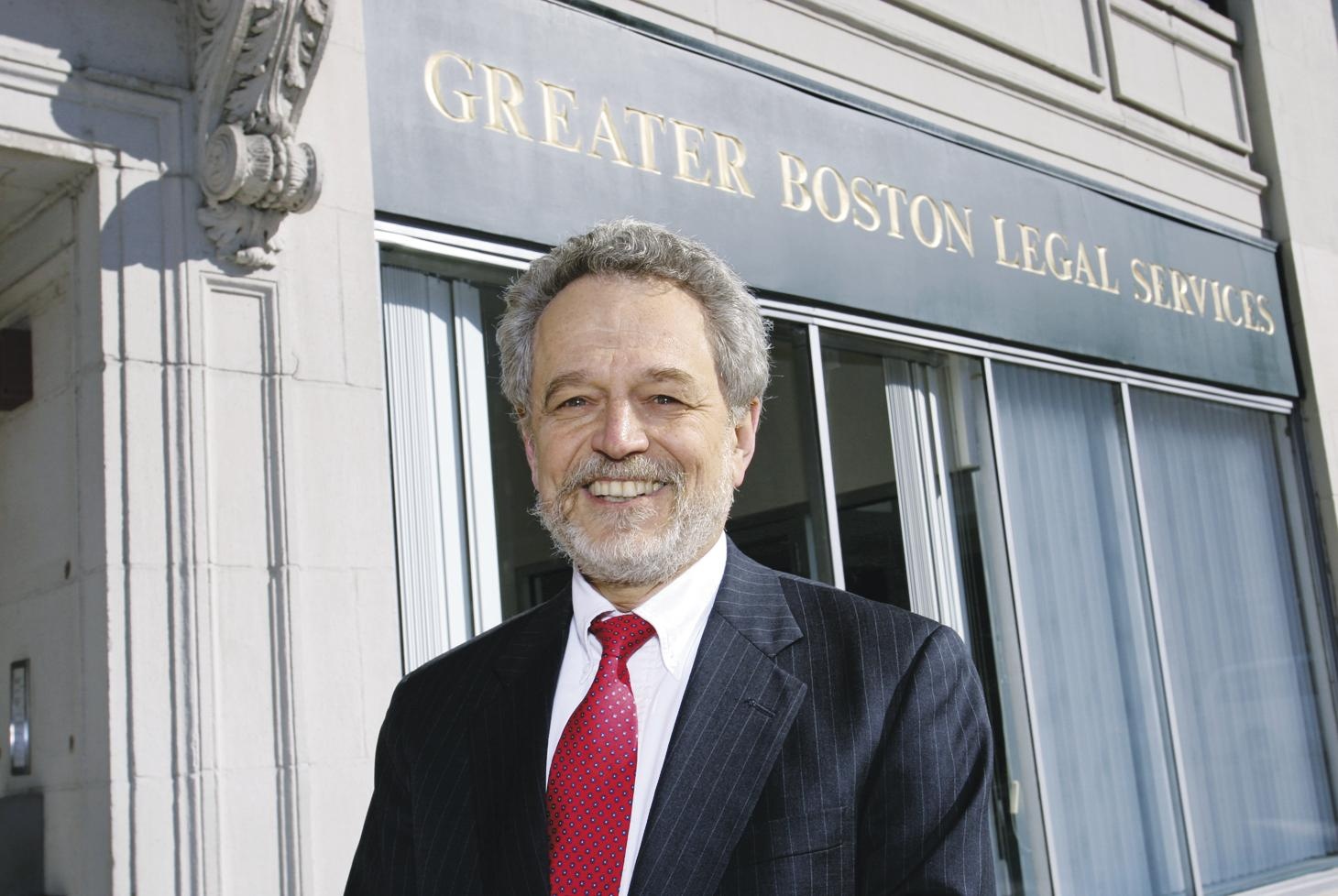
Bob Sable retired last year as executive director of Greater Boston Legal Services. Now, at age 70, he goes back to the same organization two or three days each week—happily working for his successor as a volunteer.
Following law school at Yale, Mr. Sable started out at the Legal Aid Society of Cleveland and eventually headed the National Consumer Law Center in Boston before joining Greater Boston Legal Services in 1991.
“I would get other offers in other areas, but I always knew I was a lifer—legal services was really what I wanted to do,” says Mr. Sable.
A Delayed Retirement
After 20 years leading the century-old legal-services group, however, he was ready to step down. “I would have retired even sooner, but in 2010 we had a huge fiscal crisis that was totally out of our control,” he says.
At the time, Mr. Sable’s charity was primarily supported by the Interest on Lawyer Trust Accounts program, a version of which operates in every state. When lawyers hold money for clients, they do so in one of these pooled trust accounts; any interest income is used to support legal-service programs. When interest rates plunged—as they did in the economic downturn—so does the payout, and thus less money goes to programs like Greater Boston Legal Services.
According to Mr. Sable, his charity lost $3-million in annual support as a result.
About a year later, with plans in place to stabilize the charity’s revenue sources, Mr. Sable stepped down. Or, rather, he stepped aside.
“It wasn’t that I didn’t want to work anymore,” he says. “I just didn’t want to work as hard as I’d been working. I’d been there for a long time and felt the programs would benefit from new leadership.”
Recruiting Others
Retiring from the director’s role but remaining with the charity as a volunteer, he says, allowed him “to return to my roots in legal services and be helpful as a lawyer, not a leader.”
Mr. Sable’s administrative days may not be entirely over, however: Beyond working pro bono himself, he also intends to start recruiting other retired lawyers to volunteer. His nonprofit has worked informally on that recruitment effort for years, he says, but now that he has time, he “would like to work to really institutionalize it as a program.”
He sees a promising pool of candidates, too.
“At the big law firms, people are retiring both earlier and financially well off,” he says.
The challenge, he says, will be convincing those veteran lawyers to overcome their rustiness.
“It’s still the same profession,” he notes, “but it’s a type of law they haven’t practiced for 20 or 30 years.”




