The Next Act for Gates’s CEO: Pushing for Smarter Philanthropy

By Doug Donovan
Contributor

April 21, 2014 | Read Time: 8 minutes
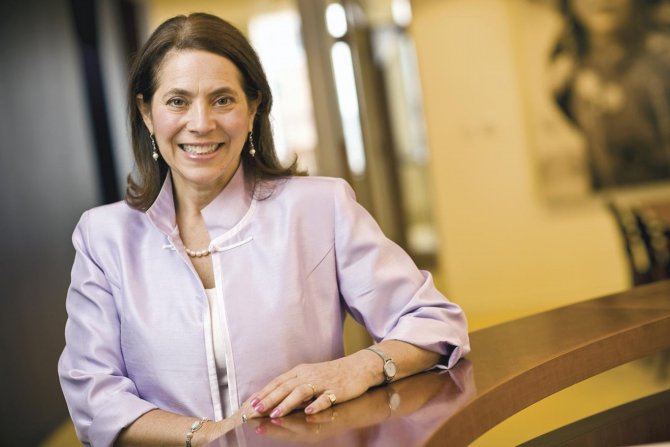
As Susan Desmond-Hellmann prepares to take over as chief executive of the Bill & Melinda Gates Foundation on May 1, her predecessor, Jeff Raikes, offers some simple advice: “Drive the tractor.”
In other words, says Mr. Raikes, who moonlights as a Nebraska farmer, the new leader should make time for programs that are most interesting to her. For Mr. Raikes, that has been agriculture and American education.
“As I say at the Gates Foundation: From my farm-kid days, you learn that some days you get to drive the tractor and some days you scoop hog manure,” Mr. Raikes says. “You want to optimize for those days when you get to drive the tractor.”
For six years, the former Microsoft senior executive has driven the biggest tractor in philanthropy, a grant maker with $40.5-billion in assets. It has grown from one with 250 employees and $1.5-billion in annual grant making in 2005 to a global entity with 1,200 employees and $4-billion a year in grants. [Editor’s note: The previous sentence has been revised to correct the timing of this growth. which started before Mr. Raikes took over.]
Seeking Feedback
Along the way he has worked to improve the communication challenges that come with an expansion unrivaled in philanthropy. His efforts have focused on fostering better collaboration among the people who work in each grants program and training staff members to improve relations with grantees frustrated with the foundation’s burgeoning bureaucracy, turnover of program officers, and what some people perceive as arrogance.
“The challenge of philanthropy is the power structure—the funder having the money and the grantee wanting money,” he says. “How do you navigate those issues to have the most productive dialogue?”
Drawing on two surveys it conducted, the foundation has trained staff to be more responsive to grantees to reduce their confusion over grant making. Its EthicsPoint system allows grantees to make confidential, anonymous complaints filtered by an outside contractor.
Diana Aviv, chief executive of Independent Sector, gives Mr. Raikes high marks for tackling that issue head-on and getting grant recipients to be more open.
“He realized that when you have that much to give away, they’re just not going to tell you the truth,” Ms. Aviv says.
The two-way feedback Mr. Raikes has been pushing is a model for how other foundations can improve honest relations with grantees, says Eugene Tempel, dean of Indiana University’s Lilly Family School of Philanthropy.
“It’s not easy to get grantees to be frank and open with you,” Mr. Tempel says. “He’s built a culture of listening internally and pushed for more honesty from the outside. He’s really made this a standard for how foundations should operate.”
He also credits Mr. Raikes with helping to spark a discussion about whether foundations should give a bigger share of their assets during economic downturns than the federally required minimum 5 percent of endowment, as the Gates Foundation did in 2009. Mr. Raikes told The Chronicle in 2009 that the foundation would increase its grant making by 10 percent despite a 7-percent decline in total assets at the time. It encouraged other foundations to do the same.
“That has continued to be a topic of conversation among foundations all the way to the policy level about what could be done to help encourage foundations to be more countercyclical in their payouts,” Mr. Tempel says.
A Sense of Urgency
Still, that move was easier for Gates, given that Warren Buffett’s annual contributions provided a cushion for grant making that other foundations do not have.
The Buffett pledge, however, helped accelerate the foundation’s growth, and Mr. Raikes asked staff members to carefully examine what grant-making efforts were making the greatest difference. The process resulted in tension, which Mr. Raikes says is vital for spurring progress in a fast-growing organization.
Among the improvements that emerged were allowing employees to contribute ideas for program and management decisions and establishing yearly meetings that bring together Bill and Melinda Gates and grant-making officers.
“The first couple of years doing the strategy reviews were tough, people were a little anxious” to talk about the work they had been doing, Mr. Raikes says. But the process was part of his effort to build a “culture of robust intellectual dialogue.”
When Mr. Raikes looks back on the foundation’s accomplishments, he says he’s especially proud of results the foundation has achieved by offering money to governments and nonprofits tackling big problems like polio.
Polio has been wiped out in India over the past three years, thanks in part to the Gates foundation’s support of eradication efforts, he notes.
“What I admire in Bill and Melinda that I don’t see in philanthropy as a whole is a sense of urgency,” he adds. “These children are dying.”
Mr. Gates made a trip to Nigeria to help figure out why the foundation’s polio-vaccination efforts were not getting the intended results. He knew it wasn’t just because a few kids were failing to get vaccinations from health-care workers who drive and walk from village to village. Whole villages must have been missed during the process.
By applying better mapping and GPS-tracking technology, the foundation’s staff learned that hundreds of villages had been missed.
New Direction
Mr. Raikes says that after he leaves his post, he plans to devote more time, with his wife, Tricia, to their Raikes Foundation. The transition will be a significant one in Mr. Raikes’ career: It will mark the first time in three decades that Mr. Gates hasn’t been his boss.
The Raikes Foundation, which has $139-million in total assets, focuses on youth and education issues.
Mr. Raikes is looking to increase his foundation’s annual grant making beyond its current $7-million last year to $9-million in 2014. He also plans to become more involved in helping wealthy individuals and other foundations deploy their money to programs that show evidence of results.
“Just in the last 48 hours I’ve had at least five conversations with people who are billionaires thinking about how to take the next step with their giving or people advising high-net-worth individuals on their philanthropy,” says Mr. Raikes. [Editor’s note: A sentence at the end of this paragraph suggesting that the donors he talked to were focused on Brazil, China, and India has been deleted because it was an inaccurate reflection of what Mr. Raikes said.]
At his foundation, he intends to use his position to speak out more forcefully on the need for philanthropy to achieve greater results. “Philanthropy lacks a rigor and disciplined intellectual framework that could generally raise the level of the field,” he says.
Mr. Raikes will continue to manage his family’s corn, soybean, and cattle-feeding farm—an occupation that has been at the center of his family’s life since 1854. His responsibilities for the property grew after his brother died in a 2009 farming accident.
Mr. Raikes will continue serving on the board of the Water for Food Institute at the University of Nebraska and championing agricultural developments in Africa and elsewhere to help spur what he hopes will be a new Green Revolution. Deploying modern agricultural and water-supply techniques, he says, has the potential to transform underdeveloped regions.
“There are parallels from what happened in the United States to what will happen in Africa during the 21st century,” he says.
Path to Success
On a 2009 trip to Kenya, Mr. Raikes met a farm couple who benefited from a program in which chilling equipment was installed that allowed them to preserve more milk from their cows to sell at markets. With money from the increased milk volume and the sale of two of their three cows, they sent their daughter to college in Nairobi to study hotel management. [Editor’s note: The previous paragraph has been revised to clarify that the Kenya trip was in 2009, not and not recent.]
“Anytime a farm family could get an increase in productivity and maybe a little income, the first thing they did was put it into the education of their children,” he says.
His parents did the same thing for him and his four siblings. Building a similar path to success in developing nations is key to systemic change, he says.
“If you want to achieve long-term sustainable change, you have to think in terms of changing systems,” he says. “That work is hard. A lot of people think philanthropy is easy. But if you want to invest in a way that has real evidence of social good, that’s harder.”
Jeff Raikes, retiring chief executive, Bill & Melinda Gates Foundation
Salary: $975,000
Education: Stanford University, bachelor’s degree in engineering-economics systems
How much his own family foundation holds in assets: $139-million
Books he asks his senior managers to read: Thinking in Systems, by Donella H. Meadows, and The Practice of Adaptive Leadership, by Ronald A. Heifetz, Marty Linsky, and Alexander Grashow; both, he says, provide great insight into shaping organizations to better succeed at their missions.
What he’s reading now: From Prairie Farmer to Entrepreneur: The Transformation of Midwestern Agriculture, by Dennis Nordin and Roy V. Scott