The Struggle to Build a Social-Justice Group as a Black Leader

By Jim Rendon
Executive Editor
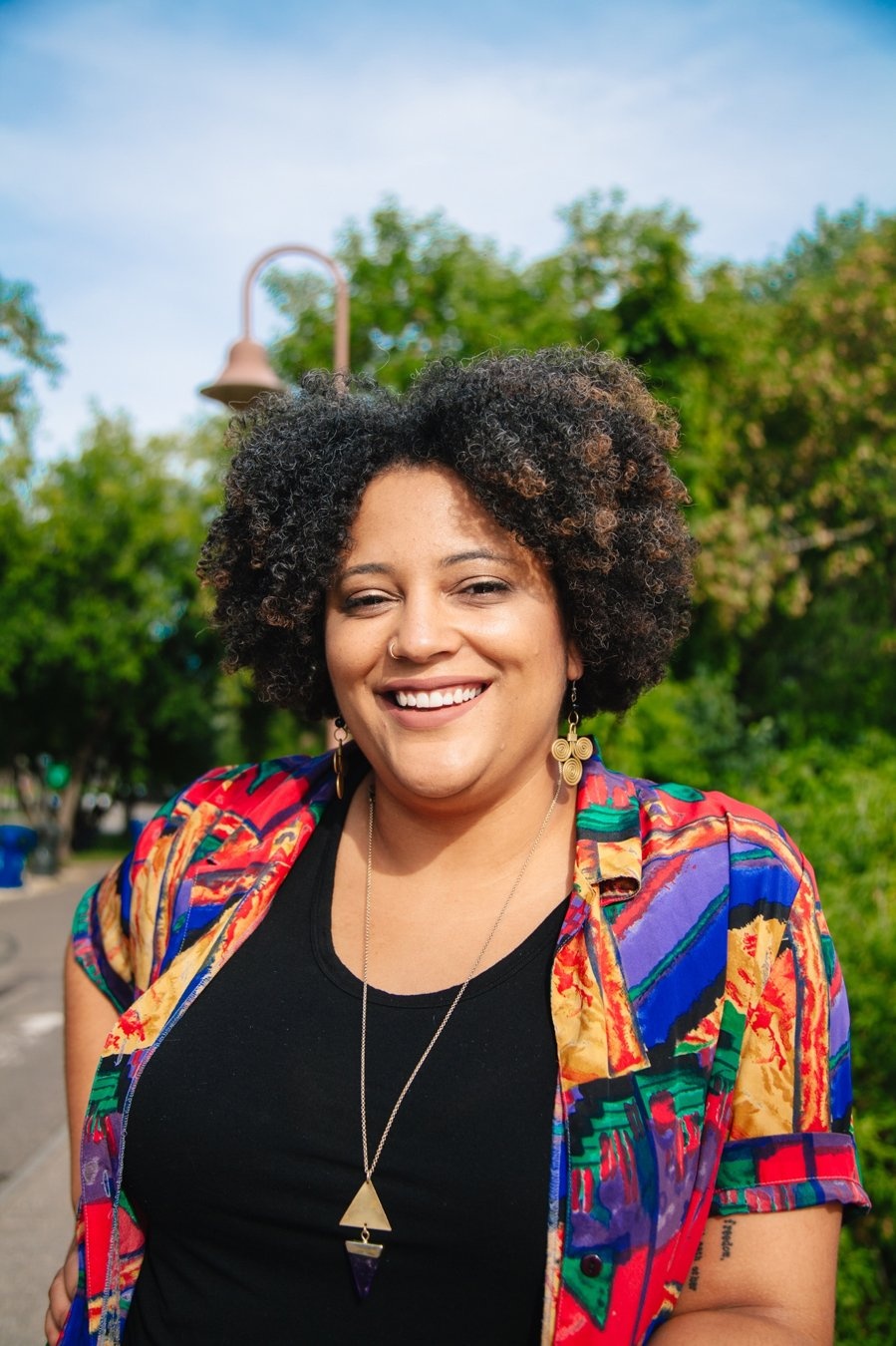
Philanthropy is slow to change, says Kandace Montgomery, founder of the Black Visions Collective. Black Visions Collective
July 2, 2020 | Read Time: 4 minutes
Kandace Montgomery helped organize a Black Lives Matter chapter in Minneapolis in 2015 and started the Black Visions Collective in 2018. The queer- and trans-focused group works to organize young Black people to end systemic racism. Since its founding, the Black Visions Collective has been working on solutions to police violence in Minneapolis. It has pushed the city to decrease funding for the police department, something that has become a rallying cry at protests across the country after a city police officer was caught on video killing George Floyd.
Montgomery spoke to the Chronicle about the underfunding of her organization and others led by people of color and the opportunity and challenges inherent in this moment of upheaval that has spread from her hometown to countries around the world.
Organizations led by people of color often lack funding. How has that affected your work?
I have to spend a lot of my time fundraising and convincing people that our work is valuable and necessary. Oftentimes, I’m convincing people who do not look like me, who do not come from Black communities and have really no perspective on what it means to be a community organizer and what it takes to do this work. Oftentimes, it’s a huge waste of my personal resources that could instead be used to strengthen our organization and our collective strategy.
Foundations play a role in controlling nonprofits and community organizations and deterring movements. The way that foundation applications are set up, the time it takes to fill out a grant application, to talk with the program officer, to pull together all of the particular materials that they want, and then also do the reporting on the back end, that all pulls me and my team members away from doing the necessary work.
There needs to be a serious shift in philanthropy to recognize that the wealth that is accrued in philanthropy is hoarded and actually continues the cycle of inequity. The job of philanthropy should be to give that money out, not to be figuring out strategic ways to hold it.
How has the national spotlight on police violence in Minneapolis affected your organization?
It’s too bad that only in moments of crisis are folks willing to trust and support Black-led organizations as well as indigenous- and [people of color]-led organizations. What we know as folks who have been doing this work for the long term is that this is just a small blip and that all of these folks will be gone and all of those dollars will be gone.
Part of the need for those rapid-response funds that we and others received is to address the increase of capacity. It’s not just that we have a lot of national attention or international attention. We now have a lot more work than we did three weeks ago. That takes capacity, and capacity oftentimes takes resources.
Your group and others combating police violence have received an outpouring of gifts from individual donors, but you have yet to see a similar spike from foundations. Why do you think that is?
Folks are looking for something to do, and that is one of the first ways that people find something to do. Some philanthropy is trying to get itself together to figure out how to have a meaningful response, but they are not built for rapid response, almost intentionally. I will be curious to see how philanthropy makes a long-term commitment.
Do you think the support will be sustained?
I hope that it is sustained. And I think a degree of it will be sustained for folks who are interested in being in solidarity with us. But oftentimes guilt is the real reason why people give. And that will allow a lot of folks to say, “Oh, OK, great. I gave one time. I can let go of that guilt and move on.”
From my experience in this work over the last 10 years, lots of those folks will not be here unless they see another crisis happening. And lots of folks don’t even recognize the long-term work, the fact that we’ve been building an organization for three years. I went unpaid for the first two and a half years.
What was it like to build this group without getting paid?
It’s really difficult. It requires a lot of time and care and also working other jobs and meeting other responsibilities while also taking care of my dad, who is chronically ill. I don’t have a trust fund to fall back on. I grew up really poor. I’m in debt from school. All of these things just add to the stress of doing this work, and I think that that can be true for a lot of Black organizations now.
This interview was edited for brevity and clarity.