
This Year’s Federal Funding Freezes Offer Lessons on Emergency Grant Making
The federal spending freeze may have come to an end, but its impact on nonprofits offered a preview of where the most urgent needs might be next if there are further cuts to federal safety net programs.

By Stephanie Beasley
Senior Writer
December 1, 2025 | Read Time: 12 minutes
The recent government shutdown — the longest in U.S. history — strained nonprofits across the country, especially those that deliver food and other essential services. And while the federal spending freeze has come to an end, its impacts on the sector offered a preview of where the most urgent needs might be next if there are further cuts to federal safety net programs.
The tax bill signed into law by President Trump over the summer would cut nearly $1 trillion from Medicaid, which provides health-care coverage for low-income individuals and others, as well as roughly $186 billion from the Supplemental Nutrition Assistance Program, or SNAP, over the next decade. Those cuts will be devastating to families and communities that rely on those programs, said Nicole Taylor, CEO of the Silicon Valley Community Foundation.
The foundation is anticipating an increased need for philanthropy to support groups that will be helping to fill gaps left by the federal funding cuts. That’s why it launched its Community Lifeline Fund in October with an initial pledge of more than $1 million from its donors, she said. The fund will support organizations that serve low-income families, immigrants, seniors, and children for the next three years.
“It’s a bridge — that’s how we’re seeing it — to allow the public sector to figure out what their long-term plan is going to be,” Taylor said. “When all of these federal cuts that are a result of the tax bill take place, it’s going to be pretty catastrophic, particularly for health care access, food, and housing.”
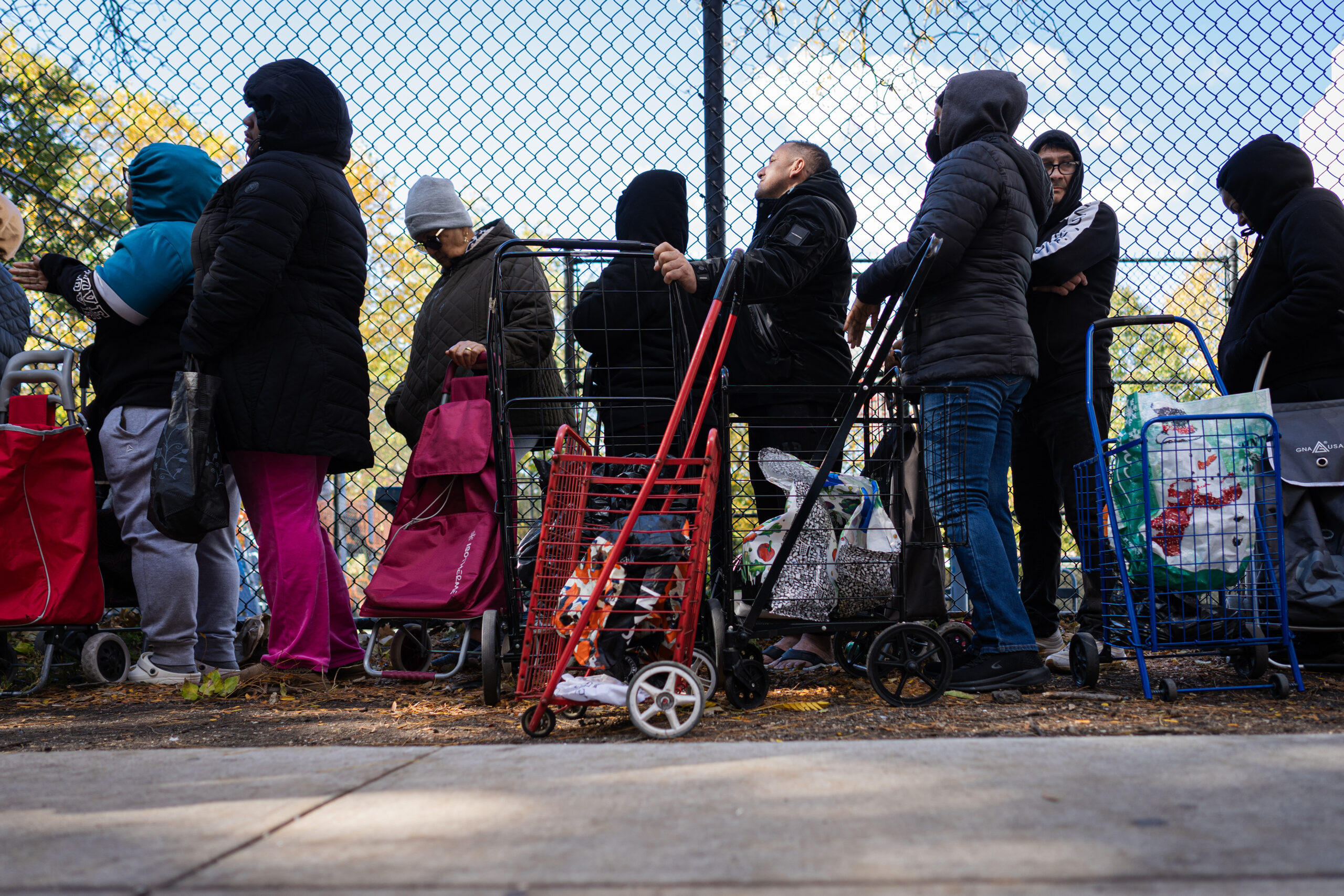
SNAP benefits were disrupted during the 43-day shutdown that ended last month. That, along with increased food insecurity among furloughed federal workers, threatened to overwhelm food banks across the country. Taylor said she kept in touch with the staff at the Second Harvest of Silicon Valley, which is part of a national network of food distribution nonprofits, during the shutdown. They told her there had been a sharp rise in the use of the “find food” locator tool on their website.
Just because the government has re-opened doesn’t mean the underlying problems have been solved. Second Harvest has warned that the stability will be short-lived. The rising costs of groceries and health-care costs combined with anticipated SNAP and Medicaid cuts will impact low-income and marginalized communities.
Throughout the past year, the Chronicle of Philanthropy has tracked a surge in emergency funding, mostly among community foundations nationwide. In California, there is recognition among funder groups like the League of California Community Foundations, which has more than 40 foundation members, that there must be a long-term strategy to get philanthropy dollars to the communities that will be most impacted by these funding cuts, Taylor said.
“This is the moment that community foundations are built for,” she said. “We are that critical intermediary between the resources and the need in our local communities.”
Chatter Among High Net-Worth Funders
Assets held by private and community foundations reached an all-time high of $1.68 trillion this year. And many foundations are gearing up to dip into their coffers and offer rapid response grants to nonprofits, but some large donors are not responding the same way. Some individual funders are feeling daunted by the scale of needs that have emerged since federal funding cuts began going into effect at the start of this year, according to Alex Johnston, founding partner at Building Impact Partners. The firm provides advisory services to high net-worth funders.
There are more billionaires in the world than ever before, and some, like MacKenzie Scott, have increased their giving to groups that help people or work on issues that have been most deeply impacted by reduced government funding. But philanthropy was never intended to take over from the government and can’t, Johnston said. As a response, some wealthy funders are revamping their strategies to determine how best to “keep the lights on” at nonprofits, how to prioritize the most pressing needs, and how to help grantees diversify their revenue sources, he said.
Active donors can also push their peers to give more in the coming months and years, said Johnston. He highlighted billionaire couple Cari Tuna and Dustin Moskovitz’s recently announced efforts to step up their work with other funders and pool funding to maximize the impact of donations.
Giving can be “deeply meaningful,” he said. “ And activating others in that is, I think, a big opportunity that I think we’re going to see happen more and more.”
A New Rapid Funding Model
Dire cuts to certain types of federal funding have forced creative responses among some grant makers that are proving to be effective.
In the face of near total elimination of the U.S.’s international aid programs, current and former employees of USAID created Project Resource Optimization in February. The group has delivered more than $110 million to international nonprofits since January and recently announced a final call for proposals from “highly cost-effective, life-saving projects” focused on health or humanitarian aid that have lost government funding since the start of the year. The deadline for submissions is December 22.
With immigrants facing increasing threats of arrest and deportation in New York City, Lisa Cowan, the former vice president of the New York City-based Robert Sterling Foundation, launched what she is calling a “pop-up foundation” to support neighborhood-level groups serving immigrants in October. The Haven Fund was created in response to increased immigration enforcement activity in New York City and will provide funding to small and faith-based organizations that provide services like accompanying immigrants to their court hearings, food relief, and education assistance, said Cowan. The Haven Fund is hosted by the Oakland-based JustFund and advised by the New York Foundation and the North Star Fund, which provide operating grants to social justice groups.
Cowan wants to raise at least $1 million for the fund. Grant dollars will be delivered by JustFund, she said. Cowan, who has been volunteering to accompany people to immigration hearings, said setting up the fund has helped to focus her energies.
“I think it’s super easy for all of us to sit inside and be terrified and be on our phones,” she said. “I just feel a little less anxious because I feel like I’m doing something.” Below is a list of rapid response funds compiled by the Chronicle of Philanthropy. Let us know about more funds.
National Funds
Defending Our Neighbors Fund
This month, the American Civil Liberties Union, the Rockefeller Philanthropy Advisors Abundant Futures Fund, and United We Dream announced this $10 million fund to support nonprofits providing legal assistance to immigrant families affected by the Trump administration’s immigration crackdown. The goal is to raise $30 million for the fund, the group said.
Emergent Fund grants
The Emergent Fund provides rolling, no-strings-attached rapid response grants to organizations for urgent and unanticipated crises, particularly for grassroots groups led by Black, Indigenous, and people of color.
Late last year, the group joined with the Transgender Law Center to launch a separate Action for Transformation Fund with the goal of providing $1 million in rapid response grants to trans-led organizations amid a growing backlash against efforts to advance transgender rights. The Action for Transformation Fund is a pilot that is providing one-time grants of $5,000 to $20,000.
Four Freedoms Fund’s Immigration Frontlines Fund
Four Freedoms is a funder collaborative launched more than 20 years ago by NEO Philanthropy, which aims to raise $10 million this year to advocate for and protect immigrant communities.
Impact Fund rapid response grants
These grants of up to $10,000 are for “sudden out-of-pocket” litigation expenses related to lawsuits in the areas of economic, environmental, racial, and social justice.
Regional Funds
Cambridge Community Foundation’s Urgent Needs Fund
The foundation is providing emergency grants in response to federal budget cuts, which it said are “dismantling our social safety net and threatening to push many Cambridge families, elders, and children into crisis.”
Coastal Community Foundation of South Carolina grants
In November, the foundation opened applications for nonprofits to apply for emergency grants to help communities affected by the government shutdown. Eligible organizations must operate within the following counties: Beaufort, Berkeley, Charleston, Colleton, Dorchester, Georgetown, Hampton, Horry, and Jasper. Applications will be reviewed on a rolling basis.
Colorado Health Foundation advocacy grants
Colorado-based nonprofits seeking funds for short-term health-care advocacy initiatives can apply for these grants, which range from $15,000 to $75,000. Submissions are reviewed on a rolling basis.
Delaware County Rapid Response Fund
The Foundation for Delaware County and The Community’s Foundation provided grants to organizations focused on emergency food assistance, housing stability, and the provision of essential services during the government shutdown.
The Denver Foundation’s Critical Needs Fund
The foundation is soliciting donations for its ongoing rapid response fund to help provide legal aid, educational resources, nonprofit operational support, and other assistance to immigrant and refugee communities. This will continue to be activated throughout the year.
England Family Foundation food assistance grants
Based in Bethesda, Md., this foundation deployed $1 million in emergency funding in November to support groups assisting families in the Washington, D.C., area who had been affected by the government shutdown and the suspension of SNAP benefits. The funding was provided to two local nonprofits — Bread for the City and Martha’s Table.
Foundations Community Partnership Target Funding — Rapid Response grants
This fund offers grants of up to $15,000 to the foundation’s existing grantees in Bucks County, Pa., to help them manage the impact of federal funding losses. The grants will be available until June 30, 2026. Applications are accepted on a rolling basis.
Greater Rochester Health Foundation grants
This rapid response fund aims to help existing grantees continue their work by providing bridge funding and money for costs related to ending services or layoffs, strategic litigation, transitioning clients to new providers, and services and costs associated with nonprofit mergers and collaborations.
Greater Worcester Community Foundation grants
The foundation had opened up its longstanding nonprofit effectiveness grants program for nonprofits serving central Massachusetts, to include needs associated with unforeseen federal funding losses and legal costs associated with changes in federal law, legislation, or compliance requirements. The program also has shifted to a rolling deadline with grant decisions made twice a month.
Haven Fund grants to immigrant communities
This “pop-up” foundation will support small, neighborhood- and faith-based groups throughout New York City that are providing services to immigrant communities, including food relief, accompaniment to court hearings, and educational assistance.
HealthSpark Foundation grants
Based in Colmar, Pa., this foundation provides one-time, flexible funding ranging from $500 to $5,000 to nonprofits based in or that serve residents of Montgomery County and are responding to unexpected and urgent challenges. The money can be used to support community organizing, leadership training, and legal defense needs, among other things. Applications are accepted on a rolling basis.
Howard County Emergency Relief grants
Last month, the Community Foundation of Howard County and its Women’s Giving Circle worked together to reactivate the foundation’s community relief fund to support food banks.
King County nonprofit relief funds
King County, which includes Seattle, Washington, recently announced that it would provide $25 million to nonprofits to help blunt the impacts of federal funding costs, rising living costs, declining donations and a drop in volunteerism. Part of the funding comes from a six-year property tax levy to support veterans, seniors, and housing services.
MacArthur Foundation food security grants
The foundation provided $1.5 million in rapid response funding to support several organizations in the Chicago area, including the Greater Chicago Food Depository. The grants aim to address heightened food insecurity across the city following the delays to federal food assistance benefits. About $250,000 of the funding also went to United for Chicago, a coalition of civic, business, faith, nonprofit, and philanthropic leaders advocating against the deployment of National Guard troops in Chicago.
McKnight Foundation direct assistance grants
The Minnesota-based family foundation has provided $1 million in grants to 14 organizations in the Twin Cities and Greater Minnesota. The money will help fund the delivery of gift cards for gas, vehicle maintenance, diapers and baby formula, and heating assistance. Grants will also go toward emergency housing assistance, food assistance, and holiday cash assistance.
The Meyer Foundation’s rapid response grants
The Washington, D.C.-based foundation provides funding to nonprofits in the district and the surrounding area. It is offering one-time, rapid response grants of $10,000 to $20,000 to current grantees focused on racial justice and systems change.
North Star Fund grants
This fund is offering grants of $2,500 or $5,000 to help grassroots groups in New York City and Hudson Valley that focus on community organizing and social-justice issues. Applications are accepted on an ongoing basis.
San Francisco Foundation’s rapid response grants
The Rapid Response Fund for Movement Building provides one-time grants of $3,000 to $20,000 for small nonprofits focused on racial and economic equity. The nonprofits must serve residents in one or more of the following Bay Area counties: Alameda, Contra Costa, Marin, San Francisco, and San Mateo.
Silicon Valley Community Foundation rapid response grants
The Community Lifeline Fund will support local organizations providing food, housing, health care, and legal aid, among other services. The community foundation’s funders have pledged an initial $1 million to the fund with the expectation that additional funds will be raised in the coming years. Priority will be given to organizations serving low-income families, immigrants, seniors, and children.
United for San Diego fund grants
Prebys Foundation, Price Philanthropies, and San Diego Foundation have joined together to pledge $70 million to support San Diegans at risk of losing access to food, housing and healthcare in the wake of federal funding cuts.
San Diego Foundation also launched the San Diego Unity Fund to encourage other San Diegans to contribute to the emergency response effort.
Yellow Springs Community Foundation awards
These rapid response grants of up to $3,000 will be provided to nonprofits in Ohio’s Yellow Springs and Miami Township areas.
International Funds
The Catalyst Fund from Population Services International
The group has revived this fund, which was initially created during the pandemic, to deploy small grants to global health care organizations whose U.S. funding has been terminated.
Project Resource Optimization grants
The group has announced a final call for proposals from “highly cost-effective, life-saving projects” that have lost government funding since the start of the year. The deadline for submissions is December 22.
Skoll Foundation emergency fund
The $25 million fund is supporting current Skoll Foundation grantees affected by U.S. international aid cuts.
Correction: This story has been updated to clarify that neither Prebys Foundation nor Price Philanthropies was involved with the launch of the San Diego Unity Fund.





