To Combat Racism, Nonprofits Need to Knit Generations Together, Leader Says

By Eden Stiffman
Senior Editor
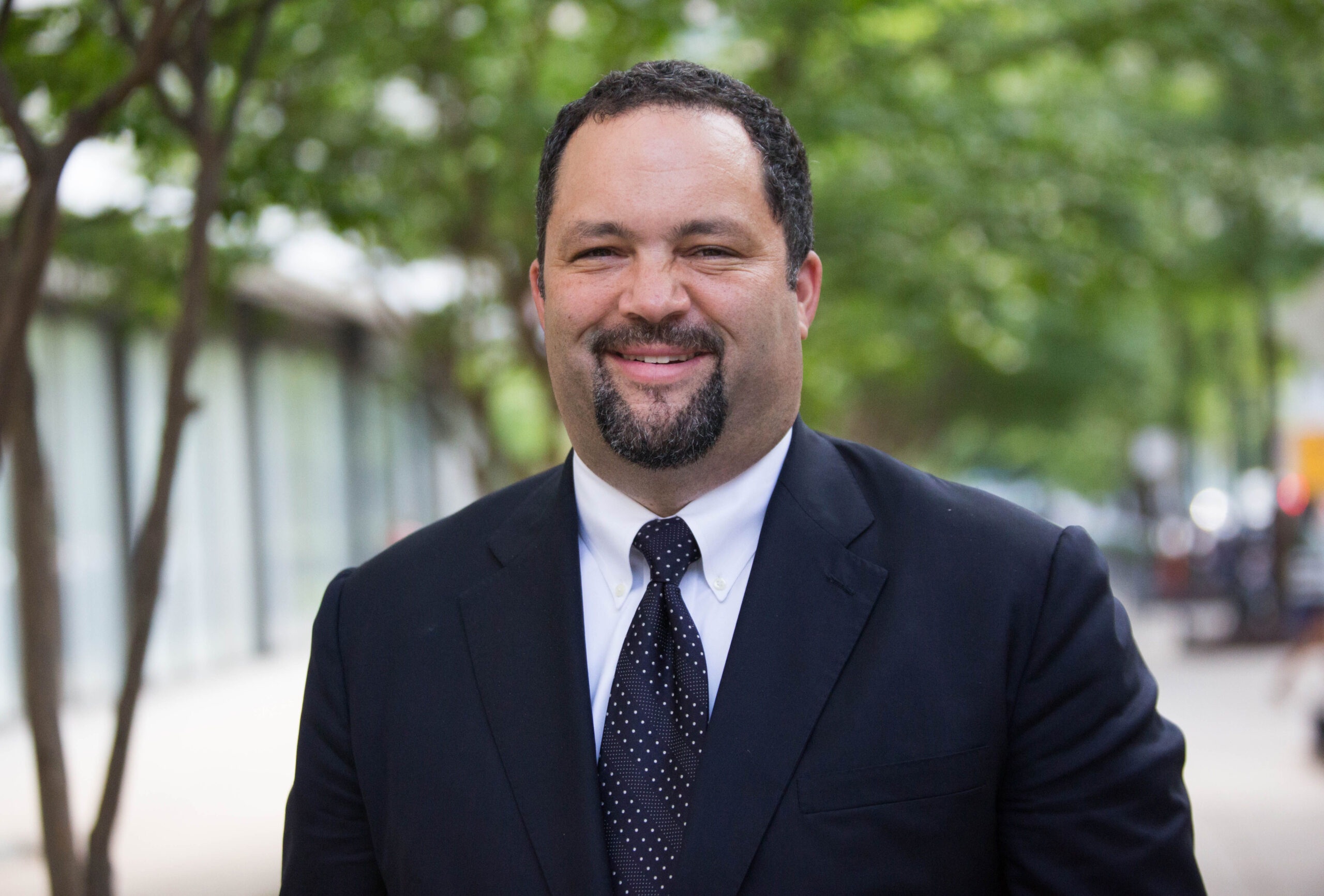
“Racial discrimination is still a burning problem,” says Ben Jealous, new president of People for the American Way. People for the American Way
July 2, 2020 | Read Time: 3 minutes
Ben Jealous has deep roots as an organizer and a leader in the nonprofit sector. In 2008, he became director of the NAACP at the age of 35. Two years ago, he mounted an unsuccessful campaign for governor of Maryland.
Jealous started a new role as the president of People for the American Way last month. The progressive advocacy group was founded in 1981 by television producer Norman Lear and lawyer and civil-rights leader Barbara Jordan. Jealous is the organization’s first Black leader.
He spoke with the Chronicle about the potential to advance social change in the wake of nationwide protests against police brutality.
How does the way nonprofit organizations talk about racial equity today compare with when you entered the field 30 years ago? Does it feel like we’re at a different moment right now?
We’re now at a place where every leader in our country has to recognize that racial discrimination is still a burning problem with a very sharp edge that cuts deeply, not just into the souls of individuals, but through entire communities and our country as a whole.
I see great, great potential in this moment for us to leap forward as a nation. Our country is a place where decades of change can happen in a day, and then we can be stuck in like the worst version of Groundhog Day for decades. We are living through a moment where decades of change can happen in the community in a day. We saw that in Colorado when they abolished qualified immunity. We saw that in Camden [N.J.], when they reconstituted their police department.
Can you tell me a little bit about People for the American Way’s internal diversity and where the organization is in its thinking about inclusion?
I spent my life building inclusive, high-performance organizations, but any leader who tells you that they’ve got it figured out, any organization that tells you that they do it perfectly is not telling you the truth. We are a work in progress. With that said, it matters that we had a very powerful Black woman political leader and very powerful white man activist join up in the very beginning to found the organization. We’ve been multiracial from the day Barbara Jordan and Norman Lear launched the organization.
Our young-elected-officials network is tremendously diverse. It’s between those two bookmarks that the national staff and the membership exists.
I’m confident that we can build on our tradition of multiracial organizing and we can build on our very talented and diverse team to build an organization that’s even more inclusive and even more high performing because of it.
What’s the best way for young organizers to plug into established nonprofits? And what’s the best way for nonprofits to support organizing?
The best thing that ever happened to me as a young organizer was that my pastor made it clear that young people were needed to lead the nation, not just their generation. That accelerated me toward becoming the youngest national president in the history of the NAACP.
This is one of those moments when we need to be encouraging young people to run for office, to lead not just the protests of the day but the movement of the moment — and to lean in to a rare opportunity to make a better future come much faster than we thought possible just a month ago.
It’s also a time to knit people together across generations, to recognize that the greatest activists in any movement often come from two generations with two things in common: those around and below university age and those around and above retirement. They both perceive themselves as having the time to be deeply involved, and they are both eager to change the world. One is about to take over a generation and take over responsibility for it. And the other one is preparing to hand over that responsibility to others.
This interview has been edited for length and clarity.