
To Spend a Windfall Wisely Takes Time, Energy, and Restraint

By Debra E. Blum
Contributor
March 10, 2014 | Read Time: 9 minutes
When a Montana church received a $1-million bequest last fall— nearly double the size of its annual budget—the pastor asked his congregation to pray about the gift for 40 days before any discussion would start about how to spend it.
In California last summer, a domestic-violence shelter quickly stashed a seven-figure donation into a newly created endowment to keep staff members from claiming it for their pet projects.
And when a social-service group in Mississippi was surprised at the end of the year with an anonymous $1-million contribution, the charity’s leader, worried that employees and donors might mistakenly think the group was flush, kept the news quiet until he could explain the organization’s financial position and needs.
For these small nonprofits and others like them, a donation of hundreds of thousands of dollars or more can be a thrilling, once-in-a-lifetime windfall. But handling such gifts can also overwhelm organizations that aren’t used to seeing so much money at once.
Trickiest of all is when the gifts come as a surprise—as they often do, since small charities are not typically courting big donors—and without specific donor instructions.
That’s where patience and planning are paramount, say charity experts.
“Hitting the pause button is the most important thing to do,” says Caren Skoulas, chief financial officer of the Poetry Foundation, which was formed in 2003 after a tiny nonprofit that published a poetry magazine received a $200-million gift from the philanthropist Ruth Lilly. “Even if it’s not millions and millions, if it’s more money than the organization has ever dealt with, they should pause and take stock.”
Time to Think
Small charities might need to secure the necessary investment expertise or set up endowments to manage the money. They might have to establish policies to protect the gift from being drained quickly, spent unwisely, or fought over by charity leaders with competing interests.
And they might need to gently remind other donors that their support is still needed, despite the windfall. A gift’s impact depends not only on its size but also the size of the organization that receives it.
For instance, last month’s $150-million donation to Harvard University by Kenneth Griffin, the hedge-fund manager, was just a drop in the bucket for the institution and its current $6.5-billion fundraising campaign.
But when a small Indiana community foundation received a bequest of about that size from Guy David Gundlach in 2012—roughly triple its entire endowment at the time—the move triggered more than a year of working with special task forces, focus groups, and consultants and lots of soul-searching and strategic planning.
The result: four new areas in which the organization will direct its grant making, starting in the summer.
“To deal with a megagift, a nonprofit has to spend a lot of energy and time thinking it through before it acts to spend,” says Pete McCown president of the Elkhart County Community Foundation, in Indiana.
“It’s akin to someone of modest means winning the Powerball and continuing to live in the house they live in and not buying that Ferrari, while they work with accountants and lawyers to figure everything out.”
Scott Hitchcock, a Seattle financial adviser, also uses a lottery analogy to explain what he considers a donor’s obligation to give responsibly.
Just as a lottery winner shouldn’t buy a million-dollar home for a relative who can’t afford the taxes and upkeep, he says, donors shouldn’t make a donation that might overwhelm or obligate a charity.
“The burden should be on the donor to make sure the charity has the operations and expertise to handle the gift they want to give,” Mr. Hitchcock says.
He suggests that donors research the groups and work with their leaders to craft a gift that makes sense.
If the donor makes an unrestricted gift, it might be smart to give it in parts over time.
A living donor could use a donor-advised fund to distribute the money, he says, while an estate gift could be established as an endowment.
Charities, in turn, should ensure they have the right money-management policies in place and should work with donors and their advisers to make sure the donation would best fit their needs.
But when donors end up surprising even the smallest nonprofits with relatively huge sums of money with no strings attached, charities are left to come up with their own solutions to handle the windfall.
How Nonprofits Handle a Windfall
Charity puts checks in place so as not to spend big gift ‘willy-nilly’
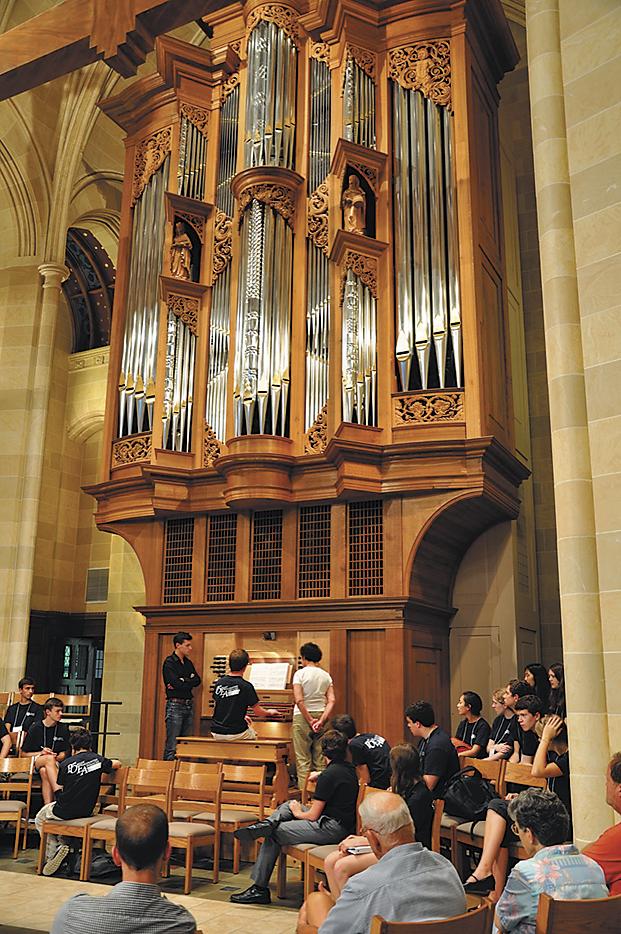
American Guild of Organists
Big gift: $500,000 bequest, in January.
The big picture: The group raised $938,000 in fiscal 2013.
In January, the American Guild of Organists received a nearly $500,000 bequest from the late Virginia Dean Strohmeyer-Miles, a church organist in Arkansas and a longtime member of the guild. The group was expecting a gift from her estate, but the sum turned out to be five times the amount that was expected, blowing the lid off what the group hoped to raise in total this year.
But the organization sat tight instead of immediately checking off items from its long wish list of projects, like an improved website and new commissions for organ music. The group learned such restraint after receiving another windfall 15 years ago.
“We started spending that gift right away,“ says James Thomashower, executive director. “We had incurred losses at our biannual convention the year before, so we were writing checks to pay bills, pay vendors.”
With $100,000 quickly out the door, guild officials pulled back, slowing spending from the donation—which equaled more than a third of the group’s budget at the time—and putting controls in place. Henceforth, its new policy said, only 25 percent of unrestricted gifts may be used immediately for operations. The rest would go into a board-controlled fund.
“Having a rule in place that acts as a check is important when there can be so much excitement around a gift,” Mr. Thomashower says. “It automatically says, This is great, but you can’t spend just willy-nilly.”
Charity builds an endowment so it won’t spend big gift too hastily
Domestic Violence Solutions for Santa Barbara County
Big gift: $1-million bequest, in June.
The big picture: The group’s largest-ever previous gift had been $125,000.
Domestic Violence Solutions for Santa Barbara County had recently opened an account at its local community foundation, a board-controlled fund where the group intended to park the money it hoped to raise in its first-ever capital campaign.
But just as the social-service group was about to start planning the campaign, it got a surprise $1-million bequest from Susan Trescher, a lawyer and a friend of a former board member.
“Luckily, we had just created a catcher’s mitt and just established a relationship with an entity we trusted with our money,” says Marsha Marcoe, associate executive director of the organization, which typically raises less than $1-million a year.
Being able to rely on the Santa Barbara Foundation’s financial expertise is invaluable to Ms. Marcoe’s small organization in helping it invest and manage the gift, she says.
Another unexpected benefit of the endowment, she says, is that spending it requires approval from her governing board, so it can’t be spent hastily.
“It would have been maybe $20,000 here and $40,000 there for projects, and that money can start adding up really quickly,” she says.
Immediately after the organization received the gift last summer, the group’s then-executive director wanted to buy a new security-camera system for its five shelters.
“We needed to hold off, get the board involved in the spending decisions, be strategic,” says Ms. Marcoe, adding that Domestic Violence Solutions was instead able to use grant money for the cameras.
Convincing supporters money still needed despite a windfall
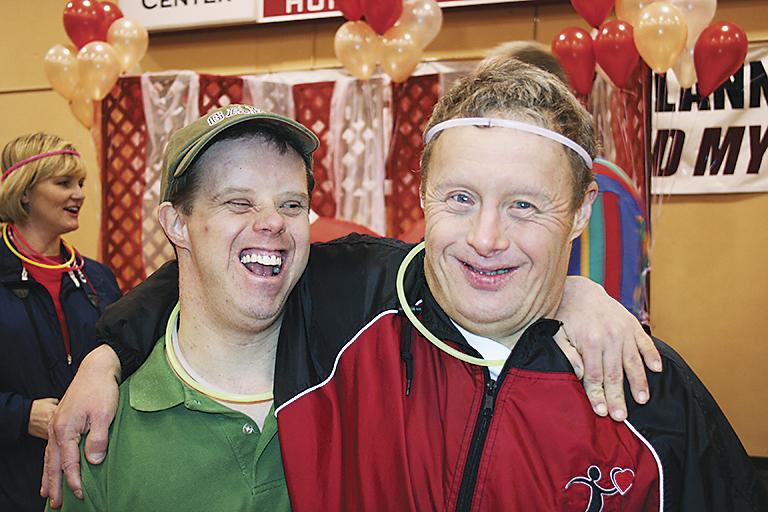
Baddour Center
Big gift: $2-million, in October.
The big picture: The group raised about $940,000 in fiscal 2013.
Money has been tight since the start of the recession for the Baddour Center, a residential community in Mississippi for adults with intellectual disabilities. Two of its biggest sources of revenue have taken a hit: tuition and contracts with businesses that provide vocational opportunities for residents. So for the past two years, the group borrowed from its line of credit.
Money is still tight despite two recent large gifts: $2-million from James and Mabyline Henderson, parents of a resident, and a surprise $1-million from an anonymous donor.
Together, those donations are triple what the group received the previous year. But most of the $2-million is earmarked for a scholarship fund for residents, and most of the $1-million, which came with no restrictions, is already spoken for. The group will use $400,000 to pay back the line of credit and much of the rest for capital projects, such as desperately needed updates to many of the group’s single-story ranch homes built more than 30 years ago.
Because of its improved finances, Baddour will ask for less grant money from the Mississippi Conference of the United Methodist Church. But it plans to continue soliciting its other supporters as usual, while explaining its financial situation and demonstrating the effectiveness of its work.
“It can be tough telling people how badly you need money when there’s news of a windfall out there,” Mr. Pepper says.
The group will also share budget information and spending plans with the staff because, Mr. Pepper says, he doesn’t want them “to think that we no longer have to worry about pinching pennies.
Church could take a year to use big gift
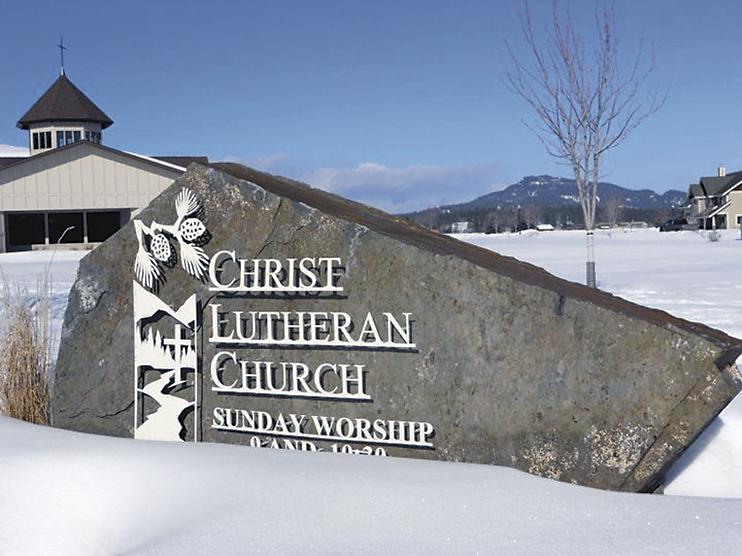
Christ Lutheran Church
Big gift: $1-million bequest in October.
The big picture: The church’s annual budget is about 600,000.
Everyone at Christ Lutheran Church, in Whitefish, Mont., was shocked to learn in October of the $1-million bequest from Roger Wold, a reclusive railroad worker who had lived in a camper with no running water. He had attended the church as a child but not as an adult.
The church had an annual budget of $600,000 and had never before received a gift anywhere near that size.
Mr. Wold, who died in 2012 at age 75, had invested in real estate and left the church the unrestricted gift in memory of his mother, who had taught Sunday school there.
In response to the donation, John Bent, Christ Lutheran’s pastor, says he called for 40 days of prayer “to calm things down, to make sure there was thought before talk.”
After the prayer time, church members were asked to write down ideas about how to spend the money, and in the coming months, church leaders will present those ideas to the congregation as a whole, start a series of discussion forums, and gather financial information about the projected costs of various capital projects, like a new sanctuary.
The whole decision-making process could take well over a year, Mr. Bent says, because “you can’t rush careful thinking, consensus building, and being a good steward, no matter what the sum of money.”




