September 22, 2014 | Read Time: 5 minutes
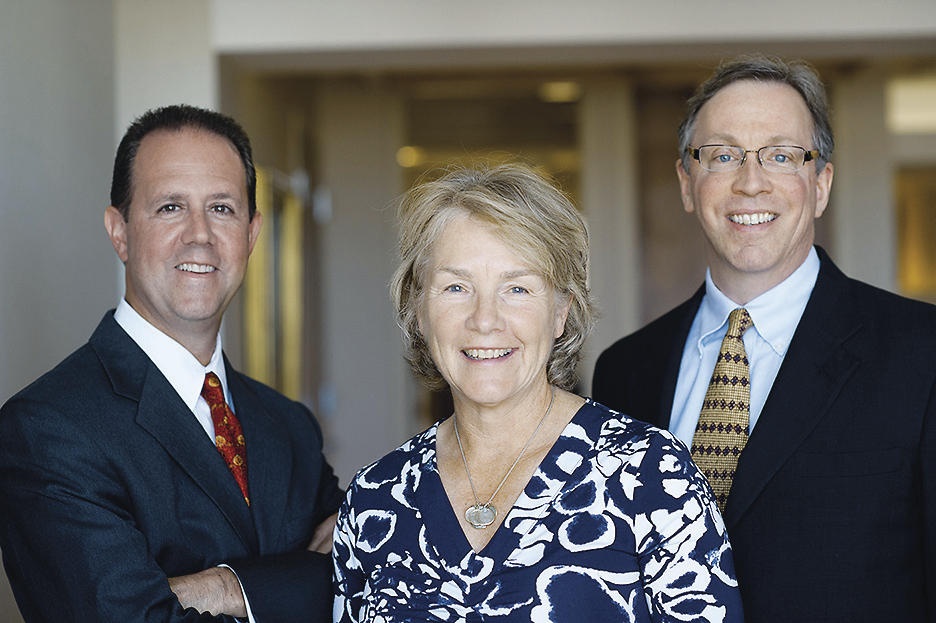
When Otto Bremer gave his bank holdings to charity 70 years ago, he left instructions to allow the trustees of his foundation to establish their own pay. The three trustees who currently oversee the Otto Bremer Foundation, in St. Paul, have used that latitude to give themselves extraordinary raises: Two have received a 1,000-percent increase in just the past nine years.
In June, the Otto Bremer trustees pushed out Randi Roth and eliminated her executive-director position, naming themselves co-CEOs. The National Committee for Responsive Philanthropy, a watchdog group, is calling for the Internal Revenue Service and Minnesota’s attorney general to open an investigation into the trustees’ compensation.
“The people making the decisions about how to run this foundation have decided to run it in a way that they’re personally benefiting from it,” says Aaron Dorfman, NCRP’s executive director.
Jon Austin, a crisis-communications specialist hired by the $800-million foundation, says the three trustees are working-full time at the foundation, and their total combined compensation of $1.28-million in 2013 is in line with what other foundations pay their top executives.
“We’re deeply troubled by the manner in which our reputation has been falsely—and even recklessly—attacked through innuendo and unfounded accusations,” he says.
Bigger Workload
Either the IRS or the Minnesota attorney general could choose to investigate—neither one is currently commenting—and may examine the work responsibilities of the three trustees. Any legal or regulatory action would probably hinge on the answer to this question: Are the trustees appropriately raising their compensation as they take on a heavier workload at the foundation, or are they merely ratcheting up pay to enrich themselves?
There’s little doubt that the trust technically allows the trustees to pay themselves very well. The 1944 trust document says that as much as 4 percent of income can go to trustee pay.
Thanks to robust profits from the Bremer Bank, which is 92-percent owned by the trust, the trust received income of $43.2-million in 2013, which means as much as $1.7-million could be spent on trustee salaries.
In 2013, Brian Lipschultz received total compensation of $493,835, Daniel Reardon received $492,950, and Charlotte Johnson received $293,575. (The two men earn more since they have responsibility for overseeing investments, and Ms. Johnson does not, Mr. Austin says.)
Some evidence suggests that the trustees are able stewards of the foundation’s resources, which are primarily used to benefit poor and rural residents in Minnesota, North Dakota, and Wisconson.
Increased Assets
Last year, a Chronicle survey found that Otto Bremer was the only large foundation among 87 organizations that managed to increase its assets from the eve of the financial crisis in 2007 through 2012. (A handful of other foundations increased assets through unusual circumstances, like a large donation.) And the foundation gives a far greater proportion of its grants—70 percent—to economically marginalized communities than the average similar-size foundation, notes Mr. Dorfman.
But plenty of trustees earn modest incomes, or none at all, for such stewardship—and the Otto Bremer Foundation embraced that philosophy until a series of sharp pay raises began in 2005.
A decade ago, the foundation’s three trustees made clear in tax filings that they weren’t working full-time on foundation business.
Ms. Johnson put in 30 hours a week, according to the 2004 tax filing, while Mr. Reardon and William Lipschultz (who served as a trustee for 51 years until his son Brian was tapped to replace him in 2012) worked just 15 hours a week.
Each trustee received total compensation of $44,940, compared with $257,622 for John Kostishack, the foundation’s executive director at the time. That’s not out of line with typical trustee pay: A 2011 Chronicle study found that 38 of the nation’s 50 wealthiest foundations compensate board members, with annual pay averaging $26,617.
Mr. Reardon’s compensation has gone up 11-fold, as has the salary of the younger Mr. Lipschulz compared to what his father made in 2004.
More Time
Nine years ago, the trustees made a pittance compared to their executive director; now two of them make far more than the $326,320 Ms. Roth made before she was let go. Why?
Mr. Austin says the trustees are devoting more time to the foundation, in part because assets have doubled over that period and grants have more than doubled.
The compensation for the trustees was set with the help of outside lawyers and compensation experts, he says, and was influenced by a recent compensation study conducted by a “nationally recognized consultant.”
Mr. Austin declined to provide the report. He notes that overall expenses as a percentage of grant making have dropped slightly, to 13.1 percent, from 13.7 percent in 2004.
Different Role
Bruce Hopkins, a tax lawyer who specializes in advising nonprofits, says the foundation’s best argument, should a regulator pursue the case, is that the trustees’ role has changed since 2004 and become much more time-intensive and critical to foundation operations.
“That’s their defense,” Mr. Hopkins says. “If they’re putting in a lot more time and they’re taking on more responsibility, they’re entitled to more compensation.”
Mr. Dorfman says he’s heard from multiple foundation workers in the Twin Cities area that the Otto Bremer trustees are not engaged in a way expected of full-time CEOs. These sources have told him that the trustees have not been in the office regularly and are rarely seen at local philanthropy meetings, although Mr. Dorfman acknowledged that none of his sources were willing to go on the record. (Mr. Austin vigorously denies these allegations and says all three trustees are working full-time on foundation activities.)
Mr. Dorfman argues that none of the three would make the finalist list for the top job at any other large foundation.
“The people who are charged with the fiduciary duty to carry out the mission of the foundation have decided that they are uniquely qualified to be highly compensated to run the foundation,” Mr. Dorfman says. “It just doesn’t pass the smell test.”