
Turbulence on Wall Street Doesn’t Yet Spell Fundraising Panic, Experts Say

By Megan O’Neil
Contributor
January 21, 2016 | Read Time: 3 minutes
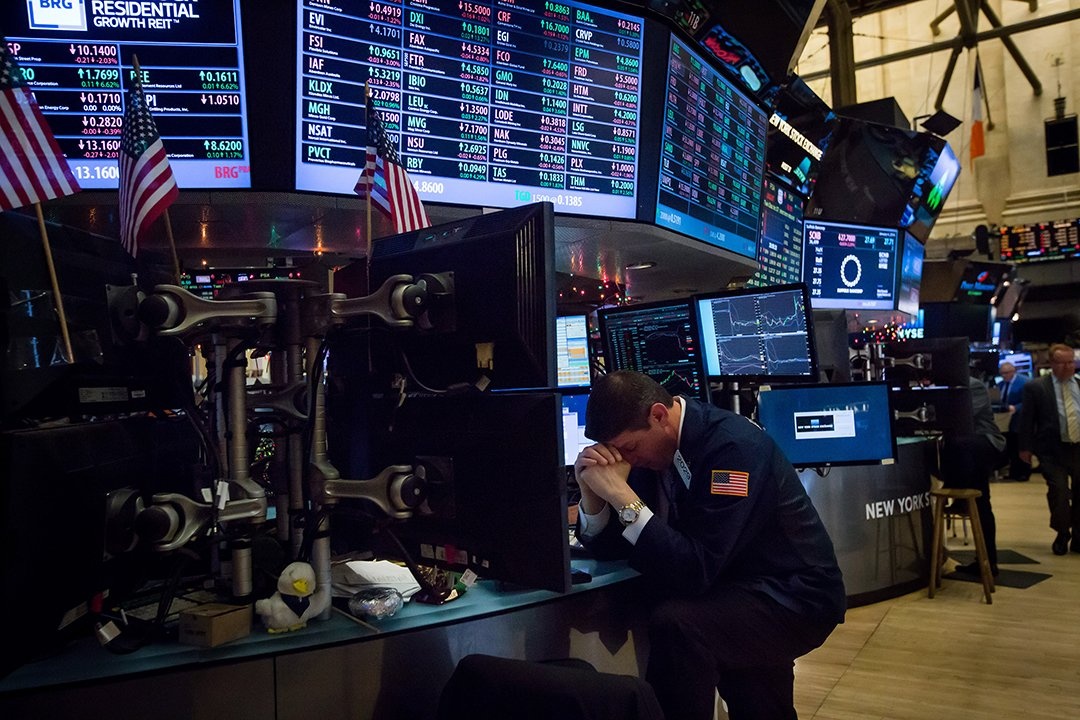
Three weeks of turbulence on Wall Street has been serious enough to put charity leaders on alert, but the bumpy start to 2016 is unlikely to have an immediate negative impact on charitable giving as long as it doesn’t last long, fundraising experts say.
Charitable giving is directly influenced by economic conditions, and the stock market is an important factor in understanding the overall economy, said Una Osili, director of research at Indiana University’s Lilly Family School of Philanthropy. Individual donors are sensitive to short-term and midterm market losses, but she and her colleagues remain bullish on the giving environment.
“This is three weeks,” Ms. Osili said. “We are still in the early part of year. We haven’t even finished the first quarter.”
On Wednesday, the Lilly School and consulting firm Marts & Lundy published a forecast predicting that charitable giving would increase 4.1 percent in 2016 and 4.3 percent in 2017.
Bruce Flessner, who advises universities and other institutions on ways to raise big gifts, described the stock market as the best indicator of charitable giving. The behavior of high-net-worth donors fluctuates with the market. If the losses seen during the last three weeks were to carry on for months or longer, it could spell trouble for specific types of organizations, Mr. Flessner said.
“For certain sectors — academic medical centers, universities, colleges, arts organizations, permanent charitable capital going into family foundations — almost all of those are driven heavily by very large gifts,” Mr. Flessner said.
The good news? The stock market is coming off a couple of solid years, and generally the U.S. economy is performing well. What’s more, people have short memories, Mr. Flessner said, and most large gifts are made toward the end of the calendar year. By that time, the January market losses will be forgotten.
“In the great recession, I remember a lot of people telling me they never wanted to make five-year pledges again because they were painful to pay off when they lost a third of their net worth,” Mr. Flessner said. “And five, six years later when the market had doubled, they were making five-year pledges.”
Little Impact on Foundations
In the world of foundations, neither grant making, which is often based on three-year averages, nor investment strategies, which span decades, are likely to be affected by short-term stock-market declines, according to nonprofit leaders.
In an email, Brian O’Neil, chief investment officer at the Robert Wood Johnson Foundation, one of the country’s biggest, with about $10.3 billion in assets, said that while he and his colleagues are always mindful of market fluctuations, “the foundation seeks to balance investment return against risk and promote a steady, stable flow of support for our grantees. Stock-market fluctuations over shorter periods do not affect this larger strategy.”
Financial advisers across the board are watching the indicators, said Steven Lawrence, director of research at Foundation Center, which show a strong U.S. economy that is benefiting from cheap oil. He expects foundation giving will grow by less than 10 percent in the year ahead but will stay ahead of inflation.
Foundations have gone through two downturns in what could be described as a pretty short period of time, Mr. Lawrence said.
“They are going to be very cautious and pragmatic about their investments and determining their levels of giving to ensure that they don’t find themselves having to cut their grants budgets.”






