Under Construction
Charities find low-income rental-housing projects stalled by chilly investment climate

By NICOLE WALLACE
Features Editor
July 2, 2009 | Read Time: 8 minutes
The financial crisis has dealt a staggering blow to the federal program that is the largest source of financing for low-cost rental housing, stalling hundreds of projects across the country and causing major cash-flow problems for scores of nonprofit groups.
The credits are expected to produce $3-billion to $5-billion in private investments in low-cost housing projects this year, compared with $9-billion in 2007, before the financial crisis hit.
The problem is that while the tax credits are still plentiful, the banks and other financial institutions that have long been the biggest source of investment in the credits have been battered by the current recession and are less willing and able to invest in them. Fannie Mae and Freddie Mac, for example, have historically accounted for 40 percent of all investment in low-income-housing tax credits. The federal government seized control of the mortgage-finance companies last fall, and both have stopped buying tax credits.
Each year the federal government allocates low-income-housing tax credits to the states, which then award the credits competitively to housing developers — either nonprofit or for-profit — that are planning housing projects that serve people who earn 60 percent or less of area median income.
The housing developer then essentially sells the credits to corporations in exchange for equity investment in the housing project. The corporations, in turn, can use the tax credits to lower their tax bills.
In the midst of a prolonged downturn, the drop in demand for tax credits isn’t hard to understand, says Ken Wade, chief executive of NeighborWorks America, a national network of more than 240 community-development organizations.
“If you don’t have profits, you don’t pay taxes,” he says. “And if you don’t pay taxes, you don’t need tax credits.”
Projects in Limbo
Among the projects in limbo because of the drop in investment: Orness Plaza, in Mankato, Minn.
Built in 1970, the seven-story apartment building has multiple sewage and plumbing problems and very little insulation to keep out the bitter winter cold, and pieces of concrete have begun to fall from the low wall along the edge of the roof.
Yet its 101 units of public housing serve very-low-income elderly and disabled residents, and there’s a waiting list.
The Southwest Minnesota Housing Partnership, a nonprofit organization in Slayton, thought it had developed a plan to repair Orness Plaza — one that would serve as a model for how to use tax credits to rehabilitate aging public housing.
Last year, the housing organization was awarded low-income-housing tax credits by the state that it thought would generate $8.2-million of the $13-million needed to renovate the building. But the group has been unable to find an investor for the Orness Plaza renovation or the three other tax-credit projects that it is working on.
Projects are required to be completed two years after the tax credits are awarded, and Rick Goodemann, executive director of the Southwest Minnesota Housing Partnership, worries that the clock is ticking.
“If we stop and we wait until everything is resolved, we may not have the time required to do the development,” he says.
The slowdown in tax-credit investment has hit developers in rural areas and smaller cities particularly hard. And even when investors can be found, the price they are willing to pay in exchange for the tax credits has dropped significantly.
A year ago, Mercy Housing Lakefront, in Chicago, got as much as 95 cents in investment for each dollar of tax credit the group was awarded. Now the price is closer to 69 cents.
“For most projects, that’s almost $2-million to $3-million worth of equity that has instantly dried up,” says Cindy Holler, the president of Mercy Housing Lakefront, which builds, renovates, and manages low-cost housing in Illinois and Wisconsin.
Stimulus Rules
Two provisions in the federal economic-stimulus law passed in February seek to ease the crisis in the tax-credit market.
The Department of Housing and Urban Development will provide $2.25-billion to the states to use as gap financing for developers that, like Mercy Housing Lakefront, were not able to generate as much investment as they had expected because of the drop in price for tax credits.
Also included in the stimulus bill is a program at the Department of the Treasury that gives states the option of exchanging unused 2008 tax credits and a portion of their 2009 tax credits for 85 cents per dollar of tax credit returned. States can then use the money to assist low-cost-housing projects either in the form of grants or loans. The total amount distributed is expected to top $3-billion.
In early June, the Treasury Department announced awards to five states totaling $135-million. The HUD program is expected to begin giving money to the states soon as well.
Housing organizations welcome the money, and hope that it can get projects moving again. But at the same time, they worry that the stimulus provisions are only short-term fixes.
“We think it’s great that stalled deals can get a jump-start, but ultimately we need to get investment flowing again,” says Buzz Roberts, a senior vice president at the Local Initiatives Support Corporation, a community-development group in New York.
One idea to lure investors is to change the period of time over which companies can use the tax credits. Under the program’s current rules, companies can claim the tax credits over 10 years after the completion of the project. Construction or renovation often takes about two years, so companies buy tax credits based on what they think their tax liabilities will be for the next 12 years.
“In these very uncertain economic times, it’s very hard to look forward 12 months as opposed to 12 years,” says Peter Lawrence, senior policy director at Enterprise Community Partners, a housing organization in Columbia, Md. “That’s a real hurdle to new investors.”
If the program’s rules were changed to allow new investors to “carry back” tax credits five years, it would allow companies to apply the credits to tax bills they paid during flush years and reduce the number of years they would have to forecast their ability to use the credits.
For housing organizations, delayed tax-credit projects have meant a significant loss of revenue. Housing groups often rely on the developers’ fees that they earn from projects for a significant proportion of their annual income.
Community Housing Initiatives, in Spencer, Iowa, has five projects for which it is seeking tax-credit investors. Depending on the year, developers’ fees account for 40 to 60 percent of the organization’s revenue. So far, the charity has been able to avoid layoffs, but it has had to postpone plans to hire additional employees for the home-ownership program it started two years ago.
Doug LaBounty, the organization’s president, is concerned that his group’s tight cash flow might hinder its ability to compete for stimulus dollars.
While the five projects the charity is working on have been awarded tax credits, it hasn’t been able to accept them officially, because the state charges a 1-percent fee. Together the fees for the projects would total roughly $240,000.
“We can’t afford to pay that without knowing that we have an investor,” says Mr. LaBounty. He worries that for-profit developers who have been able to accept their tax credits and pay the fee will have an advantage competing for stimulus funds.
Like many other housing advocates, Mr. LaBounty thinks that for the tax-credit market to rebound, housing groups need to expand the base of investors beyond traditional buyers.
Over the years, one of the main investors in the projects that Community Housing Initiatives built was a local investment fund that pools the money of Iowa companies that want to invest in low-cost housing.
With so many of the group’s projects on hold, Mr. LaBounty has been trying to help the fund’s organizer to reach out to new investors. For example, they plan to talk with a large manufacturer in Des Moines — a very different prospect than the financial institutions that have traditionally made tax-credit investments.
“There was no need to talk to them in years past,” he says. “There was plenty of money from the banks and the insurance companies to do the housing that needed to be done.”
|
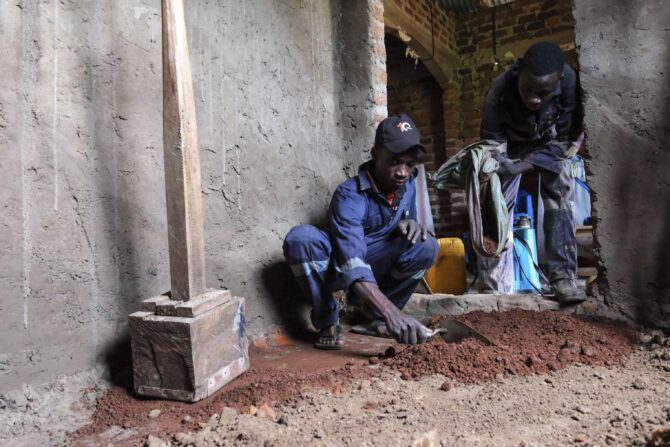
Income from the federal program that is the largest source of financing for low-cost rental housing has dropped off sharply.
|
||||||||||||||||||||||||||||||||||||||||||||||||||||||||||||||||||||||||||||||||||||||||||||||||||||||||||||||||||||||||||||||||||||||||||||||||||||||||||||||||||||||||||||||||||||||||||||||||||||||||||||||||||||||||||||||||||||||||||||||||||||||||||||||||||||||||||||||||||||||||||||||||||||||||||||||||||||||||||||||||||||||||||||||||||||||||||||||||||||||||||||||||||||||||||||||||||||||||||||||||||||||

|
LOW-INCOME-HOUSING TAX CREDITS: HOW THEY WORK
|