

March 10, 2011 | Read Time: 5 minutes
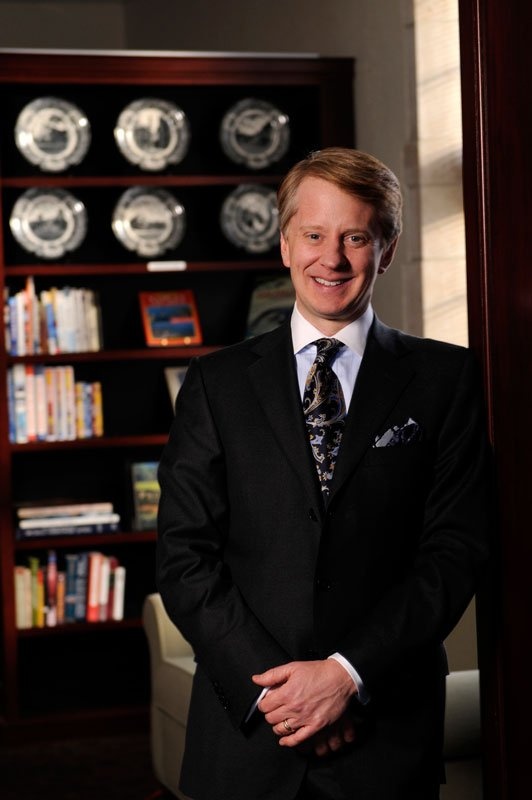
On the secretly taped video of NPR’s top fund raiser, Ronald Schiller, that has led to a media storm and the resignation of NPR’s chief executive, Mr. Schiller trashes conservatives and the Tea Party movement. He also talks about his home in New Hampshire and the history of Madeira wine.
That is to say, the nearly two-hour video of a lunch meeting between Mr. Schiller and another NPR official, Betsy Liley, and two men posing as prospective donors from a fictitious Muslim education group is, by turns, inflammatory, awkward, and banal.
The video, which stays trained nearly the entire time on Mr. Schiller’s profile as he eats risotto and a salad, was released Tuesday by James O’Keefe, the conservative activist who was also behind the undercover videos that damaged the now-defunct Association of Community Organizations for Reform Now, or Acorn, a group that advocated for low-income Americans.
In the latest instance, it appeared Mr. O’Keefe was looking to call out NPR for what many critics describe as its liberal bias and to give ammunition to Republicans in Congress who want to strip NPR and its member stations of tens of millions of dollars in federal funds.
Mr. O’Keefe’s colleagues said they were from the Muslim Education Action Center Trust—which they described as a fast-growing organization—and that they were interested in giving up to $5-million to public broadcasting. They didn’t have to wait long for Mr. Schiller to utter the words that would ultimately lead to his downfall.
Following their lunch orders and some small talk, Mr. Schiller responded to one of the prospective donors’ concerns about NPR’s potential loss of federal aid. The fund raiser said that the impact of such a loss on NPR’s budget overall would be “negligible” and that most stations, the ones that he described as having “very smart boards,” would not be much affected because they have taken steps to avoid relying on federal dollars. He said, though, that some stations, particularly those in rural areas and those that “were not smart and didn’t really look ahead,” would not survive the cuts.
An ‘Anti-Intellectual Mood’
Even with that prediction, Mr. Schiller highlighted the benefits of a more independent NPR, one, not subject to the whims of government decision-making or beholden to politicians, particularly Republicans, he said, who “play off of the belief among the general population that most of our funding comes from the government.”
Not including money from the Corporation for Public Broadcasting, which comes in the form of grants for specific projects, he said, federal money accounts for about 10 percent of the total budgets of NPR and its local radio stations.
A follow-up question from the other prospective donor about whether it is the Republicans in the House or the Senate putting up the loudest fight against NPR led Mr. Schiller to, as he said, take off “his NPR hat” and “talk personally.” And here, he was at his most provocative.
In this part of the video, which has been widely distributed as part of the edited, 12-minute version of the conversation, Mr. Schiller said that there is a “real anti-intellectual mood” among “a significant part of the Republican party” and that the party, “particularly the Tea Party is fanatically involved with people’s personal lives and very fundamentally Christian, and I wouldn’t even call it Christian; it’s this weird evangelical kind of move.”
As Mr. Schiller spoke further about the Tea Party, one of the donors interjected to call the group “radical, racist, Islamaphobic,” to which Mr. Schiller added: “And not just Islamaphobic but really xenophobic. I mean, basically, they believe in sort of white, middle-America, gun-toting, I mean, it’s scary. They’re seriously racist.”
Describing a ‘Firewall’
Other times in the video, Mr. Schiller fails to take the bait offered by the men posing as donors.
He nodded and kept eating when one of the donors said that “Jews do sort of control the media, or certainly the Zionists.” And Mr. Schiller laughed when the man joked that his friends call NPR “National Palestinian Radio,” because, according to the man, it is one of the few news-media outlets to offer the Palestinian perspective.
But Mr. Schiller’s response was all about NPR’s dedication to presenting the news in an unbiased manner —a point he hit on repeatedly during the meeting, describing “a big firewall between funding and reporting.” And when the men posing as donors talked about their desire to support NPR so it can “fight back against Fox News” and other TV and radio stations known for their conservative bent, Mr. Schiller answered that NPR doesn’t raise money to run certain kinds of stories but instead to help its journalists do their job of balanced reporting.
Later, when pressed, Mr. Schiller admits that “every dollar that comes from any source has a string attached” but that NPR makes it clear to donors that they cannot influence the news. For example, he said, NPR broke ties with a “very prominent Jewish philanthropic family that had been supporting NPR for over a decade, very generously” when the family said that NPR had to cut down on its “Palestinian coverage.” Mr. Schiller didn’t name the family or offer any other details.
Near the end of the meal, Mr. Schiller asked the men posing as donors about “the next steps,” and one tells him that his organization’s board meets again in July to decide about gifts, including the $5-million he had mentioned, though, he said, it might not all go to NPR.




