Unorthodox Leader of Cleveland Fund Pushes New Ideas to Bolster City’s Economy

By Ben Gose
Senior Editor

March 7, 2010 | Read Time: 8 minutes
Cleveland
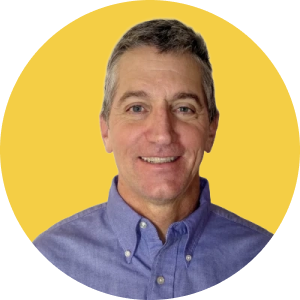
As the board of the Cleveland Foundation sifted through résumés seven years ago, an unorthodox candidate for chief executive stood out: Ronald B. Richard had served as a diplomat in Japan, managed a major division for Panasonic, and led the Central Intelligence Agency’s venture-capital fund. Unlike nearly all the other candidates, Mr. Richard had never held a significant position in philanthropy. But the board of one of the country’s largest community foundations tapped him anyway, thinking that Mr. Richard’s business acumen, diplomacy skills, and appetite for risky bets might help the foundation craft an aggressive new strategy to help revive Cleveland’s moribund economy.
“We were helping the disadvantaged, the arts, and the core institutions in Cleveland,” says David Goldberg, chairman of the $1.8-billion foundation’s board of trustees. “But the thing we were not focused on was economic development. If you don’t figure out how to improve the economy, there’s not going to be money to turn on the lights at the Cleveland Orchestra.”
Major Overhaul
Mr. Richard has lived up to expectations. He has led a major overhaul of the 96-year-old Cleveland Foundation—the nation’s first community foundation—turning it into a venture-capital fund of sorts, churning out ideas for kick-starting the city’s economy. Mr. Richard estimates that roughly 85 percent of the $33-million in annual spending that the foundation directly controls goes to foundation-generated projects. (Another $47-million per year goes mainly to projects earmarked by the foundation’s donors.)
The foundation has spent about $1-million to study the possibility of putting giant wind turbines in Lake Erie. It has made significant changes to its staff, including hiring Jorge Delgado as the foundation’s international-relations director to travel the world to try to convince businesses in countries like Germany and Costa Rica to open offices in Cleveland.
And the foundation is helping to start a series of companies—including a commercial laundry and a solar-panel installation business—that will employ low-income Clevelanders and allow them to purchase equity stakes.
It’s too early to say whether these and other concepts will succeed, but Mr. Richard says someday such efforts may provide a route out of the city’s economic malaise.
“We need to try everything that could be feasible,” he says. “If anyone has a better idea than the 40 ideas we’re working on right now, we’d love to hear it.”
A Blessing and a Curse
Throughout the country, community foundations trumpet their leadership and local impact, as they try to differentiate themselves from commercial providers of donor-advised funds. But some experts say more community foundations should follow in the steps of the Cleveland Foundation and move more boldly into economic development.
“What the foundation has done under Ronn’s leadership provides a model for where I believe other community foundations need to go,” says Ben Hecht, president of Living Cities, a coalition of mostly private foundations that focuses on improving urban areas. “They take a proactive approach to helping the community understand what its problems are, and what some game-changing solutions might be, and then they’re willing to put money on the table.”
Others see a potential downside as such an influential foundation wades into economic development. The foundation’s investments could skew market forces and, in a worst-case scenario, prevent the region’s best business ideas from bubbling to the surface. “It’s both a blessing and curse,” says Ed Morrison, a Cleveland resident and an economist at Purdue University’s Center for Regional Development. “The blessing is they have a lot of money. The curse can be if the foundation plays an inordinate or heavy-handed role in directing both economic and social policy. With too much money, you don’t learn from mistakes—you just run away from them.”
Anticipating Flops
Last month, Mr. Richard visited one of his favorite potential game-changers—a gleaming new commercial-laundry facility on the edge of the troubled Glenville neighborhood.
The Evergreen Cooperative Laundry is based on a model developed in Mondragón, Spain. It hires low-income workers from Glenville, many with criminal pasts, and the workers will have the opportunity to buy shares in the company. Mr. Richard says profit-sharing payments may accumulate to $65,000 per worker when they vest after eight or nine years—enough to buy a house here.
The Cleveland Foundation has put $750,000 into the project, and another $2.25-million into three other start-up businesses.
Ten percent of the profits from the companies will be recycled into a fund to start new cooperative ventures that will employ even more Cleveland residents, creating a continuous cycle of employment.
Of course, all these plans require the laundry to actually turn a profit. During last month’s visit, Mr. Richard was surprised to learn that it was operating at only 10 percent capacity some four months after it had opened.
He thinks the laundry will eventually get more business and thrive, and he is prepared to help. “You’ve got to be ruthless about calling me—I’m really good at sales calls,” he told the laundry’s top executives. (Later that afternoon, he cornered Oliver Henkel, chief external affairs officer at the Cleveland Clinic, one of the city’s biggest employers, to inquire why the hospital had not yet steered business to the laundry.)
But he knows it is possible the laundry won’t make it. While working at the CIA’s venture-capital fund, he says he fully expected 80 percent of the businesses he supported to fail. Shortly after joining the Cleveland Foundation, he queried his board members: Could they stomach a flop, including the humiliation of seeing a foundation-backed failure written up on the front page of the local newspaper? Board members said they could.
“I can assure you that some of these businesses will fail,” Mr. Richard says. “The alternative is safe but not very impactful grant making.”
Meeting with Gang Leaders
Mr. Richard often collaborates with the heads of three large local employers—the Cleveland Clinic, University Hospitals, and Case Western Reserve University. He has formed partnerships with those institutions on 15 projects, including several to improve blighted neighborhoods near the bustling University Circle area.
When not mingling with Cleveland’s power elite, Mr. Richard likes to stay in touch with the people the fund is trying to help. He regularly meets with gang leaders in his office, he says. “He’s remarkable in his equanimity in difficult situations,” says Delos M. Cosgrove, president of the Cleveland Clinic. “He is somebody who easily makes the transition from being analytical about a problem to really being empathetic.”
Not everyone gives Mr. Richard high praise. He has faced the fiercest public criticism of his tenure in the past two months after the foundation decided to sharply cut support for the Fund for Our Economic Future, a regional collaborative.
Some of the foundation’s high-profile projects have drawn mixed reviews. Mr. Richard has pushed since his arrival in Cleveland for wind turbines in Lake Erie, but some economists doubt the project will be cost-effective relative to land-based turbines. The best-case scenario has five or more turbines in the lake by year-end 2012. The turbines would provide only a small amount of the city’s power, but would symbolize its efforts to become a manufacturing hub for wind-turbine components.
“We’re getting really close,” Mr. Richard says. “If it doesn’t happen, it will break my heart.”
Others say the foundation’s international efforts seem to have yielded relatively little business activity for Cleveland. Lately, Mr. Richard seems most interested in Cuba, traveling twice to the country in the past year to arrange cultural exchanges and to establish relationships should the United States ever end its trade embargo with the country.
“I don’t have a clue about the Cuba or Costa Rica initiatives,” says David Abbott, executive director of the $422-million George Gund Foundation, which is based in Cleveland. “I don’t understand them, and I don’t understand their connection to Cleveland.”
Mr. Richard compares the Cuba work to his research-and-development days at Panasonic, saying it’s crucial to have products in the pipeline, even if their commercial viability is questionable. “We’re going to make everyone’s head spin if and when Cuba opens up,” he insists.
And, despite years of effort by the Cleveland Foundation, the Fund for Our Economic Future, and others, Cleveland’s economy remains weak. Last May, Forbes ranked Cleveland No. 3 on its list of “Worst Big Cities for Jobs,” citing its high unemployment, negative job growth, and high foreclosure rate.
Mr. Richard says he expected leading a foundation to be a breeze compared to the business world. “How hard can it be to give away money?” he gloated to his wife, Bess, after he was hired.
He now describes leading the foundation as the toughest job he has ever had, and “the most political by an order of magnitude.”
But he says he intends to retire here, and in recent months he has turned down higher-paying jobs to remain.
“This is a town that is worth revitalizing—it’s a great American city,” Mr. Richard says. “I go home at night exhausted, but I also look in the mirror and I say, ‘I’m not wasting my life.’”
His Current Roles:
- Hired by the $1.8-billion Cleveland Foundation, the country’s second-largest community foundation (tied with the New York Community Trust), in 2003.
- Named “infrastructure czar” for the State of Ohio by Gov. Ted Strickland in 2009, a volunteer position in which Mr. Richard oversees the spending of stimulus funds.
Previous Experience:
- Chief operating officer of In-Q-Tel, the Central Intelligence Agency’s venture-capital fund, from 2001 to 2002.
- A senior manager at Panasonic, where he was, among other things, president of research and development for North American operations, from 1988 to 2001.
- A foreign-service officer stationed in Japan and Washington, from 1983 to 1988.