
U.S. Ebola Case Could Spur Stronger Response From Donors

By Megan O’Neil
Contributor
October 1, 2014 | Read Time: 5 minutes
The first confirmed case of Ebola diagnosed in the United States could fuel what had previously been a restrained charitable response to an outbreak of the virus overseas.
The Centers for Disease Control and Prevention said Tuesday that a patient in Dallas, Tex., began showing symptoms five days after arriving on a flight from West Africa.
“It might generate a tremendous amount of media attention, which would spur donor involvement,” Bob Ottenhoff, chief executive of the Center for Disaster Philanthropy, told The Chronicle as news of the infected individual broke Tuesday.
A combination of factors that include a lack of a cataclysmic event, slow-building media coverage, and significant government intervention had tempered the philanthropic community’s response during the first several months of the outbreak, according to Mr. Ottenhoff and other experts.
“When you read stories that the American government is sending 3,000 military workers and spending hundreds of millions of dollars, some donors think, ‘Well good, this problem has now been addressed,’” Mr. Ottenhoff said. “Then there are other donors who think, ‘Given all this money, where are the gaps?’ and ‘Maybe we need to hold back a little while and figure out where the funding gaps are before we commit our money.’”
To be sure, there have been some major gifts aimed at stemming the outbreak, which started in Guinea in March and has since spread, sickening more than 6,574 and killing at least 3,091, according to the most recent update from the World Health Organization.
The Bill & Melinda Gates Foundation pledged $50-million to U.N. agencies and others. The Paul G. Allen Family Foundation gave $9-million to the CDC, $2.8-million to the American Red Cross, and $100,000 in matching funds to the online-giving platform Global Giving.
The William and Flora Hewlett Foundation gave $5-million to several international health organizations.
The U.S. government has committed significant resources, including 3,000 people to build Ebola treatment units, train local health-care providers, and staff a Department of Defense hospital. USAID has spent more than $100-million fighting the outbreak. Last month, the agency said it was making an additional $75-million available.
Moving Faster
Still, in a speech at the United Nations in New York City on September 25, President Obama said the world was not moving fast enough to respond to the crisis. “More foundations can tap into the networks of support that they have to raise funds and awareness,” he said.
Those interviewed for this story described the rate of private giving as modest.
The American Red Cross has raised $98,000 from individual donors in addition to the gift from the Paul G. Allen Family Foundation. Jana Sweeny, director of international communications at the Red Cross, said the organization plans to put up a dedicated Ebola web page this week to try and drive more donations.
When donors see the government, the CDC, and the World Health Organization responding, a situation like the Ebola outbreak may not be “top of mind as a place to donate,” Ms. Sweeny said.
A spokesperson for Global Giving said the online-giving platform has raised a total of $353,924 from 2,540 donors for Ebola relief, in addition to the $100,000 matching gift from the Allen family, that is helping to fund 17 relief projects in Guinea, Liberia, and Sierra Leone.
George Salloum, vice president for finance and operations at SIM USA, said the Christian mission organization has incurred more than $1-million in costs for the evacuation, transportation, security, and quarantining of staff working in West Africa.
Two of its health-care workers, Nancy Writebol and Rick Sacra, were infected with Ebola in Liberia late in the summer, fueling what had previously been limited media attention. Mr. Salloum said that since then, he and SIM USA President Bruce Johnson have fielded dozens of interview requests.
In recent weeks, the organization has received “several hundred thousand dollars” in donations to support its mission in West Africa, he said, including “sizable” checks from three churches in the Charlotte, N.C., area where SIM USA is headquartered. He did not specify exactly how much the organization has raised so far. Total annual donations to the group are typically about $50-million, he said.
SIM USA has also seen a 15-percent increase in inquiries from those interested in joining the organization, Mr. Salloum said. “Things are starting to happen that should have happened six months ago, candidly,” he added. “But better late than never, I guess.”
Publicity Brings Gifts
Samaritan’s Purse, another Christian organization operating in West Africa, also found itself in the spotlight in August after one of its doctors, Kent Brantly, who worked with Ms. Writebol, was infected and transported to Emory University Hospital where he recovered.
In an email, Samaritan’s Purse said that so far, the organization has seen a 13-percent increase in cash contributions compared to the same period last year. Of the new donations, $4.4-million was designated for Ebola relief.
“It has come from small and large individual donors as well as churches, foundations, and businesses,” the organization said. “One very large donor had not given in several years, but God laid it in their heart to invest in the response to this crisis.”
The publicity surrounding the American health workers’ infections heightened awareness with America donors, Samaritan’s Purse said.
“As with HIV/AIDS several years ago, it took time and exposure for people to understand the scope and severity of the epidemic,” Samaritan’s Purse said. “When people began to understand the magnitude of the Ebola crisis and the devastation to families, cities, and even entire countries, they responded generously.”
Last week, the Center for Disaster Philanthropy established its own Ebola Action Fund in response to interest from donors looking to help but not entirely certain how to contribute, Mr. Ottenhoff said. A worst-case scenario projection from the CDC that the number of infected could climb to 1.4-million next year, and speculation about the outbreak spreading the United States, has captured the public’s attention, he said.
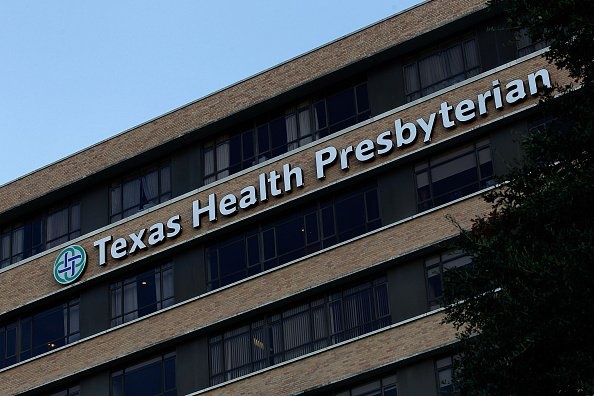
On Tuesday, that speculation became reality when Thomas Frieden, director of the CDC, confirmed that a patient at Texas Health Presbyterian Hospital Dallas was diagnosed with Ebola. The individual had traveled to the United States from Liberia to visit family, Mr. Frieden said during a news conference. The patient is being kept in isolation, and Mr. Frieden expressed confidence that the case would be contained.






