

May 2, 2016 | Read Time: 2 minutes
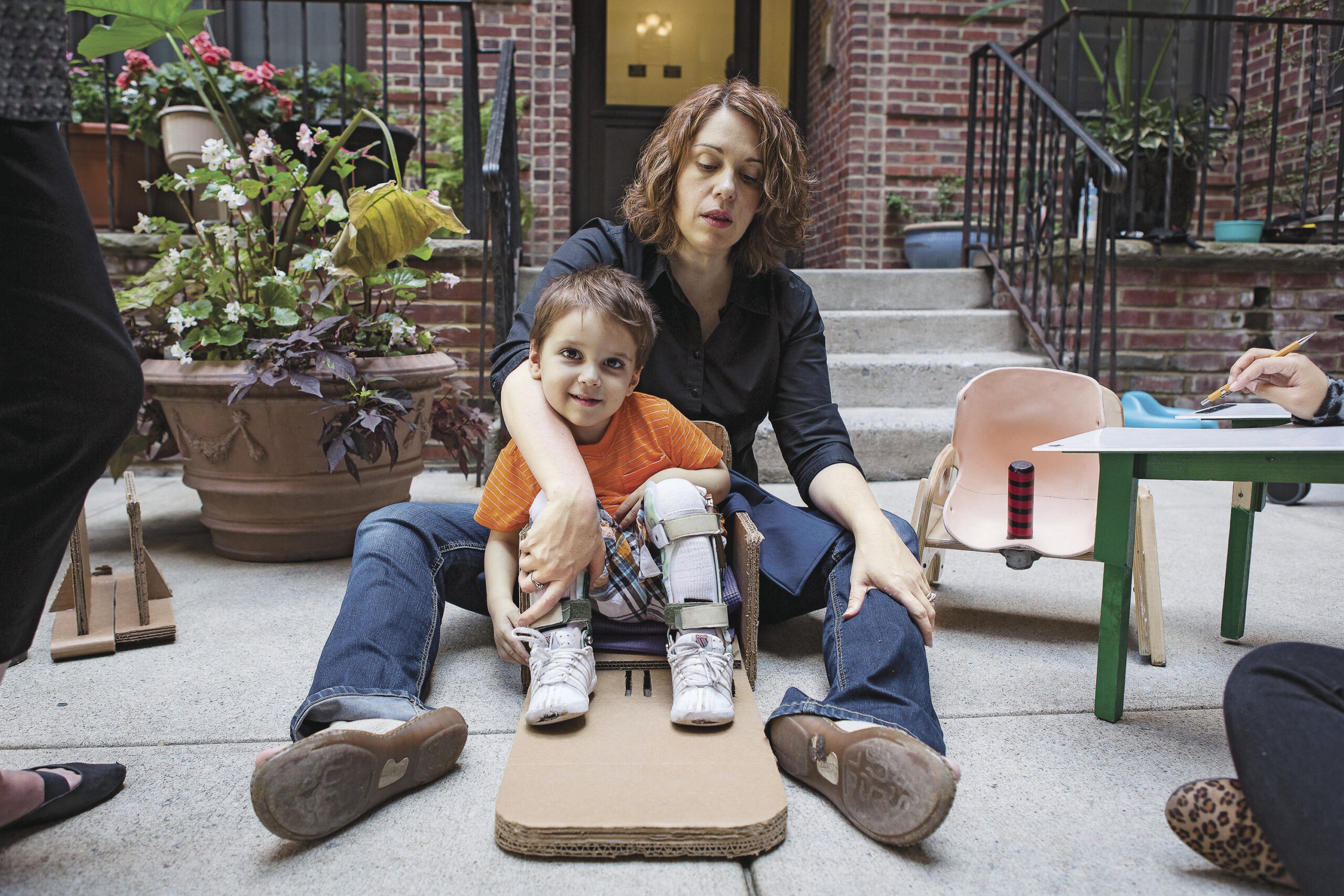
One of Shannon Thomason’s earliest childhood memories is feeling the wind on her face as she rode on the back of her father’s bike — and she wanted to share the experience with her son. But Emmett has cerebral palsy and can’t sit on his own, and Ms. Thomason couldn’t find a bike seat that would keep him safe.
Enter the Adaptive Design Association, a New York charity that creates custom equipment for children with disabilities. The nonprofit modified a bike seat with a full vest and wide strap to support the four-year old. It also built Emmett a special portable chalkboard desk that allows him to join other neighborhood kids to create chalk art in the courtyard of their apartment building, without assistance.
Alex Truesdell, the nonprofit’s founder, started building adaptations for people with disabilities in the 1980s when her aunt, Lynn Valley, lost the use of her fingers after a spinal cord injury. Even today, people with disabilities are discriminated against and suffer high levels of underemployment, poverty, and depression, says Ms. Truesdell.
“It’s a very serious problem in the human family,” she says. “We tackle it by making sure that a child is not exiled off to the side.”
To keep down costs and because children often outgrow the equipment quickly, Adaptive Design builds many of its modifications out of cardboard. The variety the nonprofit uses is a little more than half an inch thick and can withstand 1,100 pounds of pressure per square inch.
“It’s a very strong but very easy to work with material,” says Ms. Truesdell, who also teaches adaptive-design methods through in-person classes, internships, and videos. She’s working with people who are taking Adaptive Design’s model to 12 other cities.
In September, Ms. Truesdell won a MacArthur fellowship — a.k.a. a “genius grant” — which she says has raised awareness about adaptive technology for people with disabilities significantly: “That is one big stamp of approval.”





