April 29, 2012 | Read Time: 7 minutes
Five years ago, more than a dozen employees at the University of Virginia decided to meet together for lunch to talk about their work challenges and potential solutions. Now those employees have turned those lunches into a vibrant professional-development effort run and led entirely by people involved in fundraising, alumni affairs, and parent relations, as well as faculty members and administrators. The so-called Engagement Community attracts 500 people to lectures, Webinars, and other learning opportunities.
University officials say that rather than just offering general tips for improvement, like many typical staff-training options, the open, collegial spirit of the group emboldens employees to put specific on-the-job challenges and frustrations on the table. And they say the group’s evolution offers lessons in how charities can harness staff brain power to solve the kind of nagging inefficiencies organizations typically call in consultants to fix.
Mary Blair Zakaib, who helped create the group and now devotes part of her time organizing it, calls the problems the Engagement Community tackles common “riddles” that employees across the institution share when they are trying to attract supporters. For example, they might tackle practical questions like how to get young alumni to be more active or how to nudge small-money donors to give more.
Often, she says, the group’s collective wisdom produces better answers to such questions than employees can find working on their own. The gatherings the Engagement Community holds are “about giving me something [new] I could be doing today.”
What’s more, she says, the upgraded skills of workers have helped increase the university’s success in reaching donors, alumni, and parents. “This is an incredible growth driver for the institution,” she says.
Similar Problems
The idea for the group took shape after Ms. Zakaib kept leaving campus for conferences, only to find herself bumping into other University of Virginia staff members she’d never met before. Often she found that her work as managing director of the university’s office for alumni and parents paralleled what those co-workers did for academic departments or on-campus foundations.
When a small group of people who work in alumni relations decided to start meeting for lunch, they soon realized they’d been holed up in different offices grappling with the same problems. As they grew more comfortable with one another, they opened up more about their own failings and frustrations and began to bounce possible solutions off each other.
Many participants in the early Engagement Community sessions say they gained practical help for problems they were dealing with.
Elizabeth Piper, director of development at the Virginia Foundation for the Humanities, one of about 25 independent foundations housed at the university, said event planners in the Engagement Community helped her by offering solid leads on places to hold her board’s social and business events.
Since her foundation supports efforts to preserve and promote Virginia’s cultural heritage, knowledge of the history-rich campus comes in handy. She’s deepened her knowledge by tagging along on tours the Engagement Community conducts of historic buildings on campus.
“Thank God, they exist,” she says of the group. “You just learn things constantly.”
Welcoming Everyone
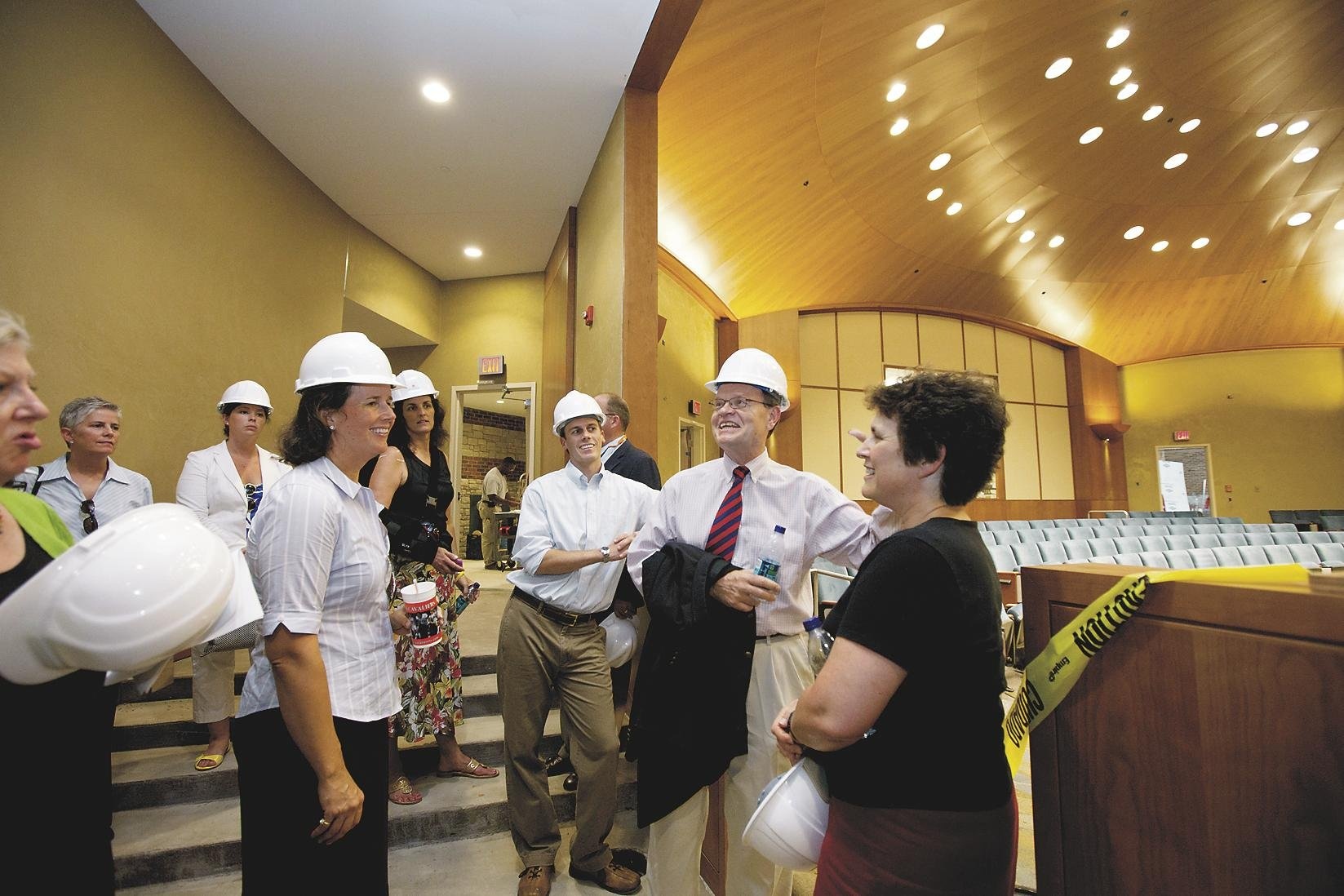
As word of the group spread, others wanted to join. Fundraisers and communications staff members started coming to the gathering. Even professors and top administrators began dropping by. The group welcomed them all.
“What I’ve tried to do is emphasize what we all share,” Ms. Zakaib says. Everybody involved in the Engagement Community, she says, is in some way “building relationships, sending out messages, trying to strengthen the institution. I really believe each of us has something to teach and something to learn.”
Once the group started multiplying in size, the university decided to give it formal support and a broader mandate. Ms. Zakaib’s office provides staff support, complete with data analysis to help turn ideas and hunches into statistically grounded recommendations.
Today about half of her job description revolves around the group’s care and feeding—literally so, at its lunches. (Her office has a budget of about $15,000 for the group’s gatherings and Webinars.)
Still, she resists calling it a formal program of the university.
She says a big part of the group’s charm and its success lie in its informal nature. It sprouted from what employees felt they needed, not what their bosses told them they should be doing.
“We didn’t have a mandate to create a new continuing-ed program for employees, with a huge rollout plan,” she says. “I’m not in a training group. I’m not in HR. I’m just someone trying to tap into all the knowledge and resources out there.”
Eases Communications
While the Engagement Community holds formal training programs, there is an understanding that anyone can contact her or her office to discuss problems, so anyone around the campus can float an idea or a question. Ms. Zakaib enlists William Maisannes, whom she calls the chief “data wrangler” for the group, to crunch the numbers. For instance, she put him to work recently after realizing many students’ parents weren’t opening e-mails from the institution. Parents wrongly thought the messages were directed solely at their children.
The engagement group experimented by sending e-mails with different subjects to different parents: Some said simply, “Join us for …” and others said, “UVa Parents: Join us for …”. When the word “parents” was in the subject line, 46 percent opened the messages.
That’s the kind of practical insight people in schools and foundations across the campus can take advantage of, says Mr. Maisannes. But without the Engagement Community, they might not have a way to tap into research about what works.
Now the Engagement Community has created a committee to craft snapshots of each school at UVa so it will be easier to see which ones are doing the best getting people of different ages and backgrounds to donate, volunteer, or otherwise help the institution. As each snapshot is finished, the committee shares it with the others. Such information can be invaluable for fundraisers, says Mr. Maisannes. (Nearly 140 Engagement Communities members are fundraisers, more than any other job title.)
Fundraisers get judged by how much they bring in and don’t have time to try untested methods. Mr. Maisannes says that he and Ms. Zakaib offer a shortcut.
An Adaptable Model
The Engagement Community idea can be adapted in small or large nonprofit organizations, says Ms. Zakaib. Given its organic, grass-roots quality, she says, it can be as small and simple or as large and complex as the participants decide to make it.
Her boss, Cindy Fredrick, agrees. As associate vice president for alumni and parent engagement—and a veteran of two decades working in and leading nonprofit groups—Ms. Fredrick says large charities and foundations face many of the same organizational and communications challenges the University of Virginia has tackled through its group.
She adds that small nonprofits might also benefit, provided employees from a dozen or so small nonprofits can get together to chat and can overcome the natural competitive urges that come when vying for donor dollars.
She says the group doesn’t just improve efficiency: “I look at it as a staff-retention, staff-satisfaction tool. People want to be part of a community to make a difference.”
At a recent meeting of the Engagement Community, someone asked about Pinterest, the hot new social network. Ms. Zakaib said she’s thinking of gathering some people to talk about it, and she predicts participants will volunteer to do what it takes to teach others what works.
“You respond to needs,” she says. “We’re not making any huge expectations, we’re just saying, OK, we are taking one more step. We’re not trying to do something huge and official. We’re just a bunch of people who want to learn from each other.”
See the entire continuing-education guide »