
War on Poverty Story: Father’s Rise From a Poor City Inspires a Daughter’s Antipoverty Work

By Lisa R. Jackson
Contributor
January 23, 2014 | Read Time: 3 minutes
To commemorate the 50th anniversary of the War on Poverty this year, The Chronicle asked readers to submit stories about how the effort affected their careers. Lisa R. Jackson shared her story.
As I started to think about the connections between my professional life and the War on Poverty, my father came immediately to mind.
His name was George G. Richardson, and he grew up in the 1940s and ’50s in East St. Louis, Ill., one of the nation’s poorest cities then and now. His father and mother, both African-Americans, worked service jobs for wealthy white families. Like so many people in his community, no great potential was pinned on him for education or employment, but he had greater expectations for himself.
He made his way to Bowling Green University and then joined the Air Force before using the GI Bill to attend medical school at Howard University.
My father eventually settled in Englewood, Calif., and opened an obstetrics and gynecology practice for low-income families, most of whom were able to see him only because of the creation of Medicaid, a core War on Poverty program. Because his business catered to people who depended on public assistance, he struggled endlessly to reach financial sustainability, but he never complained. He found comfort and a sense of mission working with people who were just like the ones he grew up with in East St. Louis.
After years of practicing medicine, he discovered that he had an appetite for further education. He obtained a law degree, becoming one of a handful of African-Americans at the time to hold both medical and legal degrees.
The example he set led me to the nonprofit sector, where over the years my work has focused on helping low-income students of color access high-quality education.
As I have matured professionally, a contradiction about the War on Poverty programs and the lived experience of people who received benefits from them became clearer in my mind. The federal support my father and his patients received helped them get a foot on the social-mobility ladder (and helped lead to the opportunities I have had in my life), but those programs didn’t motivate or sustain them as they tried to climb it. That came from inside and from their own determination to realize the destiny they wanted for themselves and their families.
In my role now, I’m working with nonprofits that are operating innovative programs that aim to foster this determination and unlock social mobility.
For example, the Family Independence Initiative brings small groups of families together in neighborhoods and lets them set the agenda for improving their lives. The families support each other, develop goals and plans, and provide data to the Family Independence Initiative, which, in return, helps them get the right resources to work toward their goals—and uses the data to continually update its programs.
It’s important for our sector to observe, and in some cases celebrate, the 50th Anniversary of the War on Poverty. Many lives have been improved as a result of War on Poverty programs.
But solving the problem of poverty has just as much to do with changing our mind-set about why poverty exists, who the people living in poverty are, and what people living in poverty are capable of doing. Only then can we can move beyond modestly improving lives to truly transforming them.
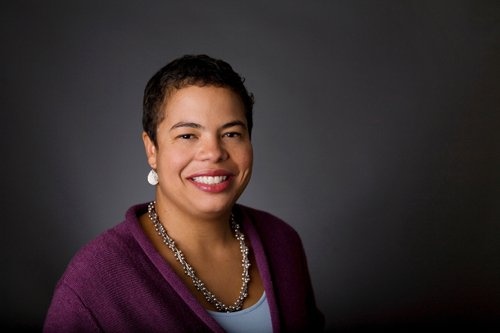
Lisa R. Jackson is managing partner of portfolio investments at New Profit, a venture-philanthropy organization.
How has the War on Poverty influenced your career? Send your story to editor@philanthropy.com.
See all of our coverage timed to the 50th anniversary of the War on Poverty in this special section.




