
War on Poverty Story: Son of Migrant Parents Now Advocates for Low-Wage Workers

By Luis Sandoval
Contributor
February 6, 2014 | Read Time: 3 minutes
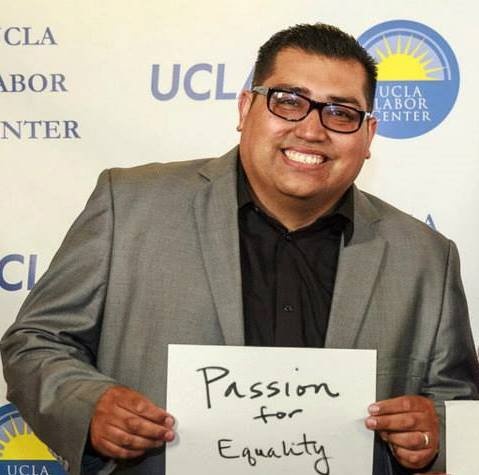
To commemorate the 50th anniversary of the War on Poverty this year, The Chronicle asked readers to submit stories about how the effort affected their careers. Luis Sandoval shared his story.
As someone who has been a direct beneficiary of programs intended to uplift families from poverty, I am conscious of the battles and victories that have been part of War on Poverty. I attribute my personal and professional aspirations to the cultural, social, and political climate I experienced in my formative years.
Coming from a humble migrant family, I was able to see the correlation between my community’s well-being and poverty. Without the crucial legislative victories accomplished as part of the War on Poverty, I would not be where I am today.
The Child Nutrition Act and National School Lunch Act provided me free breakfast and lunch at school. Too often these were my only meals of the entire day. The Migrant Education Program, introduced by the Elementary and Secondary Education Act, helped ensure that I was not penalized for disparities among schools and provided much-needed academic support.
Through high school, I was encouraged to participate in a federal outreach program, Talent Search, which provides help to low-income and first-generation college-bound students. I became the first in my family to enroll in a university. While in college, I heavily relied on federal financial aid, including work-study and student loans.
These collective experiences have led me to fight inequalities rooted in poverty.
Over the past 15 years, I have advocated for programs that lift families out of poverty through education. I have served in numerous capacities as a university administrator, providing direct leadership and oversight to state and federally funded programs. In this capacity, I have been responsible for developing programming and best practices related to diversity and inclusivity for undergraduate outreach and recruitment efforts, retention programs, and academic support services.
I have served as an administrator of multiple federally funded projects, including Talent Search, Student Support Services, and migrant programs, all created as part of the War on Poverty. I have been responsible for programs geared to at-risk students and those seeking careers in the sciences.
Now as an advocate for immigrants, I am committed to fighting the linguistic, civic, and economic barriers that restrain upward mobility for immigrant households. I promote education and training programs that help immigrants move up from low-wage jobs and increase their economic security.
I may never know the names or titles of the people who crafted the War on Poverty or be able to thank them personally. But the best way for me to show my gratitude is by continuing to fight to end poverty. My philosophy of success is not measured by wealth or title but rather by my ability to advocate for families who are at risk, underserved, and without a voice. I am aware that this fight is never-ending. Fifty years have passed and we are far from a complete victory.
Luis Sandoval is development manager at Building Skills Partnership, which provides vocational education and training to low-wage janitors, guards, and other workers who provide services in buildings.
How has the War on Poverty influenced your career? Send your story to editor@philanthropy.com.
See all of our coverage timed to the 50th anniversary of the War on Poverty in this special section.




