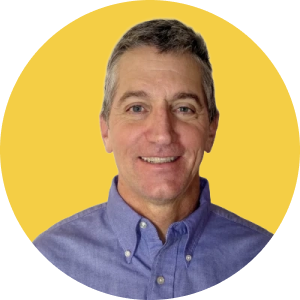
Warren Buffett’s Eldest Son Shifts Giving Focus to Humanitarian Causes

By Ben Gose
Senior Editor
July 20, 2006 | Read Time: 5 minutes
Howard G. Buffett is the most restless of the Buffett children. “Type A is not quite strong enough,” says his sister,
|
ALSO SEE: Article: Contribution to History Article: Buffett Children Forge Their Own Philanthropic Paths Article: A Passion for Kids and Education Fuels Giving for One Buffett Child Article: Children and Women Are Focus of Youngest Buffett’s Philanthropy Article: A Family Foundation Is About to Become One of the Nation’s Wealthiest Article: Philanthropic World Voices Mixed Reaction on Buffett’s Gift to Gates Fund Article: How Buffett’s Gifts Will Work Table: Philanthropy’s $60-Billion Behemoth |
Susie. “I can’t decide if he’s ever slept in his life.”
That energy carries over to his philanthropy. More than 80 percent of his giving through the Howard G. Buffett Foundation goes to causes outside North America, and Mr. Buffett says that he visits 12 countries a year to learn firsthand how his giving can be most effective.
Those visits have led to a major shift in his grant making. Mr. Buffett used to give primarily to conservation-related causes — including charities that try to protect mountain lions in the United States, and cheetahs and mountain gorillas in Africa. But the trips to Africa opened his eyes to endemic poverty adjacent to the biodiversity he sought to protect.
“I ended up seeing that you can’t do anything in conservation work unless you take care of the human issues first,” Mr. Buffett says. “A friend of mine once said, ‘You’re not going to get someone to starve to save a tree.’”
At present, only about half of Mr. Buffett’s giving supports humanitarian causes. But he expects his annual giving to soon rise eightfold, to more than $55-million, thanks to his father’s gift last month of more than $1-billion worth of Berkshire Hathaway stock. Once he figures out where to place that money, he expects 85 percent of his donations to go to humanitarian causes, such as providing safe drinking water.
Howard Buffett grows corn and soybeans on 840 acres in Decatur, Ill., where he moved in 1992 to become a spokesman for the Archer Daniels Midland Company. He resigned from the agricultural-products company in 1995 when its executives became embroiled in a price-fixing scheme. Now, aside from his farming and foundation work, he takes photographs of wildlife and local residents on his many foreign travels, and he has written six books featuring his pictures.
“My life is fun,” Mr. Buffett says. “I love what I do. I love farming, and I love going to different countries and coming back and documenting the experience with photographs.”
Immigration Is Next Challenge
During a phone interview last month, Mr. Buffett spoke from a hotel room near the Mexican border in Arizona, where he was making daily trips with U.S. Border Patrol agents to get a firsthand feel for immigration issues.
He would like to begin making more grants in Latin America. He says that during stops by patrol agents, he was told by female illegal immigrants from Guatemala and El Salvador that they had been sexually harassed by Mexican police as they passed through the country en route to the United States.
“We have a humanitarian crisis on our border,” Mr. Buffett says. “Nobody is dealing with it from that perspective.”
Even so, he is not quite sure what role his foundation could play. “This is one area where it’s been hard for me to get my hands around how to be productive,” Mr. Buffett says.
For now, the fund is focusing on three causes: clean water in Africa and Latin America, eliminating viruses from basic staple crops in Africa, and nutrition in countries like Chad, Pakistan, and Sudan.
He is negotiating a large grant to the Donald Danforth Plant Science Center, in St. Louis. The center is working on a genetically modified variety of cassava, a starchy staple in Africa that is resistant to viruses. “Viruses can spoil 50 percent of the crop yield,” Mr. Buffett says. “If you can eliminate those issues, you can double the number of people you feed, in a sustainable fashion.”
His foundation has four full-time staff members, including one focused solely on projects in Africa. He anticipates adding another person focused on Latin America.
Mr. Buffett had one child with his wife, Devon, and says he considers her four children from a previous marriage to be his own. The eldest daughter, Erin, is 36, and will join the board of Mr. Buffett’s foundation in January.
But he shares his father’s strong convictions that the children should make their own way in the world. Both Susie and Peter, the youngest of Warren Buffett’s three children, receive modest salaries from their foundations, but Mr. Buffett does not — and he doesn’t intend for anyone else in his family to, either.
“The one thing I’ve said to all of them — whether I’m dead or alive — is that none of our kids should ever be paid by the foundation,” Mr. Buffett says.
|
History: Established in 1999 by Howard G. Buffett, son of the billionaire Warren E. Buffett Purpose and areas of support: The foundation supports charities that provide clean water in Africa and Latin America, work to eliminate viruses from staple crops in Africa, and provide nutrition in poor countries. The foundation also makes grants to charities that protect important ecosystems and endangered animals. Assets: $130-million, plus a pledge of more than $1-billion in Berkshire Hathaway stock by Warren E. Buffett Key officials: Howard G. Buffett, president; Devon G. Buffett, executive vice president, Trisha Cook, treasurer. Application procedures: The foundation does not accept unsolicited proposals. Address: 158 West Prairie, Suite 107, Decatur, Ill. 62523 |