Wells Fargo Supports Banking and Home Buyers in Low-Income Areas

By Ben Gose
Senior Editor
July 14, 2013 | Read Time: 3 minutes
Wells Fargo proved during the financial crisis that it could move quickly to seize an opportunity, pouncing on Wachovia Bank in 2008 when its troubled peer was on the verge of failure.
With the economy on the upswing, Wells Fargo is now showing that it can be just as opportunistic with its philanthropy.
In 2007, Wachovia agreed to sponsor the Next awards, a program operated by Opportunity Finance Network that provides millions of dollars each year to innovative nonprofit groups that provide banking services in neighborhoods with a lot of poor people.
Wells Fargo inherited Wachovia’s $16.75-million, five-year commitment, but Mark Pinsky, Opportunity Finance’s president, says that other banks were approaching him about taking over sponsorship of the awards as the initial commitment wound down.
Mr. Pinsky scheduled a meeting with Wells Fargo and presented a plan to keep the company on as sponsor for five more years, through an identical $16.75-million commitment.
“We sat down and said ‘Here’s what we’re thinking,’ and they said, ‘We’re in,’” Mr. Pinsky recalls. “Their decision to renew took less than 30 seconds.”
Helping Home Buyers
Wells Fargo gave away more cash, $315.8-million, than any other company in The Chronicle’s 2012 survey of corporate giving, thanks largely to a second grant that Wells Fargo made last year.
The company’s $77-million grant to NeighborWorks America is more than three times as large as ExxonMobil’s $22.1-million grant to the National Math & Science Initiative.
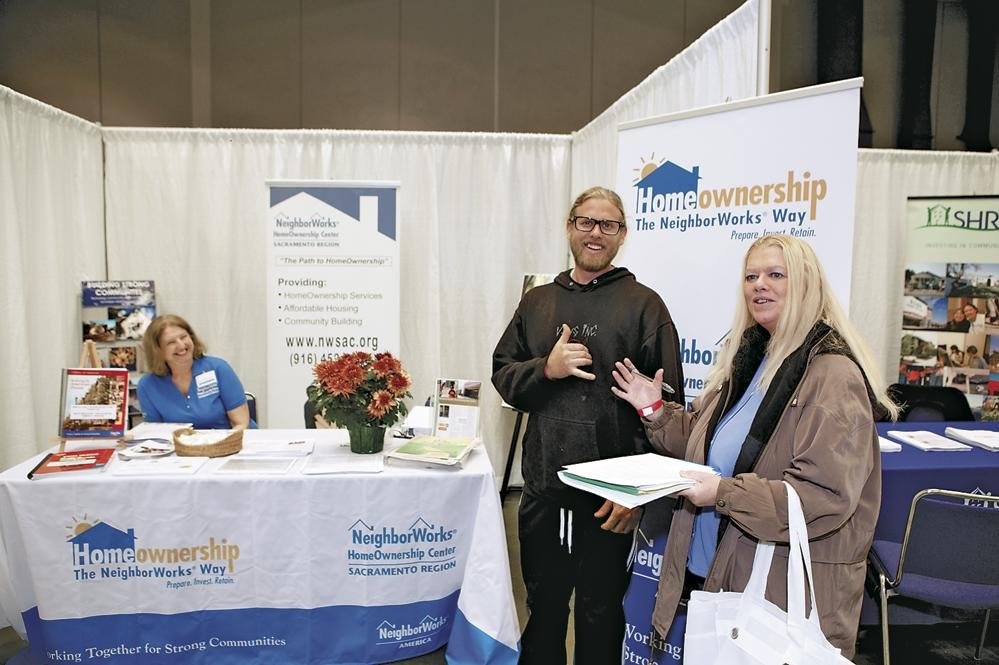
The NeighborWorks grant paid for the NeighborhoodLIFT program, which provides down-payment assistance to home buyers in cities that include Atlanta, Las Vegas, and Los Angeles.
Kimberly Jackson, head of the Wells Fargo Housing Foundation, says the company decided to help low- and moderate-income home buyers with down payments after discovering that foreclosed homes in beleaguered neighborhoods weren’t selling. Home buyers can receive from $15,000 to $30,000 in assistance. Some cities still have funds to distribute.
“It was an ‘all oars in the water’ effort to help,” Ms. Jackson says. “These were the neighborhoods that were really struggling to stay alive.“
Jim Nawrocki, a spokesman for the Wells Fargo Foundation, says the NeighborhoodLIFT program was a one-time effort and that the company’s giving may fall well below $300-million in 2013.
Motivation Questioned
Some skeptics of giving by banks view Wells Fargo’s huge grant in 2012 as an attempt to atone for its sins during the housing crisis.
Last year, Wells Fargo settled with the Justice Department over accusations that the company’s independent brokers had steered black and Hispanic residents into costlier mortgages than they did with white borrowers having the same credit risk. In July, some four months after launching NeighborhoodLIFT, Wells Fargo started a similar program called CityLIFT in eight cites as part of the settlement. Wells Fargo admitted no wrongdoing in the settlement and no longer uses independent brokers.
“Considering that Wells Fargo intentionally discriminated against black and Latino borrowers, it seems only right that they would target more of their philanthropy to help those very same people achieve homeownership,” says Sean Dobson, field director at the National Committee for Responsive Philanthropy, who wrote a report last year that was critical of bank philanthropy.
But Ms. Jackson notes that the company’s grant to start NeighborhoodLIFT predated the legal settlement. She says the company stepped forward to help because it saw the need, not out of guilt.
“There will be always be skeptics,” she says. “The onus is on us to remain focused. These neighborhoods need to be rebuilt and stabilized.”