What a Donor Learned After Giving $1 Million, $1,000 a Day

By Eden Stiffman
Senior Editor
August 10, 2015 | Read Time: 5 minutes
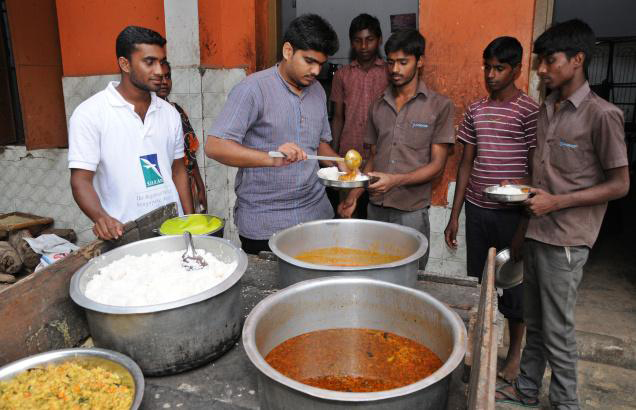
On January 1, 2013, the real-estate developer Ariel Nessel started giving out $1,000 a day, mainly to individuals with big ideas for projects that wouldn’t qualify for grants from larger foundations.
Since then, his foundation, called the Pollination Project, has made small grants in 57 countries for projects involving the environment, social justice, education, and community health. In late July, the organization gave out its 1,000th grant and its millionth dollar.
Mr. Nessel and Alissa Hauser, the foundation’s executive director, shared some of the lessons they’ve learned and their plans for the future (responses were lightly edited for brevity and clarity):
You’ve been making $1,000 grants every day for two and a half years. What have you learned?
Mr. Nessel: When we started off, it was hard for us to find evidence of this being done successfully. Now it’s been verified to us. We’re getting all those superstars we hoped to find, and we’re not having this incidence of fraud, or of people who aren’t living up to expectations. That was a possibility with something like this.
Ms. Hauser: One of the primary things that we’ve learned is how to fund the right people at the right time for the greatest impact. So that the money goes so much further than $1,000.
What you do consider your biggest successes?
Ms. Hauser: We’ve been seeing a lot of projects that are scaling. With one project, Lava Mae, they’re taking old municipal buses and turning them into mobile showers that go around to different agencies in San Francisco. When homeless people go to their appointments with a social worker or food bank, there’s nowhere to take a shower. There was barely a prototype when we funded Lava Mae, but they just completed their second bus after getting a $100,000 through the Google Impact Challenge last year. We just funded the first $1,000 to a sister project in New York City that Lava Mae is mentoring.
How has your grant-making strategy changed over time?
Mr. Nessel: When we started off, our board and a couple of other people evaluated all the grant dockets. As we got further in, Alissa really wanted to stress this idea of democratizing giving and pushing power to the edges, to people who normally don’t have access to capital, and having them help decide who gets the money.
Ms. Hauser: We now have nine teams focused on different issue areas around the world. We have about 60 grant advisers, and about 45 of them are grantees whom we’ve trained over time. The grant-award decisions are mostly made by other grantees.
Mr. Nessel, you started by giving your own money. Now the project has a daily giving program for outside contributors. Why did you decide to start that?
Mr. Nessel: Our emblem is pollination, which is considered one of most synergistic relationships in the natural world because it’s indecipherable who’s giving and who’s receiving. And that is the model for the way I want philanthropy to move. Bringing in more people who are givers allows them the opportunity of feeling the sense of contribution and connection that I felt when we got started.
Ms. Hauser: We didn’t necessarily set out to create a daily giving program, but someone approached us and said “I love this idea of giving every day” and wrote us a check for a dollar a day. Before we knew it, other people were wanting to do the same thing. We have somewhere in the neighborhood of 50 people who are giving between $1 and $20 per day. Within the last year, larger givers and foundations have started to approach us. For example, we just did a project with Levi Strauss & Co. doing youth environmental grants around the world.
What are your plans going forward?
Mr. Nessel: One funder wanted to do a Pollination Project in East Africa, so we’re moving in that direction. We just had our first evaluation by Kenyans for grant applications in Kenya, with a little guidance from us in the beginning. We’re ready to do the same thing in other areas of the world, like Cameroon and India, where we have the capacity, the know-how, and the relationships on the ground.
Ms. Hauser: This year [the author and real-estate investor] Alan Fox, through his family philanthropy, gave us $50,000 to start making impact grants — second-round funding of up to $5,000 each to grantees who’ve proven themselves. We want to expand into doing even more work to add value to these grants. We network the grantees with each other. We do a lot of promotion — every grantee ends up in the Huffington Post. We’ve also done a few Webinar trainings. We see a lot more potential to really develop some of these grantees as leaders.
This fall we’re going to start offering a “hidden gems list,” a semi-annual newsletter in which we’ll handpick our top projects ready for investment from outside funders.
What advice do you have for others who want to make grants on this scale?
Ms. Hauser: This requires building a network, especially if you’re doing one a day. More than anything else, the richness of our organization is absolutely not in the money we’re giving away. It’s in the relationships we build and the people we nurture; it’s in our community partners who help us identify grantees and applicants. When you’re doing small grants with people who’ve never applied for one before, they might be entrusting us with a dream that they’ve never told anyone about, and that’s a really fragile, vulnerable position. We’ve created an applicant’s bill of rights about how we want to behave as funders and what our applicants can count on us for. When you’re doing small grants, you’ve got to respect your applicants.