
July 6, 2016 | Read Time: 2 minutes
Nature is thriving in urban landscapes — if you know where to look.
Much of the available habitat in cities for creatures like spiders, snails, and slugs exists in backyards and other private spaces typically inaccessible to scientists.
“It’s absolutely necessary that you involve the public if you’re going to study urban biodiversity,” says Brian Brown, curator of entomology at the Natural History Museum of Los Angeles County and co-director of its new Urban Nature Research Center.
So with the help of “citizen scientists,” the center is working on what it calls the world’s largest urban biodiversity inventory. The SuperProject brings together existing research efforts like RASCals (Reptiles and Amphibians in Southern California), Slime (Snails and Slugs Living in Metropolitan Environments), and the Southern California Squirrel Survey to develop a better picture of the city’s biodiversity. The museum believes the collaborative work could serve as a model for other urban wildlife and environmental studies.
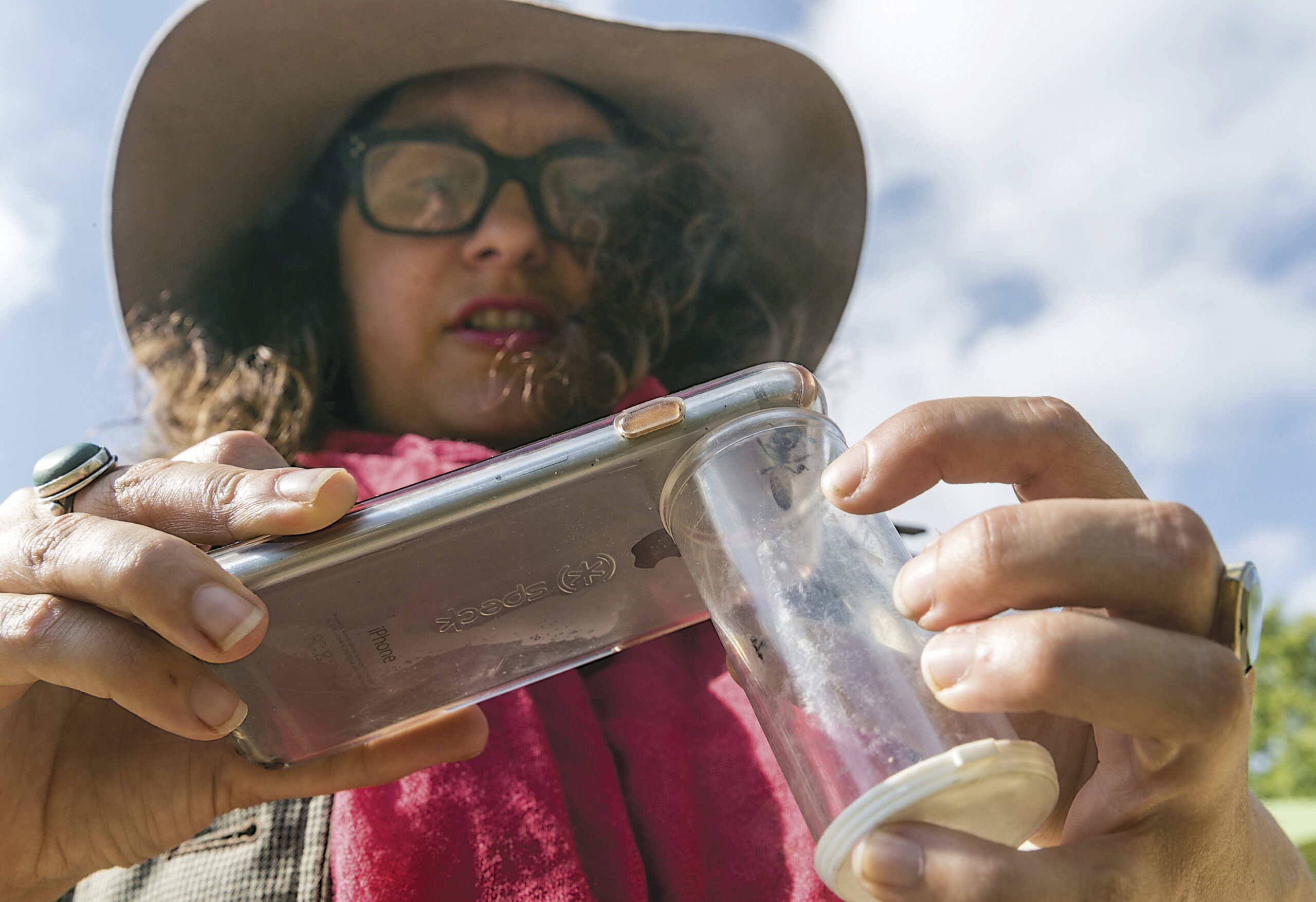
After completing a day of training on how to record data, participants post geotagged photos and other data to an app called iNaturalist, with which people from anywhere in the world can help identify specimens. Some residents bring organisms like spiders or insects directly into the museum.
Museum member Maiz Connolly has been surveying her own backyard and posting observations of creatures like fox squirrels, striped greenhouse slugs, and western fence lizards in the app since November. With the help of volunteers like Ms. Connolly, scientists have documented species that had never been recorded in the county or state before and have discovered 43 new species of flies that had never previously been documented.
Ms. Connolly feels connected to the spirit of collaboration the museum is fostering: “When we’re all working together, we can gather and connect so much more data than any little group of experts could do on their own.”