Windows of Hope: Mission Accomplished, a Nonprofit Group Takes Stock

By Jennifer C. Berkshire
Contributor
August 31, 2006 | Read Time: 3 minutes
For most charities, the decision to let the bulk of its staff members go would be an agonizing one, a
ALSO SEE:
Special Report: Renewal and Reckoning
Article: In Tragedy’s Wake
Article: Our Voices Together: Fighting Terrorism With Compassion
Article: My Good Deed: New Name Shows Lessons Learned
Article: Tuesday’s Children: After a Crisis, a Charity Turns a Corner
Article: Heroic Choices: A High-Profile Group Charts a Less-Glamorous Course
Article: Twin Towers Orphan Fund: With Needs Mounting, Money Issues Loom
sign of decline or at least financial uncertainty. But for the Windows of Hope Family Relief Fund, created to help the families of victims who worked in the food and beverage industry throughout the World Trade Center complex, trimming the staff’s size is a sign of progress.
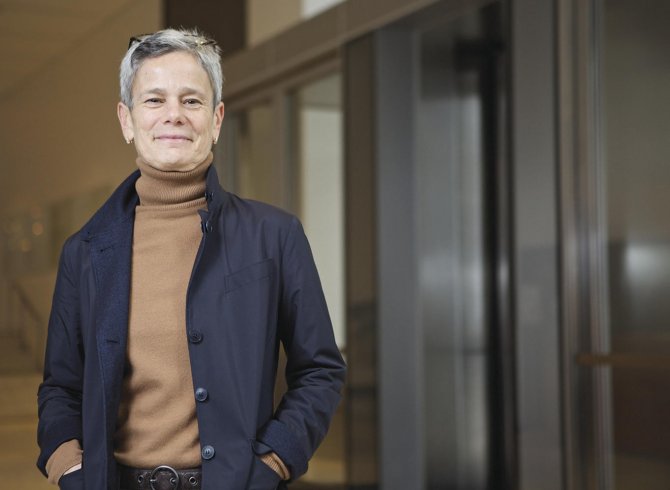
“We’ve really accomplished just about everything we’d hoped to,” says Darlene Dwyer, executive director of the charity. “That’s a really good feeling.”
Windows of Hope became something of a national sensation just a month after the terrorist attacks. Ms. Dwyer, who had worked as a public-relations consultant in the food and wine industry, along with several colleagues, came up with the idea of raising money from restaurants to help the families of cooks, busboys, servers, and bartenders killed in the attack.
Restaurants around the world were asked to donate 10 percent of their profits from meals served on October 11, 2001, and more than 4,000 restaurants contributed money.
Between those donations and contributions from individuals, who mailed in their gifts or gave via the charity’s Web site, Windows of Hope has raised more than $23-million, much of that in the months following the attacks. Today the charity continues to accept donations but is no longer actively soliciting funds.
So far the group has spent approximately $16-million to assist 258 people from 120 families that lost a loved one on September 11. That financial assistance, explains Ms. Dwyer, went to provide scholarship money for children and job training for adults.
“A lot of the kids have taken advantage of the education money and are going to private schools and parochial schools,” says Ms. Dwyer. Adults, too, she notes, have used the money to pay for English-as-a-second-language courses, skills training, even culinary school.
The charity also pledged to provide five years of health-care coverage for the families, a period that ends this year. Windows of Hope plans to continue to offer low-cost health plans to families and individuals who want them.
The remainder of the money has been invested by Bear, Stearns & Company, the New York investment bank, says Ms. Dwyer, and will continue to pay full education costs of the victims’ families, until the youngest children have completed college.
“We basically told our investors, ‘You’re under strict orders not to lose a nickel,’” says Ms. Dwyer. “We really want the education money to last.”
As the charity has begun to reach some of the goals it set for itself early on, it has also been scaling back. At the height of its efforts to find the relatives of people killed in the attacks, for example, Windows of Hope employed five case managers. Today, just one case manager remains.
“That level of case management just isn’t necessary anymore, and that’s a good thing,” says Ms. Dwyer, the only other paid staff member at the charity. “People have really begun to get on with their lives.”
And while Windows of Hope has no plans to close the office that the Bloomberg News service allows it to use rent-free — at least one staff member will be necessary to oversee disbursement of the education money — Ms. Dwyer herself has begun to think about moving on from the charity she helped start.
“It’s been five years, and that’s meant five years of thinking about September 11 every day,” she says.
But she hasn’t quite made up her mind about what to do next: “It will be hard to go back to promoting chefs after doing all of this.”