
With More People Involved in Fundraising, Giving Rose at Year’s End

By Timothy Sandoval
Contributor
January 28, 2016 | Read Time: 11 minutes
The YMCA of Greater New York’s approach to fundraising can be summed up by an adage: Many hands make light work.
Over the past two years, the organization’s six development staff members have started to devote more of their time to teaching volunteers and board members how to solicit donations.
And the results have been encouraging: The nonprofit grew total giving to about $13.4 million in 2015, a roughly 10 percent increase from 2014.
Gary Laermer, senior vice president and chief development officer for the nonprofit, credits much of that growth to the increased time spent with the Y’s 75-member all-volunteer development committee. The committee works to attract gifts mostly from individuals but also can help bring in some corporate and foundation support.
Such engaged volunteers “have the potential to be your strongest advocates,” says Mr. Laermer, who plans to keep adding more members to the fundraising committee.
Trends and New Data
Getting more people involved in fundraising, as Mr. Laermer and his team have done at the Y, is a trend that spread in 2015, a year in which it appears giving either grew or remained flat for many organizations.
Other common strategies among charities that gained or held ground in year-end giving included a growing reliance on major donors, capital campaigns as catalysts for broader giving, and the use of media old and new to promote causes.
While the stock market has been in turmoil and the political landscape is rife with uncertainty, some early indicators point to a strong year ahead for giving:
- Charitable giving will increase is by 4.1 percent in 2016 and by 4.3 percent in 2017, according to projections in a recent report by the Lilly Family School of Philanthropy at Indiana University and the consulting firm Marts & Lundy.
- Two of the biggest providers of donor-advised funds, Fidelity Charitable and Schwab Charitable, reported strong giving. Fidelity donors gave $3.1 billion in grants in 2015, a record amount. Schwab also reported an unprecedented giving year, with more than $1 billion distributed to charities, up 15 percent from 2014. The organization’s account holders contributed $2.23 billion to donor-advised funds in 2015, up from $1.86 billion in 2014. Donor-advised funds are an increasingly popular vehicle for large donors, who get a tax benefit for putting money into a fund and get to recommend grants from it over time.
- Network for Good, a processor of online gifts, saw donors give nearly $248 million in December, up 6 percent from the same period in 2014. Culture Change
As co-founder of Klein and Roth Consulting, Stephanie Roth advises small nonprofits on their fundraising. Most of the organizations she’s checked in with recently did at least as well or better in raising gifts in 2015 than in 2014.
And many, she has noticed, have started to build what is often called a “culture of philanthropy,” spreading fundraising tasks across the organization.
The idea was central to an influential 2013 report on the job pressures of development officers, titled “UnderDeveloped,” which many fundraisers still cite today.
“Where fundraising is really seen as part of everyone’s responsibility in the organization, I think those organizations did a lot better” in 2015, Ms. Roth said.
It worked for the Birthright Israel Foundation, which sponsors free trips to Israel for young Jewish people living in the United States and other countries. The foundation trained its headquarters staff to reach out to small donors who had given in past years but not recently.
In the year-end push, that training was put to good use. The group’s headquarters staff was asked to spend one to two hours a day contacting donors who had given $3,000 or less but had not given toward the end of 2015. This freed up fundraisers at its 12 regional offices to focus on bigger donors in their areas, said David Fisher, the foundation’s president.
The push helped to make the end of the year a successful one for the nonprofit, which touted highlights like a 12 percent increase in online giving in December 2015, compared to the same month in 2014.
“We’ve had a number of donors who gave a gift earlier in the year who came back and gave again at year’s end,” said Mr. Fisher, “which is always nice.”
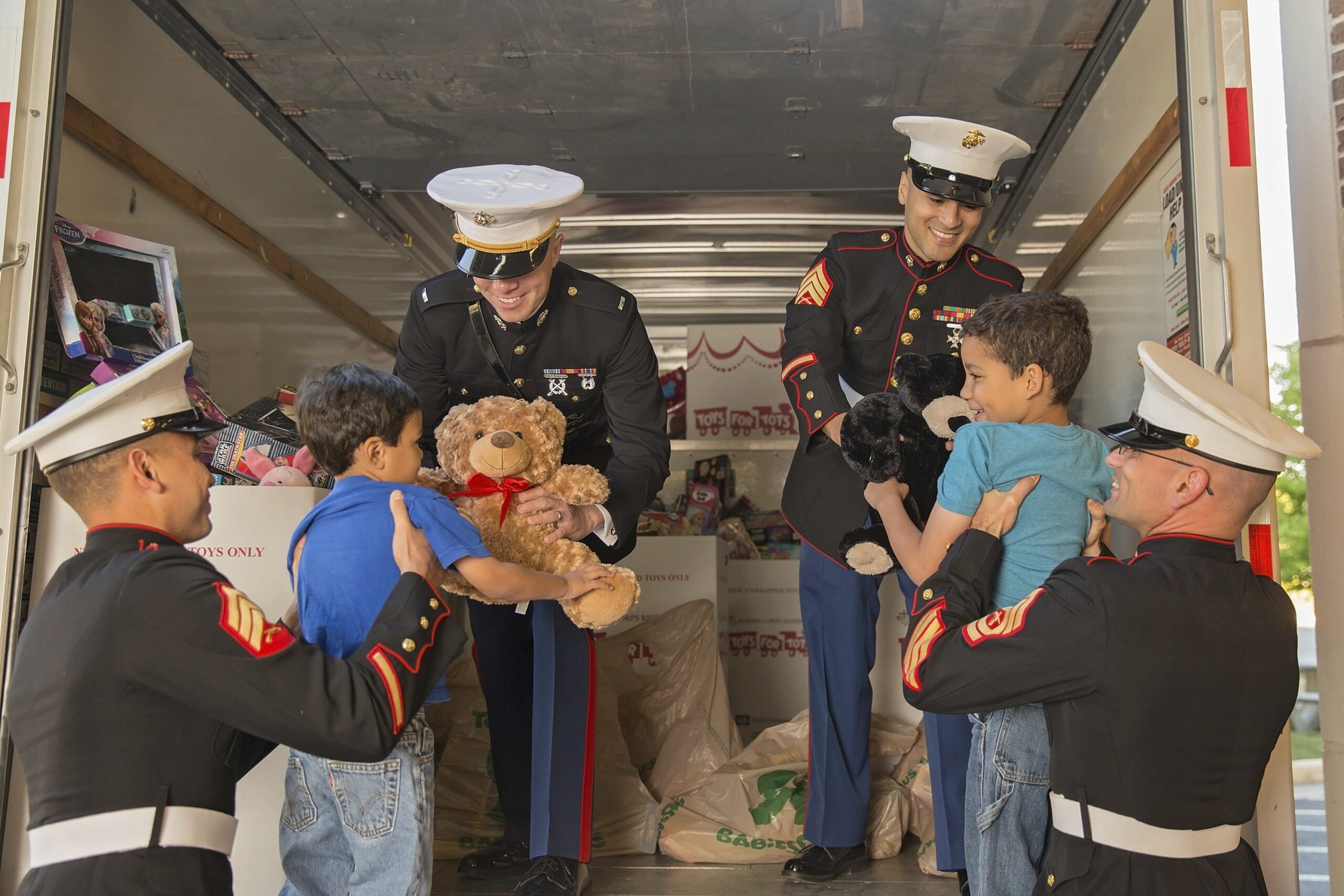
The Marine Toys for Tots Foundation saw a boom in direct-mail gifts — about $21 million, a record for the organization — and leveraged its tens of thousands of volunteers as well in 2015, says Pete Osman, the charity’s president.
The volunteers at the nonprofit’s almost 800 campaigns in 2015 mostly help to sort toys and assist with collection and distribution to children around the holidays. But, significantly, they also set up donation drives at their churches, offices, and other areas. Altogether, Mr. Osman he expects the group’s total 2015 revenue could reach $265 million, of which donated goods would account for at least $168 million. The charity reported nearly $272 million in private support for 2014, though that total was puffed up by a one-time $22 million donation of toys and other goods from an anonymous donor.
Getting a Boost
Chapman University also asked people outside of its advancement office to solicit donations in 2015.
In November, its fundraising officers started a campaign dubbed “I’m In,” , forming a 20-person staff and faculty committee that sought to raise funds on campus throughout the month.
Lawn signs around campus had photos of committee members, encouraging staff and students to contribute to a university cause in any amount. Chapman also created a website devoted to the campaign, which featured university programs that people could support. The chancellor gave a $5,000 matching gift as part of the drive.
The campaign raised $50,000 — a small amount but a welcome boost to the university’s successful end-of-year giving push, said Sheryl Bourgeois, executive vice president for university advancement, marketing and communications.
Over all, the university had raised $38 million by late January for fiscal 2016, which ends May 31. That’s high for this point in the year; Chapman raised $49.6 million in total in fiscal year 2015.
In December, Chapman received in a few large gifts that totaled nearly $14 million — including real-estate transfers valued at $7 million and $2.2. million to fulfill prior pledges to name a college of science and school of film and media arts, respectively. The properties will be sold by the university and then put toward endowments for both the college and the school.
Big Gifts on the Rise
Chapman’s fundraising totals point to another 2015 trend: the continued importance of major gifts. Robert Kissane, president of nonprofit-consulting firm CCS, said that he’s seeing nonprofits with lower levels of donor participation but larger average gifts.
That’s not entirely a result of getting rich people to donate, he thinks, but also of persuading midlevel and lower-level supporters to dig deeper.
“It is getting donors within the different giving levels to upgrade to higher levels of giving,” Mr. Kissane says. “So if you have 100 people giving you $10,000 a year, you try to get some of them to give $20,000 a year — and the effective organizations have strategies to do that.”
Feeding America Eastern Wisconsin says it’s taking a more targeted approach with large donors.
“We’re pulling out the donors in that four- or five-figure gift range, and we are doing more cultivation with them — asking them to come in for a visit, asking them to tell us more about why they are involved,” says Anne Marie Moss, the food bank’s director of development.
Giving was up roughly 30 percent in 2015 over 2014. It started the year-end fundraising season with a bang, bringing in $100,000 on Giving Tuesday, with help from a $30,000 matching grant from a local foundation.
Capital Campaigns
Like many organizations in 2015, the Wisconsin food bank is also in a capital campaign, which is now in its fifth and final year. As part of the $5 million drive, an anonymous $1.6 million gift came in at the start of the year; it allowed the organization to speed up the construction of a new facility in the eastern part of the state. The building opened in October. The organization has raised $4.1 million so far as part of the capital campaign.
With an improved economy, Mr. Kissane says, many capital campaigns and projects that were halted during the financial crisis are back on track.
In 2015, “just about everyone was in a campaign or was in the quiet phase of a launch of a campaign,” Mr. Kissane said.
New data from the Nonprofit Research Collaborative underscores that trend: Forty-six percent of organizations reported being in a capital campaign in the first six months of 2015, and another 28 percent said they were planning such a drive.
The John F. Kennedy Center for the Performing Arts says it has seen surges in donations due to its campaign for a new multiuse building next to its current facility. The $175 million campaign, slated to end in September, has raised roughly $144 million for the expansion thus far, with giving accelerating in 2015.
Marie Mattson, vice president for development at the Kennedy Center, said she thinks the campaign has helped boost fundraising over all. Many donors who were contacted as part of the capital drive asked about other ways to contribute.
“A couple of them raised their annual gift, so that helped a lot,” Ms. Mattson said.
The Kennedy Center saw fourth-quarter giving spike 9 percent over the same period in 2014, but it only slightly exceeded its fundraising goal for the year. It brought in $79.3 million, just above the $78.9 million it expected.
From Headlines to Gifts
Charities that work on easing the impact of humanitarian crises and natural disasters saw robust donor support in 2015.
Mercy Corps, an international aid charity, says it saw explosive growth in fundraising in 2015, seeing $70.7 million in giving — a 51 percent increase over 2014’s total.
Dara Royer, chief development and marketing officer for Mercy Corps, said humanitarian crises caused by the civil war in Syria, and natural disasters like the massive earthquake in Nepal last spring, made the organization’s work relevant to donors.
Mercy Corp already had staff members in the areas that were hit by crises and was able to demonstrate quickly how their work could benefit the people affected, Ms. Royer said. They spoke to the news media, and such appearances generated gifts.
Corporations also pitched in, and not just through donations. Companies like Airbnb, TripAdvisor, REI, Google, and Facebook, helped spread the word about the organization to their clients and members.
“We’ve really seen growth in all sizes of support, which is really, honestly, what we want to see,” Ms. Royer said.
The American Red Cross similarly saw donations climb in the wake of natural disasters, such as flooding in Texas and South Carolina and wildfires that rocked the West.
In the first six months of the charity’s fiscal year, which started in July, fundraising was up 15 percent compared with same period last year.
The group has placed a greater emphasis on training fundraisers, said Don Herring, chief development officer for the organization.
Last year the American Red Cross created two new curricula for development staff. Fundraisers who supervise major-gift officers are trained to motivate their teams to better communicate the charity’s work to donors. During the last quarter of 2015, about 75 percent of fundraising leaders went through this training.
In addition, all new fundraisers go through a six-month program that familiarizes them with the charity’s frontline work: Participants may, for example, accompany a disaster team to a house fire.
The Red Cross has also invested in optimizing its website so that when someone searches for keywords like “house fire,” “flood,” and “disaster,” the Red Cross donation page appears among the first results. Online revenue, which represents 10 percent of total fundraising at the charity, is up 15 percent in fiscal 2015.
Outlook for 2016
So how do things look for 2016? Despite a so-far tumultuous stock market, most organizations seem cautiously optimistic, and most fundraising experts say it’s too early to panic over a potentially weak year for giving.
At the Kennedy Center, fundraisers are confident. The organization has increased its annual fundraising goal in 2016 to roughly $90 million, Ms. Mattson said, partially because some programs this year need the extra revenue to cover costs.
She feels the organization can meet the challenge.
“We have a very loyal patron base, donors, audience members, visitors, and our early signs in a lot of metrics — like our corporate-membership renewals, event participation — seem to be very healthy,” Ms. Mattson said.
At the YMCA of Greater New York, Mr. Laermer is also upbeat.
“It’s only January,” the fundraiser said. “We have 11 months to go, and based on the responses we’ve seen, I hold my optimism.”
Count Mr. Kissane among the optimists, too. In his more than 30 years working with nonprofits, he says it’s rare to see large-scale drops in donations, noting that the annual philanthropy report “Giving USA” has very rarely seen drops in giving year over year.
“There are storm clouds right above us and not very far away,” Mr. Kissane said. “But you need pretty dramatic economic issues to slow down American philanthropy.”
Eden Stiffman and Heather Joslyn contributed to this article.





