

April 21, 2014 | Read Time: 10 minutes
At the YMCA in Missoula, Mont., the mother-son preschool dance is gone. And the charity is no longer offering children music classes. “It was a nice program, but it was really tangential,” says Jon Lange, the Missoula YMCA’s chief executive officer. With 20 percent of all Missoula third graders either overweight or obese, he figures it’s more important for kids to exercise and learn about eating right than to learn to play scales.
So the charity cut some programs to make room for efforts to help children lead healthier lives. Its pre-school, after-school, and summer-camp programs have each grown in attendance by more than a third over the past three years; its summer camp and after-school programs now incorporate half an hour of exercise daily. It began giving free Y memberships to sixth graders—an age at which kids are at high risk of turning into sedentary video-game junkies. Youths in the program, called Active 6, take nutrition classes and exercise.
The changes at the Missoula YMCA chapter reflect a bigger shakeup as the national organization tries to attract more members, pull its fundraising out of the doldrums, and shed its stodgy image. The 163-year-old organization has recast itself as a social movement rather than a federation of “gym and swim” clubs. The changes, which include focusing its mission more tightly, come as the organization competes for members with an array of commercial fitness and sports centers.
The story of the Y’s transformation is still unfolding. But it holds lessons about how both rewarding and tough it can be to remake a large and traditional nonprofit organization.
‘National Megaphone’
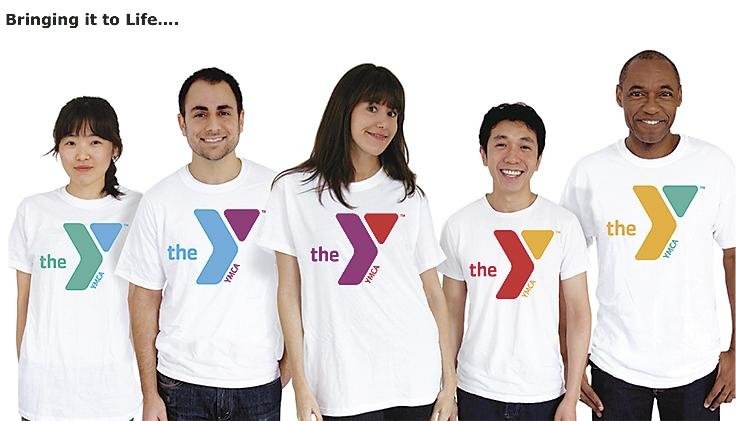
The YMCA of the USA, which coordinates the charity’s chapters nationwide, began the makeover in 2010, when it introduced a new name (simply “the Y”) and branding to be used nationally.
In March, it also unveiled a new them: “The Y. So much more.”
Since the overhaul began four years ago, the national headquarters has followed up by directing fundraising efforts with a stronger hand, with plans to unveil a unified national effort next year. It’s also focused its mission on three priorities to improve health and social welfare and is planning a national advertising campaign, so the Y’s 2,700 or so affiliates can speak through what one of its members calls a “national megaphone.”
The message: The Y isn’t just a place to work out; it’s a force for change. To make donors and the public take a fresh look at the organization, “you kind of have to unlodge people from the perceptions they have,” says Kate Coleman, the Y’s chief strategy officer.
Slow Change
But so far, the changes haven’t borne much fruit:
- Membership increased, from 20.8 million in 2009 to an estimated 22.6 million last year but still falls far short of the 25 million members Y leaders had projected.
- Private donations, which peaked at $1-billion in 2007, grew during only two years since then and remained flat at $827-million from 2011 to 2012, the most recent figures available.
It’s hard to change habits at venerable groups like the Y that encompass hundreds of local chapters, each with its own way of doing things, says Heather McLeod Grant, a management consultant who has helped large nonprofits transform themselves.
In many cases, she says, leaders of long-established charities rely on direct mail and membership dues for income. Those techniques, she says, often fall flat with today’s donors, who want to be part of a cause rather than an affiliate of an organization.
Older nonprofits hoping for an injection of new life sometimes have to ignore protests from people within the group who are unwilling to change.
“You have to go where the energy is,” she says. “Don’t waste your time on the 10 percent who are resisters. Sometimes you have to wait for them to age out.”
Different Focus
Since the facelift, the Y has tailored all of its programs, fundraising, and communications to focus on youth development, on promoting healthy behavior like exercise, and on advocacy, volunteering, and other efforts to improve society.
The charity’s leaders think those priorities will help draw more money from government and foundations interested in the same causes and persuade more people to sign up for memberships.
The new effort is not the first time the Y has reinvented itself. Thomas Sullivan opened the first Young Men’s Christian Association in the United States in 1851 in the vein of a similar charity in London that was intended to provide a refuge from the vices of city life. That year, Herman Melville published Moby Dick, newsboys hawked The New York Times for the first time, and Millard Fillmore occupied the White House.
Around the turn of the 20th century, the YMCA introduced a new fundraising technique (the annual campaign), became the first nonprofit to hire a publicist, and eventually shed its overtly religious message to provide classes, summer camps, and gym memberships to a broad population.
Today the Y maintains a presence in almost every pocket of both rural and urban America. But the group’s legacy doesn’t necessarily generate excitement, says Nathalie Laidler Kylander, a senior research fellow at Harvard University’s Hauser Institute of Civil Society, who has served as a consultant for the Y’s affiliates.
“A lot of people think they’re generally OK, but maybe kind of fuddy-duddy,” she says.
The Y, she says, has successfully recast its branding to highlight a mission that can motivate staff members, volunteers, and donors. But she says it often takes years after a makeover for the public’s perception of an old, large organization to shift.
The need for the Y to change is urgent, because private gyms have drawn away legions of potential members over the past few decades, says Robert Sheehan, head of the Executive MBA program at the University of Maryland’s Robert H. Smith School of Business.
“The Y used to be the place where you worked out, but now there are so many more places where you can use athletic facilities,” he says. “The Y had to figure out how to make sure people knew they were there. They had to remain relevant.”
Anxiety About Sharing
A goal to coordinate fundraising nationally—a key part of the makeover—has raised both fears and hopes among the Y’s far-flung affiliates.
Currently, each YMCA chapter receives tips on how to plan a fundraising campaign from a “Redbook” sent out from the national office, but each is free to raise money however it sees fit. Beginning in 2015, YMCAs in the same state or region will be grouped together, on a voluntary basis, to run their campaigns simultaneously and to share materials, ideas, and expertise.
“If we’re all on the same calendar, we can bombard our message at the same time,” says Kelley Rice, who runs development efforts at the YMCA of Greater Boston.
Today, because local chapters are given autonomy to run their fundraising drives as they wish, campaigns at many of the 31 YMCAs in Massachusetts occur later in the year than Ms. Rice’s annual first-quarter effort.
In 2015, the chapters won’t just raise money in unison. For the first time, they’ll plan their campaigns jointly and share with one another some basic data about the money they raise, including their overall fundraising costs, how many of their gifts came from first-time donors, and which donors gave more than $1,000.
Some fundraisers, Ms. Rice says, may balk at having colleagues from other Ys watch over their shoulders. “People do have anxiety about this,” she says.
But national Y leaders think any fears will subside: A 2012 pilot test of the collaborative approach in Connecticut, New Jersey, and New York helped boost donations by nearly 20 percent, and tests in 2013 also showed gains in donations and new donors.
A Need for Cheerleaders
For the transformation of such an enduring institution as the Y to be successful, change has to come from the grass roots, not the top down, says Mr. Sheehan of the University of Maryland’s business school.
“You want a bunch of cheerleaders saying, ‘This is the way to go’ before the board makes its decision,” he says.
In 2002, Neil Nicoll, the current head of Y-USA, was one of those local leaders making the case for change.
Mr. Nicoll, who then led the Seattle YMCA, met informally at an airport hotel with other local YMCA leaders in Chicago to help chart the organization’s future. The leaders sought a way to better support people who were trying, but failing, to sustain a healthy lifestyle From those discussions eventually emerged a 2007 plan to address childhood obesity and other health issues.
The group asked for voluntary pledges from other affiliates to design the effort. Many larger Ys provided $5-million to the national office, according to Y officials. Similarly, when Y-USA began to consider crafting a new image, local chapters chipped in another $4-million for the project.
The reengineering of the Y, Mr. Nicoll says, has come about by listening to the voices of the affiliates, not by using “carrots and sticks.”
Local affiliates have been given until the end of 2015 to make sure their advertising and other branding matches the design provided by Y-USA. Though affiliates are not told specifically how to shape their programs, many are already working to align them with the three new mission priorities, and nearly 80 percent will collaborate in raising money this year.
New Donations
Some local affiliates, like the Missoula YMCA, which cut music classes, have had to make changes to conform to the new vision.
But the recalibration of its programs has helped lure new donations, Mr. Lange says. The Active 6 program, for instance, caught the eye of the Dennis and Phyllis Washington Foundation, which chipped in money to run the program and to provide transportation for children whose parents cannot drive them to the Y.
The foundation started supporting the charity in 2010 with a $15,000 grant and has given more than $80,000 to the Missoula YMCA; it has also given $80,000 to the Butte Family YMCA.
The YMCA is an attractive place to invest, says Mike Halligan, the foundation’s executive director, because its focus on children fits nicely with the grant maker’s own interests. Because the Y’s centers are spread throughout the state, and its affiliates already have strong foundation support, Mr. Halligan believes other grant makers will join in.
He said the Y’s deep, historic roots encourage trust.
“Kids are going to be safe there,” he says. “They’re going to be in a nurturing environment.”
This article was corrected from an earlier version, clarifying the year in which it introduced “The Y. So much more” theme; indicating that the plan to coordinate fundraising in 2015 is voluntary; and including more accurate figures and detail on the money contributed by local YMCAs to the organization’s plans to combat childhood obesity and remake its image.
Steps the YMCA Took to Transform Itself
Listen to local leaders.
The YMCA’s effort to shed its image as a “gym and swim” membership organization and re-cast itself as an advocate for wellness came from CEOs of local affiliates rather than a board mandate.
Create a uniform identity.
Many of the 2,700 or so independent YMCAs had their own logos and their own typeface and colors. In 2010, the national organization introduced a slimmed-down logo that referred to the organization the way members had for decades: “the Y,” which the independent groups must adopt by 2015.
Sharpen the focus.
The national organization, the Y-USA, asked local Ys to develop services and advocacy focused on three causes: promoting healthy ways of life, youth development, and community involvement and social responsibility.
Band together.
To save money and promote a common message, campaign materials are now developed at the Y’s national headquarters. Affiliates can tailor the message to their own communities, but the Y asks them to create state or regional associations to coordinate fundraising.
Be patient.
Affiliates were given five years to make branding changes and were given a lot of leeway on how to tailor their programs to match the three causes that now make up the organization’s mission.
- A national strategic plan. In February, the Y’s national board approved a plan that will, for the first time, set goals for all member Ys.
- A national advertising campaign in 2016.







