Young Leader Works to Meet Needs of Aging Holocaust Survivors

By Eden Stiffman
Senior Editor
January 5, 2017 | Read Time: 5 minutes
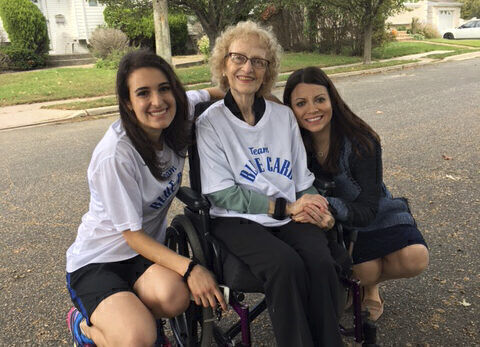
Masha Pearl’s passion for helping Holocaust survivors is rooted in her family’s past. All four of her grandparents suffered Nazi persecution as children and fled their native Eastern Europe. They speak openly about enduring hate and malnutrition and being uprooted from everything they knew. Some of their relatives did not survive the war.
“They still suffer from the effects of that, witnessing what they shouldn’t have witnessed as children,” she says.
Now 32, Ms. Pearl is executive director of the Blue Card, a nonprofit that aids Holocaust survivors in 32 states.
For aging survivors, the challenges of growing old are often heightened by the horrors they endured during the war. Nursing homes and other institutions designed for the elderly can reawaken feelings of helplessness and dread. Studies have found that Holocaust survivors have higher rates of chronic and acute illnesses, such as heart disease and cancer, which can lead a mountain of medical bills.
But as they get older, survivors’ support systems shrink and their ability to navigate red tape decreases. So the Blue Card does everything it can to help the people it serves stay safe and independent in their homes.
The charity, which gets most of its referrals from local social-service agencies, gives survivors money for living expenses, medical and mental-health care, medical equipment, and emergencies like disconnected utilities. The group also provides transportation to appointments, a hospital visitation program in which volunteers spend time with survivors who are otherwise alone, and a program to install emergency-response systems that can be programmed into a survivor’s native language.
Under the Radar
Ms. Pearl saw firsthand the challenges aging survivors often face when her family moved from Moscow to Israel during her childhood. She got to know an elderly Holocaust survivor who lived upstairs. The woman was uncomfortable with doctors and hospitals; she avoided medical care as much as possible, leading to more health problems. The neighbor recreated from memory comforting recipes that her mother had taught her as a child, but using the oven and certain smells sometimes triggered intense reactions.
“It was all related to the experience she endured in a concentration camp,” Ms. Pearl says.
More than 100,000 Holocaust survivors live in the United States today. Many subsist at or below the poverty line and struggle to pay for food, utilities, and medical care, according to a UJA-Federation and Selfhelp Community Services. study,
“These are very unspeakable conditions after all they’ve suffered,” says Ms. Pearl.
Despite the need, the issue often goes under the radar, Ms. Pearl says: “Even people with survivors in their family are often shocked to learn about it.”

Winning New Supporters
The Blue Card was first established in Germany in 1934 to support Jews who lost their jobs or businesses because of Nazi oppression. The organization’s name comes from the blue membership cards provided to donors. The charity was re-established in the United States in 1939 to aid refugees of Nazi persecution resettling in America.
Ms. Pearl began working at the then two-person nonprofit in 2009, became program director in 2011, and took the helm in 2013 at the age of 28, becoming the youngest CEO in the charity’s history.
She is passionate about the cause and dedicated to bringing in new supporters, says Elie Rubinstein, who led the organization from 2006 to 2013.
“There are people who have character, convictions, and charisma, but not all these people know how to transfer their passion to make other people feel the same way,” says Mr. Rubinstein, the current vice president of the Board of Directors. “Masha has that important quality.”
Though the Blue Card has grown slightly to employ four full-time staff members, it remains lean. Under Ms. Pearl’s leadership, the nonprofit’s annual operating budget has increased by more than 40 percent, outreach has expanded from 19 to 32 states, and the group has raised more than $10 million to assist survivors.

Contributions come from marathons and other endurance sporting events, an annual gala event, and an education and philanthropy program in which bar and bat mitzvah kids learn about the Holocaust while raising money for the program. All donations from individuals go directly to the survivors. Other support comes from foundation and corporate donors as well as from the Claims Conference, which administers restitution funds and supports the Blue Card’s emergency cash-assistance program.
The nonprofit receives hundreds of requests for assistance each year. In 2016, requests were up 20 percent over 2015. They are expected to keep increasing over the next five to 10 years and then start to decline.
Says Ms. Pearl: “As long as there are survivors in need of our help, we will be providing assistance.”
This is the latest installment of a series, On the Rise about young people making a difference in the nonprofit world.