

October 30, 2008 | Read Time: 9 minutes
As the nonprofit world prepares for the election of a new president, its leaders have been discussing ways to tighten the relationship between government and charities.
Those conversations have focused on both the need for additional federal money for nonprofit organizations and a substantial expansion of national-service opportunities. In addition, some nonprofit officials are pressing the next president to seek to steer money to innovative programs that want to spread their approaches nationwide and to finance programs that train charities to do a better job of managing their operations.
In times of financial hardship, nonprofit groups are desperately looking for new sources of financing, so it is to be expected that their attention and focus should be on more dollars.
But nonprofit groups also need to put other issues on the agenda of the next president, including assuring the accountability of the nonprofit world, tightening federal rules for foundations, and determining how much federal support should be given to religious charities.
What’s more, any effort to help nonprofit groups should be shaped by the pressures facing groups that focus on key issues such as housing the poor, feeding the hungry, training low-income people to gain useful job skills, and spurring community development. Many of the government programs that support such efforts have been seriously underfinanced in recent years, while others simply do not work well.
The challenge for the new administration will be to determine which programs deserve more money, then decide whether that support should come either directly from the federal government or by passing tax incentives and undertaking other efforts to press private sources to supply the dollars.
While organizations pushing entrepreneurial approaches for charities seem to have caught the most attention from the candidates, especially Barack Obama, the next president will have to devote his attention to helping charities carry out essential services and advocacy work — especially as the economy’s challenges take a bigger and bigger share of the money in government coffers.
The next president will also need to decide what nonmonetary roles the government should play to support nonprofit groups. The federal government’s relations with charities and foundations will not always be a “love-in”; nonprofit groups have the obligation to monitor, criticize, and, at times, oppose government efforts that are considered inappropriate or inadequate.
The following are some key priorities that will enable charities, foundations, and government to make a real difference in the next presidential administration:
- Create a White House office for nonprofit organizations. This office could be the major liaison between the administration and charities and foundations. It would also promote national service and volunteering, help coordinate government programs that benefit nonprofit groups, and assist the Internal Revenue Service in guaranteeing that nonprofit groups are accountable.
It could incorporate the office that now focuses on aiding religious groups, but a stand-alone “faith-based” office no longer needs to exist. The White House office would not be a grant-making entity.
It is important that this office be located in the White House and not in another federal agency. That would signal that the new administration plans to take seriously efforts to reach out to nonprofit groups and mobilize them to solve the nation’s problems.
- Overhaul the operations of the Corporation for National and Community Service. The corporation will administer the expanded national-service programs that both presidential candidates have proposed. While it is commendable to want to expand national service right away, it might be more prudent to stretch out the process to ensure the programs are run effectively.
The corporation’s governance system needs to be restructured immediately. Today the board is appointed by the president and, as such, has been far too sensitive to the whims of the White House. For years, America’s Promise and the Points of Light Foundation, which were created to mobilize private money to encourage volunteerism, received millions of dollars annually in government aid through the Corporation for National and Community Service. They are among the most ineffective groups in the United States, in my view. When I asked some board members why this happened, they replied that the president wanted them to get money.
To remedy this, the White House could be permitted to appoint two or three board members, but the great majority should be independent, nonpolitical appointments, people with experience and expertise in stimulating public service, civic engagement, and volunteerism.
Beyond changing governance rules, the new president should push for another change in the regulations that govern the corporation. Under legislation passed during the Clinton administration, volunteers in AmeriCorps, Vista, and other federal programs are prohibited from engaging in advocacy efforts or activism. This policy inhibits volunteers from participating in the full range of activities citizens are afforded in our democracy. It should be revoked.
- Spend money to spur nonprofit innovation and expand charity operations. Little, if any, federal money is available for new or innovative efforts by nonprofit groups. A relatively small amount — up to $250-million a year — could be reserved for this purpose in the budget of the Corporation for National and Community Service. Since the corporation already makes grants to nonprofit groups, it would be a suitable home for such a program. (Such a program is now under consideration in pending legislation that has been endorsed by Mr. Obama and John McCain, though far less would be provided.)
Some nonprofit groups also say they are in need of management and advice. Such help could come from additional money allocated to federal agencies that already provide operating support to nonprofit groups. However, at a time when the economy is crunched, that may not be the best use of government money. Plenty of nonprofit groups were created specifically to provide management training to charities; they clearly need to do a better job of providing those services to local organizations.
- Force foundations to give more. While the federal government needs to increase its support of nonprofit groups, foundations also have an obligation to do much more than they have in recent years.
The new administration should serve as a bully pulpit to persuade foundations and corporations to increase their support of nonprofit groups and provide a greater share of their grants to innovative and more risk-taking programs.
For their part, however, foundations have shown few signs that they are prepared to increase their grant making to meet the increasingly critical needs of our society. In a recent letter to its membership, the Council on Foundations urged grant makers to “look for creative ways to assist the sector in weathering this storm” and to play “an active and visible role in helping communities and regions figure out the scope and extent of the challenges they face, and in finding and crafting solutions that make sense.”
Nowhere does it encourage foundations to increase the amount of money they distribute to charities, the only real solution that makes sense.
It is time that the Congress, led by a new administration, increase the minimum percentage of assets that foundations are required by federal law to spend each year to at least 6 percent in grants. That would be a big change from the current 5-percent requirement, given that foundations are now permitted to include some administrative costs to meet the rule.
Making this change would provide at least $6-billion in additional revenue for nonprofit groups. Given the tax benefits that foundations enjoy, their boards and staffs should be ashamed of their reluctance to give more. But current patterns are unlikely to change unless the White House leads the charge to increase spending.
- Promote accountability at nonprofit organizations. The continuing scandals at charities and foundations can no longer be tolerated; they are undermining the integrity and good works of the nonprofit world.
Tougher regulations are needed to eliminate excessive compensation and end the cozy sweetheart deals for people affiliated with foundations. But greater oversight and enforcement, by both the Internal Revenue Service and state attorneys general, is the key to better accountability. Neither the Internal Revenue Service nor the state attorneys general have the financial resources to do their oversight jobs well. They must be provided with more personnel and more money.
The new administration should provide these necessary resources, as well as make it possible for the IRS and the states to fully share their data and coordinate their oversight and enforcement activities.
And it should make sure that the public has access to information about nonprofit organizations. Currently GuideStar and other nonprofit databases provide some information free, but they charge fees when researchers and others are seeking a broad overview of trends. The federal government should finance the collection and public distribution of charity informational returns, and pay for research on what the data show, so that everybody can have the ability to know about nonprofit groups at no charge.
- Maintain a strong advocacy role. Nonprofit groups themselves also have responsibilities as a new administration takes office. It is all too easy for nonprofit organizations, especially those that are sympathetic to whoever wins the race, to forget that one of the important missions of nonprofit organizations is to hold any administration and the federal government accountable and to fight against programs they deem harmful to their constituents.
In dealing with government, nonprofit groups have learned a hard lesson: The only meaningful relationship with government involves not being loved but being respected. Charities can earn that respect only through their integrity and toughness.
In the weeks after Election Day, the transition team of the winning candidate should be prepared to meet with representatives of nonprofit groups. Those meetings must not be limited to the usual organizations and coalition groups that have had access to the White House in the past, or who now have an inside track to whoever wins the election.
Many of these groups do not speak for the nonprofit world as a whole. The outreach by the White House to nonprofit groups should be much broader and more extensive than it has been in the past. Only in this way will the new administration get a real feel for what is needed by nonprofit groups and for what they could do to improve their performance.
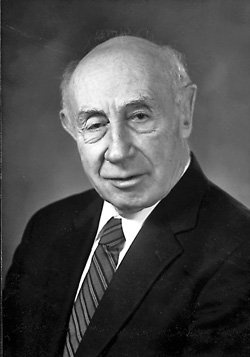
Pablo Eisenberg, a regular contributor to these pages, is senior fellow at the Georgetown University Public Policy Institute. His e-mail address is pseisenberg@verizon.net.





