
A Philanthropist Takes a Gamble on the Rising Generation of Entrepreneurs

By LESLIE LENKOWSKY
Contributor
June 26, 2011 | Read Time: 5 minutes
Few issues have been as hotly debated in philanthropy as whether grant makers would be more effective if they adopted the methods of venture capitalists.
While many people have criticized this idea as encouraging donors to act in businesslike ways, others have argued that what characterizes investors in growth companies, such as a high tolerance for risk, close involvement with the projects they underwrite, an interest in performance-based evaluations, and clear exit strategies, would work well for foundations, too.
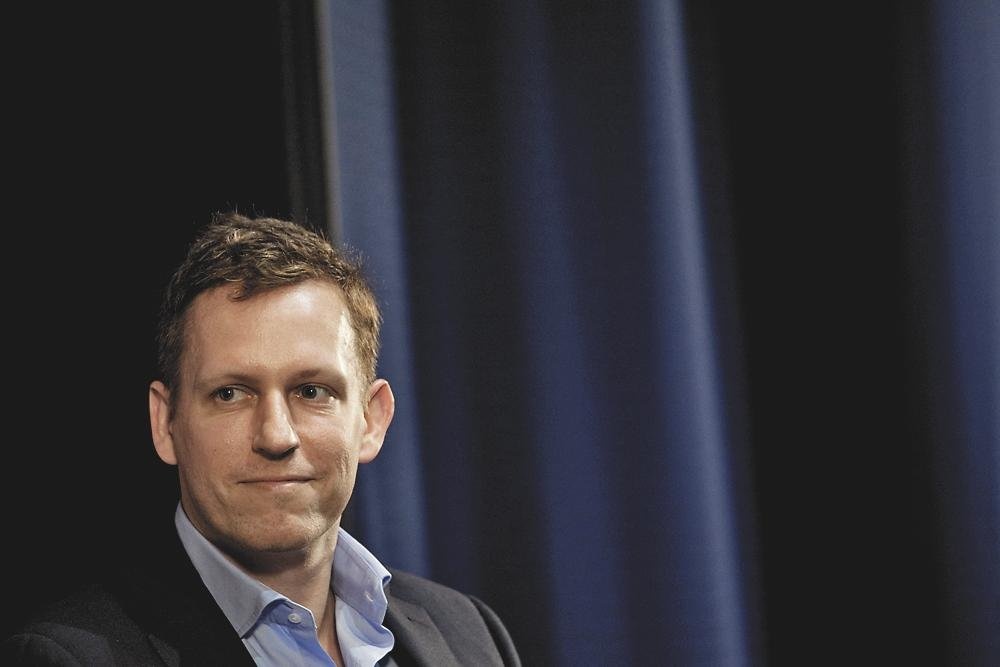
Last month, a foundation set up by one of Silicon Valley’s leading venture capitalists, Peter Thiel, made the first awards in a new fellowship program that embodies this approach.
Although it has already attracted skeptics, the program is the most interesting effort to assist talented individuals since the John D. and Catherine T. MacArthur Foundation started its fellowship program 30 years ago.
Mr. Thiel, who has played key roles in the development of PayPal, Facebook, and other high-tech businesses, is seeking to help young entrepreneurs start their own companies.
The fellowship provides two-year grants of $100,000 each to successful applicants, who must be 20 years of age or younger and willing to work full-time on their projects (which means, for most of them, dropping out of college).
Although Mr. Thiel himself is a Stanford college and law-school graduate, his program’s premise is that higher education can be an impediment to budding entrepreneurs, who might learn more by testing their ideas in practice.
More than 400 young people seemed to agree, and after a selection process that included written essays and personal interviews, 24 young people—four more than originally planned—were chosen for the first class of fellows. Mostly high achievers who have studied at institutions such as Harvard, MIT, Princeton, and Purdue, they will work on projects seeking to apply scientific and technological expertise to problems in education, economics, energy, biotechnology, and other fields.
All fellows are expected to relocate to Silicon Valley, where they will be linked with mentors experienced in their areas of interest and in entrepreneurship and given opportunities to participate in group events.
As currently envisioned, the fellowship is not renewable (although Mr. Thiel is making plans to select more fellows). After two years, participants in the program will need to find investors or other backers to continue their projects.
That has led to one criticism of the program: Given the high risks involved, many of the projects are not likely to succeed. Indeed, according to the management consultant Peter Cohan, “if typical venture-capital odds apply, about 22 of the 24 people will fail to build a successful company.”
The Thiel Foundation does not deny this, but its president, James O’Neill, responds that entrepreneurs often learn valuable lessons and skills from their failures that may help them in future endeavors. Silicon Valley, he adds, has many successful people whose first attempts fell short.
In any case, the foundation expects that the real impact of the fellowship will probably be seen only after a number of years, when the seeds planted during it come to fruition.
Others are dubious that smart, young people, chosen because of their passions and visions for changing society, possess the skills to be successful entrepreneurs. Studies indeed suggest that people who start new businesses have often worked for a time at existing ones, learning what needs to be done and how to do it. To this way of thinking, entrepreneurs are made, not born.
Even so, personal characteristics, such as independence of mind, one of the criteria used in selecting the fellows, also count. Moreover, the program seeks to compensate for the fellows’ inexperience with its mentor efforts, exactly the kind of hands-on involvement advocates of applying venture-capital methods to philanthropy recommend.
Whether independent-minded teenagers will really heed the advice they get is another matter.
However, the feature of the program that has caused the most controversy is its insistence that fellows leave college to participate.
“A nasty idea,” wrote Jacob Weisberg, editor-in-chief of the Slate Group, adding that it would lead to “halting the intellectual development” of the fellows.
Compared to what Bill Gates is doing with his philanthropy, or how Mark Zuckerberg, the Facebook founder, donated $100-million to help Newark’s schools, the Thiel Foundation, in Mr. Weisberg’s view, does not seem very philanthropic at all.
But famously, both Mr. Gates and Mr. Zuckerberg themselves dropped out of college to pursue their entrepreneurial ideas. In many ways, they are models for what the Thiel Foundation hopes to accomplish. Fellowship recipients can also resume their education when their two-year term ends (and may even take courses during the period, if relevant to their projects).
Nonetheless, formal education—or even a lengthy list of achievements—is unquestionably not one of the criteria for admission into the Thiel Foundation’s program.
In that respect, it differs considerably from most other fellowships. In 1981, for example, the MacArthur Foundation started its fellows program, sometimes called the “genius awards,” which gives five-year, no-strings-attached grants to highly successful people (who are chosen without even applying, let alone being interviewed).
Regarded as innovative at the time, and still attracting attention today, its purpose was to enable recipients who had already demonstrated creativity and leadership in their fields to have the financial backing they needed to become even more influential.
Whether it has succeeded has been debated ever since. Some people have concluded that the fellowships do little more than reward recipients for past achievements.
By contrast, the Thiel Foundation’s program is gambling on promising but largely untested people.
Although the results are less certain, if advocates of “venture philanthropy” are right, taking big risks, and accompanying them with hands-on mentoring and other kinds of assistance for a limited period of time, could produce big gains. To see if that approach really works, the Thiel Foundation’s fellows bear watching.





