
Advice to Donors Signing the Giving Pledge: Determination and Vision Matter

By Edgar M. Bronfman
Contributor
September 6, 2010 | Read Time: 6 minutes
The recent call for philanthropists to give away their wealth, with nearly 40 billionaires signing the Giving Pledge designed by Warren Buffett and Bill and Melinda Gates, has spurred an important discussion among philanthropists and nonprofits: What is the best way to bring about change through giving? What type of giving leads to lasting success?
When I was in the spirits business, there was no such thing as overnight results: A product went through multiple phases to achieve results.
Some of my philanthropic peers have worked in businesses in which they could witness a tangible result from an investment in a matter of mere hours. But if you are making whiskey, you cannot start with the grain and expect a quality product instantaneously.
You have to be patient and precise about how to plan and carry out an endeavor, while maintaining a long-term vision. I have transferred this approach to my philanthropic giving and have seen remarkable results.
I founded the Bronfman Youth Fellowships in Israel in 1987 with an eye toward the future, but with no guarantee of success.
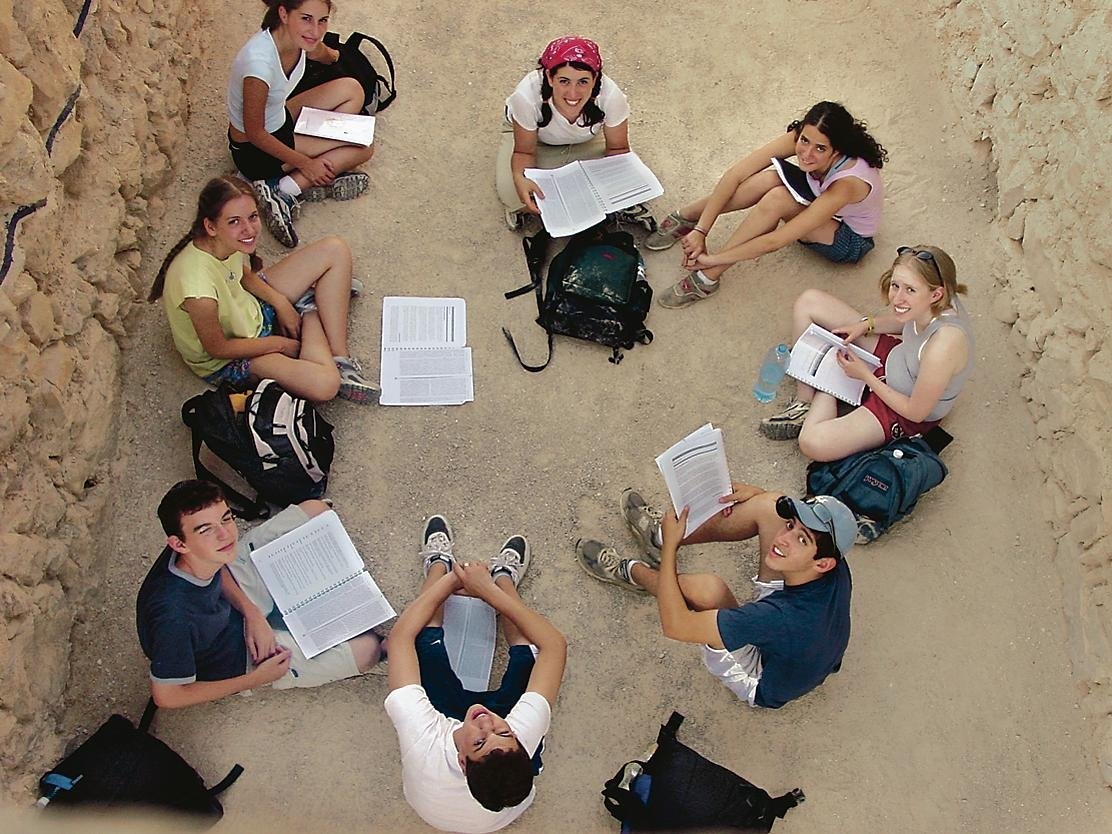
Each summer, the program sends 26 North American rising high-school seniors from a range of Jewish backgrounds on an all-expenses-paid educational program in Israel. The students are selected for their leadership potential and diverse Jewish perspectives and experiences. They spend five weeks together, exploring their Jewish identity and Israel through the study of important texts, meaningful discussions, and meetings with top leaders and thinkers from Jewish organizations and Israeli society.
I wanted to inspire a value system in a group of young people headed to become future leaders; I wanted them to have a forum to speak to one another in a substantively Jewish way. I wasn’t asking the question, “Did this group of 26 young people have a successful summer in Israel?” but rather, “How would this summer experience inform their relationship to Judaism and to one another, and how would it transform the type of leaders they were destined to become?”
Through my work with the program, I can assert that a long-term outlook has proven the most effective giving strategy. Long-term investing necessitates that a philanthropist be rigorous and reflective about monitoring philanthropic endeavors while also waiting patiently to see concrete achievements. To spend a lifetime heavily investing in one project requires a strong commitment, determination, and forward thinking.
Today, after 24 years and more than $20-million invested in the project by myself and the Samuel Bronfman Foundation, we have seen the results we hoped to achieve. Alumni of the program are now leaders in their chosen professions and include eight Rhodes scholars and four Supreme Court clerks.
Over the years, I have developed countless personal connections with the young people who have participated in the fellows program, and I chose one participant to serve as executive director of my foundation. I regularly study Jewish texts with alumni, share meals with them, and engage in serious conversations about what is important and relevant in their lives today.
Working this closely with the alumni has shown me the power of intensive investment in individuals. It has also allowed me to be attuned to the challenges and opportunities I face as a philanthropist.
When making long-term investments, philanthropists must understand that it takes time to demonstrate success. Those looking for effective investment opportunities should establish three key qualities:
Vision. Rather than focus on short-term results, you must have a long-term vision of what you want to accomplish.
My vision for the fellowship program was to educate an interdenominational cadre of young Jews who would see their commitments to Judaism and the Jewish people through a lens broader than their own perspective.
To explore practical investment options for reaching this goal, I commissioned a well-respected, thoughtful rabbi who was chaplain at an Ivy League university to conduct a study. His research determined the appropriate age of participants, the length of the program, and the ideal group composition. His careful analysis and expertise provided a road map to transform my abstract ideas into a concrete program.
After those details had been articulated, I decided that I would make this program my philanthropic priority and support the program entirely. If you want to achieve bold outcomes, seek proper guidance and do not be afraid to go out on a limb and finance projects alone.
Partnership. For a grantee-donor relationship to be productive, philanthropists must build a foundation of open communication, respect, and trust. This type of relationship is easy to establish when the grant recipient is confident that the donor is committed to a long-term financial partnership. Both you and your grantee should be adaptable and have a penchant for experimentation.
When I first founded the fellowship program, the idea was to use Israel primarily as a backdrop to explore American Jewish identity. After 10 years of experimentation, the staff of the fellowship program told me that to accomplish my vision, American fellows needed thoughtful and serious engagement with Israeli teenagers to more fully explore their Jewish identity.
After years of trial and error, it was clear that the way to go would be to create a parallel Israeli fellowship program (called Amitei Bronfman) that selects a group of diverse Israeli teenagers who meet the same criteria as their American peers.
That was not part of my original vision but came from the staff’s experience working with the fellows. Today we have 258 Israeli alumni who have created meaningful relationships with their American peers and who are also making a difference in Israeli society, a welcome and unexpected outcome.
The fellows program is always adapting, expanding, and evolving as a result of my solid partnership with its leaders. I gave the staff members who run the program time and space to experiment, and I accepted their recommendation. If you consistently encourage innovation and risk-taking, your long-term investments will create lasting change that only increases in value over the years.
Oversight. If you communicate your vision and establish a solid partnership with your grantee, the next step toward realizing your mission is maintaining oversight. And one of the most effective nonmonetary ways to support an organization is to give it access to thoughtful, high-level, professionals to act as your liaisons.
As a philanthropist, I do not personally oversee the daily functions of my grantees’ organizations. When the fellows program was started, I turned to a trusted consultant who offered management and fiscal expertise to the program’s staff on a regular basis.
The staff at the Samuel Bronfman Foundation functions in a similar role with grantees providing expertise in finance, operations, strategic thinking, fund raising, and publicity.
When new ideas, projects, or directions are presented to me, like Amitei Bronfman, I know that the processes they have already gone through both internally and with my staff and consultant provide the best foundation for success. By assembling a group of professionals, you can continually demand excellence and provide your grantees with the resources and expertise they need to use your investment to bring about change.
A deep impact in the world cannot be achieved overnight and is not demonstrated in numbers alone. Only with patience and commitment will your vision manifest into a rewarding project that will leave the world a better place than you found it.





