
As Calls to Cut Foreign Aid Mount, Philanthropy Must Accelerate Support for Grassroots Groups
With USAID funding under threat in Congress, grant makers should ensure local nonprofits across the globe can continue their critical work.

By Kathleen Enright
Contributor

October 17, 2024 | Read Time: 5 minutes
While foreign aid has historically received bipartisan support, recent calls in Congress to cut international spending make it clear that such assistance is no longer a guarantee. Regardless of who wins the election in November, foundations will need to expand their leadership in this area. Specifically, they must ensure that local nonprofits battling crises across the globe have the funding to continue their work.
Related Content
-
Reporter’s Notebook
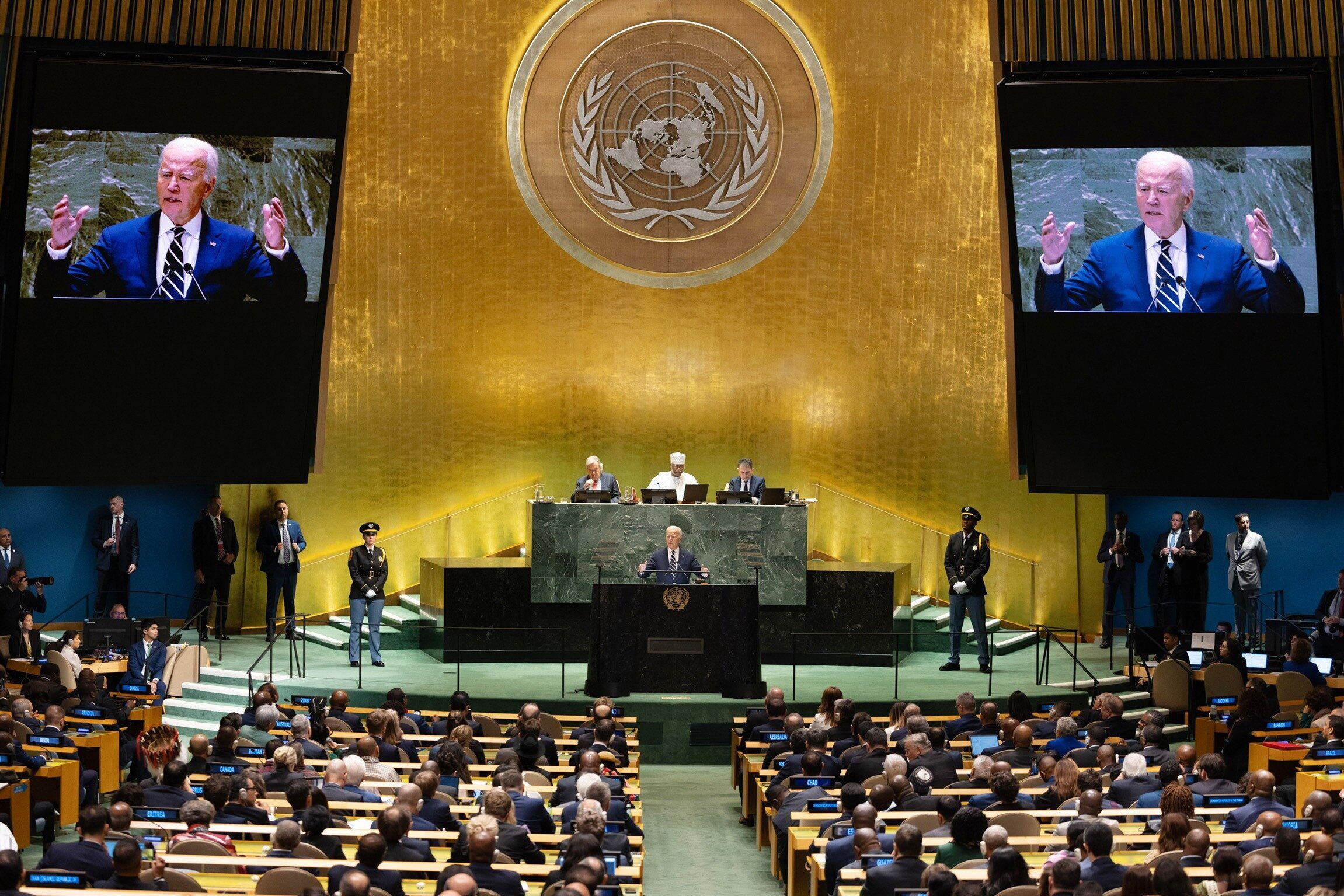
Funders Weigh the Future of DEI, Climate, and Aid at U.N. Meeting
When world leaders gathered at the United Nations General Assembly last month, I was heartened to hear grant makers express their ongoing commitment to grassroots organizations fighting climate change, health-care inequities, hunger, and other global challenges. Many funders have made impressive gains in adopting strategies that focus on supporting local organizations worldwide, recognizing that those groups understand best how to address local problems.
The Conrad N. Hilton Foundation, for example, has significantly increased the amount of its international funding to locally led nonprofits from 14.5 percent in 2021 to more than 42 percent in 2023. It has also accelerated its local giving by making several large investments in local groups, rather than giving many small grants to multiple nonprofits. This approach can serve as a model for other foundations, demonstrating how shifting to a more robust local strategy can be done quickly and effectively.
The Hilton Foundation was one of 15 foundations that endorsed a donor statement in partnership with the U.S. Agency for International Development last year, committing to moving funding, power, and decision-making to grassroots groups. Dozens more donors and foundations have signed on since.
But such progress on locally led international development relies on consistent federal foreign aid, as well as a strong partnership between aid agencies and philanthropy. Recent sentiments expressed by members of Congress have raised concerns about the potential for significant cuts, particularly in USAID funding.
If that happens, philanthropy will face greater challenges in directly supporting grassroots efforts. USAID not only provides critical financial assistance but also plays a key role in building the capacity of local organizations, coordinating logistics, and ensuring compliance with international standards. Without this type of support, philanthropic organizations would need to fill these gaps, which requires significant time, resources, and expertise that many foundations currently lack.
That’s why philanthropy must maintain a commitment to funding grassroots organizations, particularly in Africa, Asia, and Latin America — no matter the outcome of the election. These local partners, which include community-based nonprofits, cooperatives, and Indigenous organizations, are well positioned to respond to their own communities’ priorities and needs.
Doubling Down
In that spirit, foundations should not just stay the course on locally led development, but also take the following steps to shore up investments:
Invest in the civil society support system. In addition to funding individual nonprofits, grant makers should invest in the broader network of organizations that helps sustain these groups.
For example, the Packard Foundation, working in collaboration with the Penabulu Foundation, strengthens the effectiveness of civil society organizations in Indonesia through training, leadership, and other support programs. And grant maker-supported initiatives, such as the KujaLink platform, a project of the African social enterprise Adeso, perform a critical service by connecting local and national nonprofits directly to global funders.
Supporting organizations like these helps protect foundation investments in this time of uncertainty by strengthening the infrastructure that local nonprofits depend on. When local groups are equipped with training, leadership development, and strong networks, they are more resilient and better able to weather external challenges, such as funding cuts or political instability, helping to ensure the long-term impact of grant maker investments.
Expand partnerships with the U.S. government. Foundations can initiate formal partnerships with USAID by collaborating on joint programs, co-funding local initiatives, and sharing resources and expertise.
The Democracy Delivers Initiative, for instance, was launched in collaboration with USAID and other international partners and foundations, democratic reformist government leaders, and civil society groups. Together, they have mobilized $517 million to support countries taking promising steps toward democracy and to strengthen governance in vulnerable areas worldwide.
Several grant makers have joined the initiative, including the Ford Foundation, which made an $8 million commitment to democracy efforts in countries such as Tanzania and Guatemala. Efforts like this have bolstered governance, transparency, and public services, leading in one example to the lifting of a six-year ban in Tanzania on opposition rallies.
(The Ford Foundation is a financial supporter of the Chronicle of Philanthropy.)
Advocate for civil society. Whether in the U.S. or abroad, foundations need to support efforts to actively push back against regulations, laws, and narratives that restrict the ability of civil society organizations to act and speak out. Tools such as the Funders Initiative for Civil Society offer a useful framework for building both resistance strategies that focus on fighting restrictions and resilience strategies that help ensure nonprofits can continue to operate despite efforts to weaken them.
Such work can have a powerful effect. The Fund for Global Human Rights, for instance, supported Ugandan nonprofits’ efforts to counter restrictive amendments in the country’s Non-Governmental Organizations Act of 2016, which threatened groups representing LGBTQI populations and sex workers. The fund provided targeted support to local grantees to document their concerns and advocate their position with government officials. This effort led to some of the original language in the legislation being amended.
In Eastern Europe, Georgian nonprofits, with foundation support, have united to fight legislation to label them foreign agents if 20 percent or more of their funding comes from abroad. While the law has been put in place, some nonprofits have vowed to defy it, and some lawmakers have promised a court challenge. In response, global philanthropy and organizations such as the European Center for Not-for-Profit Law and the International Center for Not-for-Profit Law have provided funding for legal challenges, public awareness campaigns, and mobilization efforts to resist the law.
With elections around the globe poised to affect communities near and far, grant makers need to work together to deploy their experience, tools, and networks to continue to support locally led development. Despite the uncertainties ahead, philanthropy needs to demonstrate that it’s committed for the long haul.





