
As Social Needs Mount, How Can Philanthropy Best Alleviate Homelessness?

By LYNN LEWIS
Contributor
February 20, 2011 | Read Time: 6 minutes
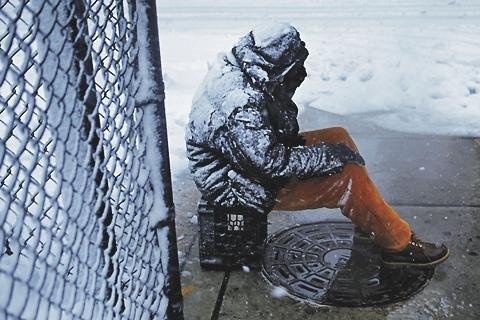
As extreme cold and big snowfalls have battered the United States this winter, many cities and towns have opened their doors and wallets to those whose lives are most vulnerable to weather: the homeless. Winter is often the time when people become especially aware of those without a place to call home—and fortunately it spurs a strong philanthropic impulse.
But given growing social needs across the country, it is fair to ask: What types of giving contribute to real change for the roughly 650,000 Americans who are now homeless?
Philanthropy has always played a vital role in supporting life-sustaining services for people who are homeless, such as emergency shelters and soup kitchens. Those services are critical, but they only offset the pain; they don’t deal with the causes of the problem.
In New York, sidewalk homelessness is particularly visible to both its residents and tourists from around the world. From 2009 to 2010, the city’s homeless population soared 34 percent, with shelters taking in more than 37,000 people, over 40 percent of them children. That is a 10-percent increase since 2005, when Mayor Michael Bloomberg vowed to cut the homeless population by two-thirds. In recent years, more than 90 percent of service providers have failed to meet their goals for moving people into permanent homes.
So why are we falling so far short and what can philanthropy do about homelessness?
Today most private giving mirrors the way society at large has come to think of homelessness. Instead of looking at the real causes, donors and policy makers focus on the behavior of people who become homeless—as if it could be avoided if people made better choices.
They rarely consider the failure of labor and housing markets that put people on the street with little notice or a health-care system that often bankrupts households. And most philanthropy seeks to provide direct services to heal those harmed by the problem rather than financing the kind of advocacy work that could transform our economy and housing stock into one that offers opportunity for all.
Over the past three years, America’s poor have been hit three times: by a national housing crisis; predatory real-estate investments built on a strategy of driving low-income renters from their homes; and historic levels of unemployment. It is no wonder that homelessness has increased in 31 of 50 states and in the nation’s capital.
Those homeless who are members of the advocacy group Picture the Homeless felt a twinge of irony as the economic crisis hit. After all, their livelihoods, and those of many Americans, have been stuck in a recession for years, even as the boom years helped America’s upper income brackets grow richer and richer.
At the same time, the persistent myth that everyone is a pink slip away from being homeless is simply not true. It only obscures the economic analysis required to reverse homelessness.
In New York City, for example, 80 percent of the homeless are women and children from low-income families, and a similar demographic portrait can be found elsewhere. The cause of homelessness is primarily extreme poverty and the constrained access to education and opportunity faced by women and minorities born into poor families.
To deal with the systemic problems that cause homelessness, we need a different approach. Social work and social services do not generally lower rents or increase incomes for communities as a whole.
It is not for a lack of government money that homelessness is on the rise, either. New York City has spent as much as $880-million annually in recent years on emergency shelter, housing, and homeless services. Incredibly, the city government has spent three times as much on homeless shelters as rental assistance in permanent housing.
Where the recession has affected the homeless most is in philanthropy’s response. Most grant makers have less money to give, and those who do have money to distribute say they want to channel it into direct services for the homeless.
That is a legitimate, charitable response to rising needs, but is it an effective strategy to take people off the streets?
Historical data provide a fairly clear answer. Looking at the shelter occupancy numbers in New York City since 1981, the number of homeless individuals and families has consistently risen during both economic recessions and boom times. Clearly, three decades of philanthropy have done little to help the homeless.
The good news is that we know what causes homelessness, and therefore what it takes to curb it.
One cause is gentrification. As cities promote development, they often give commercial and luxury-residence developers incentives to build. The arrival of high-income owners and renters leads quickly to rent increases for tenants at all income levels. Landlords and real-estate investors then have new incentives to harass low-income tenants, use longstanding tricks to undermine rent controls, and push out residents, especially those with the lowest incomes and the least job security. The result is higher rents, stress on families, and eventual displacement.
Rising costs of energy and health care also add to the household-income strain. A 2005 Harvard study found that half of those who filed for bankruptcy said health-care expenses, illness, or related job-loss was the major factor. For those with the least income, such challenges can result in homelessness.
Further undermining economic security has been the large-scale economic development policy that drives out small businesses, attracts “high-end” national retail and restaurant chains with greater efficiencies, and results in low-wage and often “temporary” jobs. It is a sad fact about America in 2010 that a minimum-wage job cannot pay for the cost of low-cost housing—defined federally as 30 percent of income—in any county of the country.
Most advocates and poverty researchers could see the warning signs of the recent economic and housing crisis, but few policy makers heard their concerns.
That’s because too little money from foundations has been poured into the organizing and advocacy efforts that would push lawmakers, leaders, and businesses to adopt economic policies that would reduce homelessness and help people preserve sustainable livelihoods in their own homes.
As with health care and the overhaul of financial regulations, the housing crisis presents a national opportunity to change policies and programs that have failed to protect the most vulnerable. Progress toward any major social change begins when those most affected are consulted and engaged, but researchers and experts too often ignore the streets and shelters where the homeless live. That is why it is more critical than ever to steer donations to efforts to promote grass-roots organizing of the homeless and conduct research on the real-world experiences they face.
Economic recovery cannot simply be measured by the stability of banks, stock-market returns, and monthly hiring data. At a time of record corporate profits, economic policies must finally reach those folks who have been most excluded—and their perspectives must be front and center in the process of developing more inclusive economic and housing policies.





