
Attention Charities and Retailers: Fundraising at Checkout Can Backfire

By Casey Newmeyer
Contributor
December 7, 2016 | Read Time: 3 minutes
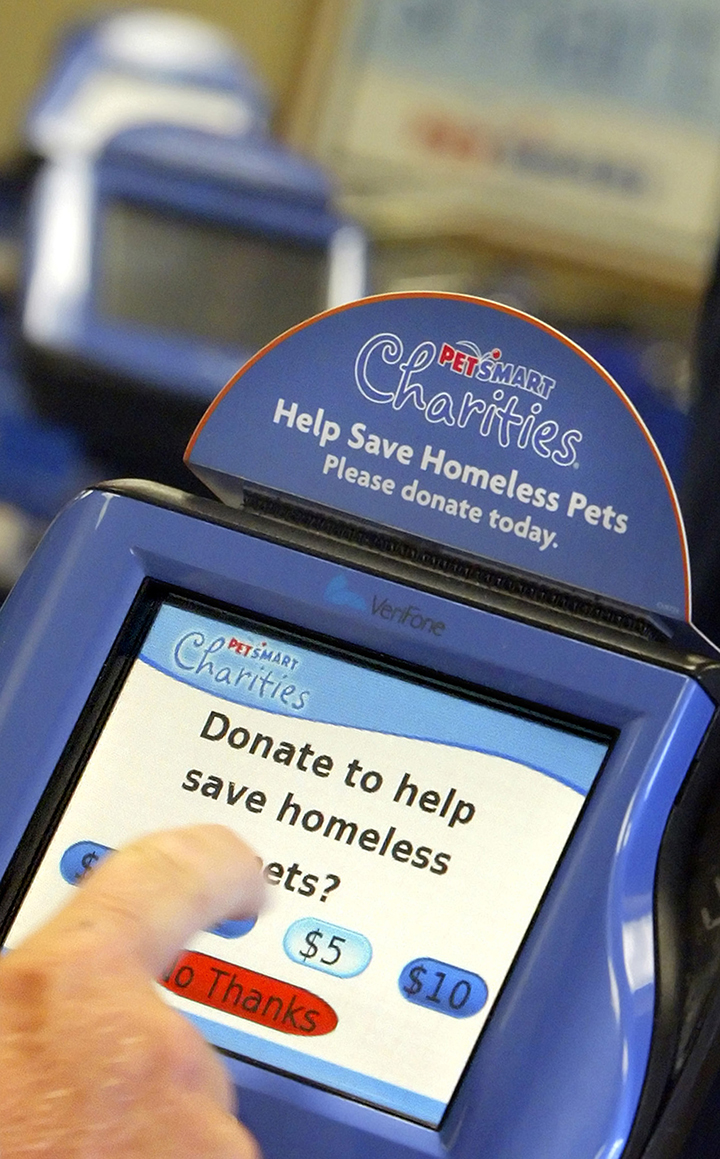
For shoppers, being asked to donate to a particular cause as they pay for their purchases has become commonplace — especially at this time of year.
But the strategy may not be nearly as beneficial to charities or retailers as is widely believed. New research shows that many consumers react negatively to checkout solicitations.
This dynamic is based on the delicate social contract between retailers and consumers, who, among other things, expect stores to provide a pleasant shopping experience in exchange for their custom. Certainly, retailers should be commended for their efforts to be socially responsible. But even with the best of intentions, they violate that unwritten contract when they ask for donations at checkout.
‘It’s Not a Good Feeling’
Rather than boosting the retailer’s reputation and promoting shopper loyalty, research that I did with Efua Obeng of Howard University, Katie Kelting at Saint Louis University, and Stefanie Robinson of North Carolina State University shows these solicitations often create feelings of guilt, obligation, annoyance, and even anger among consumers. In addition, customers may feel they are being pressured unfairly if the retailer doesn’t match donations or take some other measure that shows it is sharing in the responsibility to help.
For retailers, this could mean negative customer response and business lost to competitors. For charities, it indicates that other types of programs could be more effective in generating donations.
My colleagues and I surveyed more than 500 consumers about their shopping experiences as part of a study that is under review by a top academic journal. Participants who were asked at the point of purchase to make a charitable donation gave the retailer lower ratings than those who were not. More than 60 percent of respondents who were solicited
commented negatively about their checkout experience, saying those requests violated the normal give-and-take between shoppers and stores.
Some of their comments:
- “I don’t like to be bothered about donations as part of the checking-out process. I like my shopping trips to go as smoothly and predictably as possible.”
- “I feel pressured into donating. … It’s not a good feeling.”
- “I feel like the business is trying to piggyback off its customers by taking some of the credit for the donations made to the charities. … It’s annoying.”
We also explored whether customers reacted more favorably if the store and cause were related in some way (such as a pet-supply store raising money for a local animal shelter), but such relationships did not affect responses.
Better Ideas
This is not to say that charities and retailers should stop working together to raise money for worthy causes. But there are more effective ways to do so. For example, shoppers generally respond more favorably to the Salvation Army’s holiday bell ringers than to checkout requests for donations.
Instead of irritating and delaying shoppers at the checkout line, charities and retailers may be best served by showcasing corporate partnerships with charities through advertising, sponsorships, or in-store displays.
Alternative approaches include matching gifts or offering the customer something in return, like coupons, free merchandise, or some other token of thanks.
While social responsibility is good, charities and retailers do not want their collaborations to cost them in the form of lost business and alienated donors. Thankfully, there are better ways for companies and customers to share the responsibility of supporting their community and its nonprofits.
Casey Newmeyer is an assistant professor of marketing at Case Western Reserve University’s Weatherhead School of Management. She focuses her research on marketing to consumers.





