January 6, 2005 | Read Time: 8 minutes
As the number of charities has exploded in the past decade, it has become clearer than ever that the nonprofit world is dominated by two very different types of organizations that increasingly have little more in common than their tax-code status.
One set comprises the big organizations that command the most public attention, and a considerable share of the gross domestic product. Those organizations are supported by thousands of foundations and millions of individual donors, and by all levels of government, and they are run by large numbers of highly compensated employees, many of whom call themselves nonprofit professionals.
But another fast-growing set is composed of the vast constellation of nonprofit organizations that have been founded by conservative or orthodox houses of worship to carry out a variety of aspects of ministry, including Christian community foundations and trade associations like the Gathering and the Council of Leadership Foundations. Those religious charities provide a growing array of social services in low-income neighborhoods, and pursue an increasingly aggressive human-rights agenda abroad, focused on the “suffering church” in China, North Korea, and Sudan and on international trafficking in prostitution. Some operate from cathedrals in the nation’s sprawling suburbs, while others were created by storefront black and Hispanic chapels. They generally rely on volunteers to provide services, or perhaps on a few meagerly paid workers.
While the first set of groups has more money and other resources than the second, the organizations that make up this group are not thriving. They are gripped by a state of crisis and anxiety, because they are profoundly uncertain about their fundamental ends or purposes. They no longer have a clear identity, a sense of their unique function. They bridle at the suggestion that they are mere charities, but then cannot say how they are to be distinguished from the marketplace and government.
Religious groups, on the other hand, have nothing if not a strong sense of purpose. They understand that charity, volunteerism, and immediate community engagement are not romantic atavisms, but essential attributes of spirituality and humane citizenship. The stone rejected by the old, secular nonprofit world has become the cornerstone of the emerging, religious sector.
The loss of purpose of the high-profile charitable groups is the result of pressure from many sources. Nonprofit groups today are pushed — often by the nation’s leading foundations — to earn larger portions of their budgets through revenue-producing activities, to “market” themselves to donors, and to manage themselves with the latest techniques borrowed from for-profit firms. To look through the literature of the nonprofit world today, to scan the offerings at the ever more numerous centers for nonprofit-management education, to consider some of the discussions under way about business models and outcome-based evaluations and building organizational capacity — one might indeed suppose that efficiently managed service delivery somehow is at the heart of the nonprofit world’s purpose. But if that is the goal, why shouldn’t for-profit groups be assigned more and more of the tasks typically undertaken by tax-exempt groups? Without a clear sense of purpose, nonprofit groups cannot answer that question.
Another distorting influence has been the nonprofit world’s understanding of its relationship to government. Government has long been a major source of support to charities, but some in the nonprofit world today seem to regard fixed or expanding sums of money for a particular set of programs and policies to be sacrosanct and beyond the clumsy and untutored reach of popular majorities. Government decisions to reduce spending or to shift funds into alternative programs are not treated as legitimate policy choices, but rather as immoral assaults on innocent program beneficiaries, indeed, on the public interest itself.
Given that view of its prerogatives, small wonder that the nonprofit world increasingly regards political activism as essential to its health. And so this past campaign cycle, charities and foundations committed as much as $50-million to mobilize voter turnout.
“We should be fighting for substantial and sustainable support from the federal government and the states,” Diana Aviv, president of Independent Sector, a national coalition of charities and foundations, recently told her member groups. She said that support should not come by reallocating pieces of the fiscal pie, but by pressing “for a larger pie — whether that includes rolling back the massive tax cuts of recent years or increasing public revenues in some other way.”
Whatever one thinks about the merits of increasing taxes and raising spending, it is far too late in the day to pretend that they are anything other than intensely partisan positions. To insist that they are manifestly self-evident, nonpartisan no-brainers — just part of the nonprofit world’s operating code — is either willfully naïve, or clumsily deceptive. It confuses what nonprofit leaders confidently believe they deserve with what government is obliged to provide.
What’s more, it ignores the possibility that a democratic majority may in fact decide that taxes and spending should be cut, not raised. And it increases the unhappy likelihood that such a decision will be greeted, not by compliance, but rather by wholesale resistance from government-supported nonprofit groups, out of some misbegotten sense that they, rather than government, more truly reflect the public interest.
If the nonprofit world has difficulty saying what it is, it has no difficulty saying what it is not.
It is most definitely not the realm of volunteerism, of immediate, personal commitment to service, of merely charitable giving. To suggest otherwise — to profess that Alexis de Tocqueville may still be correct about the indispensability of small, local associations — is, in this view, to indulge in misty-eyed romanticism, or in dangerous reaction. As the Johns Hopkins University scholar Lester Salamon maintains, “America’s charities have moved well beyond the quaint, Norman Rockwell stereotype of selfless volunteers ministering to the needy and supported largely by charitable gifts.”
But the American public has yet to give up on this view of charities. The public still wants its generosity to go as directly and immediately as possible to the recipient. It has little liking for the elaborate professional intermediary apparatus that the nonprofit world has come to view as essential to its business.
So when citizens rallied eagerly to support the victims of September 11, they expected their gifts to support the victims themselves, not to finance reserve funds or bureaucratic machinery or capacity building. When they were asked to contribute to reopening the Statue of Liberty, they assumed that no other funds were available. They were not amused to discover that the Statue of Liberty Foundation was in fact sitting on a respectable endowment, while the statue itself gathered dust.
As evidenced by the massive decline in giving to United Ways’ general funds and the rise in earmarked gifts, citizens are less inclined today to defer to expert views about how giving should be directed. They are more interested in seeing immediately and directly the charitable impact of their giving on real people.
The public remains stubbornly fixed on the notion that the charitable sector is about charity, not about the businesslike delivery of government-supported social services. And every time it discovers a nonprofit group behaving otherwise, the public’s confidence in nonprofit organizations erodes even further.
But it is not only the public that clings to an allegedly antiquated view of charity. The other nonprofit world, the religious-oriented groups that are working quietly in communities across the country, also refuses to abandon the traditional view.
Its groups do not ask their supporters simply to write checks to support professional providers of services. They ask them to keep in mind their mandate from God to become actively, immediately, personally engaged in charitable service to others, to become the Good Samaritan. Such charities are never for a moment perplexed about their ultimate purpose, nor are they likely to fall prey to the misconception that they are only about business management, or only about delivery of government services.
That clarity of purpose fuels an enormous grass-roots energy, and draws citizens by the thousands into burgeoning small groups and ministries. For them, volunteerism and charity are not quaint, Tocquevillian throwbacks to yesteryear. They are living, breathing, essential expressions of the “purpose-driven life,” to borrow a phrase from Rick Warren, the pastor of California’s Saddleback Church and one of the leaders of America’s religious resurgence.
The American public has little patience with the sort of existential dithering in which many of the nation’s best-known charities engage. The public prefers the certainty of purpose possessed by religiously inspired charities. Insofar as public preferences tend to influence where resources flow in our society, this enduring public conviction, no matter how primitive or naïve it may seem, is likely over time to have an impact on the relative fortunes of the two segments of the nonprofit world. For the grass-roots religious groups, this may be the best of times, and could soon be even better. But for the other groups, this may be the worst of times.
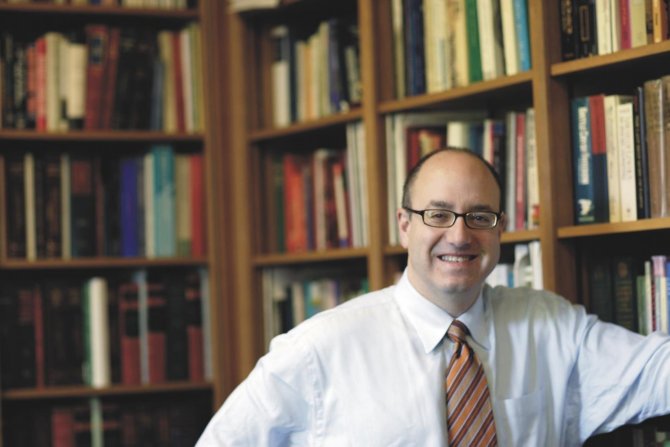
William A. Schambra is director of the Hudson Institute’s Bradley Center for Philanthropy and Civic Renewal, in Washington.