February 21, 2010 | Read Time: 6 minutes
After four years of national elections, it’s safe to say that America is in the grips of a new populist insurgency. Spanning the political spectrum, it seems to be an insurgency against big institutions of all sorts. Big corporations and banks are in disrepute with voters on the left; big government and big plans for its expansion are in disrepute with voters on the right.
And throughout American history, beginning with the creation of the Commission on Industrial Relations in 1912, and continuing through the Congressional investigations by Representatives Eugene E. Cox, B. Carroll Reece, and Wright Patman in the 1950s and 1960s, whenever the populist gale is blowing in America, sooner or later it blows ill for the world of philanthropy.
Over the past decade or so, philanthropy has set itself up to be severely buffeted by the storms of American populism. That is because not only has it gotten to be very big but it also relishes and proclaims its bigness in a way sure to aggravate populist sensibilities of both the right and the left.
Consider the title of one very popular recent book, by Matthew Bishop and Michael Green: Philanthrocapitalism: How the Rich Can Save the World.
It’s hard to imagine a title more likely to inflame populist resentments. The book celebrates a trend long thought to be very good news for philanthropy: namely, the influx of a new wave of very wealthy entrepreneurs who are bringing cutting-edge techniques of business management into the slipshod, amateurish world of nonprofit organizations. Even more established foundations are adopting, and ordering their grantees to adopt the business plans, benchmarks, measures, and sometimes even the revenue-generating techniques of the marketplace.
So at the precise moment that big business is in bad odor with the American people, foundations and their grantees are themselves deliberately becoming more like big business, adopting the very measurement-obsessed approach that did so little to prevent, and may have even helped precipitate, today’s recession.
Consider another trend likely to provoke populist animosity. Foundations and charities today are becoming ever more enthusiastic about working with and mimicking big government.
Indeed, many major nonprofit groups today are already virtually indistinguishable from agencies of big government because they are so beholden to government for money. And they are anxious to become even more so. Often at the urging of foundations, nonprofit groups are turning ever more to “advocacy,” which—in spite of the abstract, value-neutral terminology—invariably means advocacy for sustained or increased government spending on an array of programs.
To cover the costs, some nonprofit organizations are honest enough to admit, it will be necessary to raise the public’s taxes, to which cause they are now dedicating their wealth and energies.
The problem, though, is that nonprofit groups are less and less likely to benefit from the increases in government taxing and spending they seek, even if they can be squeezed from hard-pressed and resentful taxpayers. As state governments across the nation are discovering, ever larger and less sustainable portions of their budgets are devoted to extremely generous salaries, benefits, and pensions for current and retired civil-service employees. This inevitably siphons off money from nonprofit organizations.
An aide to Arnold Schwarzenegger, the governor of California, noted recently that “this year alone, $3-billion was diverted to pension costs from other programs.” So nonprofit organizations may have the best of intentions for their hard-pressed clientele as they “advocate” for larger government, but it will in fact simply be serving as the tax collector for labor unions that represent government workers.
Further sealing the relationship between big government and philanthropy, many of the nation’s leading foundations are pushing forward into substantial new partnerships with government departments of education, health, and welfare. They are overjoyed that at last all those pilot projects they have financed through many lean, mean-spirited years can at last be pumped full of federal dollars and spread across the country.
But coziness with big government provokes even more vigorous populist resentment than coziness with big business. Surveys show that the public’s trust in government is lower than ever and sinks lower yet with each new major proposal for its expansion. Particularly as concerns with government deficits mount, it would be difficult to find a position more likely to grate on populist nerves than advocacy for yet more taxing and spending. And yet this is a cause to which American philanthropy is increasingly drawn.
Ironically, even as foundations and their grantees pride themselves on becoming ever larger, more sophisticated, and more businesslike or governmentlike, the American people still think of them as charities—a word that often makes its leaders squirm. In the public view, charity means that everyday citizens respond in a neighborly fashion to meet immediate needs and organize to solve their own problems. Even as citizens fume against big institutions, they gladly write a check for the relief of Haiti or for the new center for the elderly around the corner.
This humble and homely view of the nonprofit world can create problems for its larger institutions, as administrative costs and salaries approach levels considered appropriate for all large and sophisticated institutions. That is why so many nonprofit scholars are busy explaining to the American people that it’s no longer your father’s or mother’s charitable sector.
Neighborliness and local civic activism are nothing more than naïve,Tocquevillian illusions about a mythical past, they insist, and have nothing to do with the massive, gleaming institutions—so admirably like government and business—that are at the heart of today’s nonprofit sector.
That Americans still feel warmly toward and participate willingly in charitable activities testifies to the failure of their leaders so far to persuade us that nonprofit groups should be regarded just like any other big institutions. For a while, at least, the stubborn persistence of this quaint, romantic myth about charity—which so many nonprofit leaders are working hard to dispel—may spare big foundations and nonprofit groups from the populist discontent with bigness wherever it is to be found.
It would be far wiser for nonprofit leaders to embrace the public’s view, however unsophisticated it may seem, that philanthropy is indeed part of and a vital support for everyday civic institutions.
To do that, it would be necessary for foundations to devote far more time, energy, and resources toward supporting local community activism and other efforts to get citizens involved, rather than vitiating those impulses with technocratic, businesslike procedures. It would be necessary for foundations and nonprofit groups to stand as sentinels against—rather than as silent and acquiescent partners in—the wasteful and inhumane practices of corporations and governments, which have done so much to provoke public anger.
In other words, it may yet be possible for philanthropy actually to contribute to and help refine the populist energies now surging across America, rather than falling victim to them.
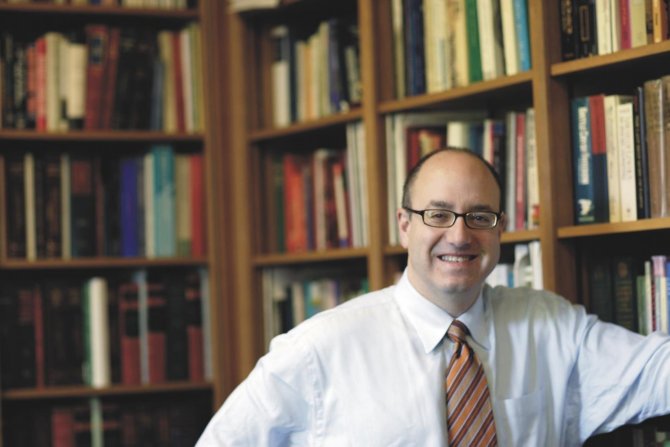
William A. Schambra is director of the Bradley Center for Philanthropy and Civic Renewal at the Hudson Institute, in Washington, and a regular contributor to The Chronicle’s opinion page. His e-mail address is william@hudson.org.