
Charities Must Stand Up to States That Skimp on Payments for Services

By ALLEN PROCTOR
Contributor
March 4, 2012 | Read Time: 6 minutes
A hard reality will soon confront the nonprofit world as the pressure to cut government spending gets more serious.
Nonprofits have long felt the tight pinch from state budget cuts, but they have masked much of the impact on people who rely on their services. That can’t go on much longer.
A growing number of organizations that receive state aid will soon be forced to tell governments they cannot sign contracts that continue to offer such punitive terms. If state officials don’t back down, nonprofits will face a tough choice: Deny services to some clients to help others or shut down and thereby deny aid to all clients.
This dilemma has been slowly building. State, federal, and local governments have been talking about spending cuts for years. Sometimes they have reduced spending and sometimes they have not. Either way, most taxpayers haven’t seen any difference in their lives. They just see three issues: debt, deficits, tax increases. Who wouldn’t want to eliminate or avoid all of them? Abolishing debt is good for the country, and it has no obvious personal impact. Erasing deficits also sounds good and is abstract enough for many individuals to anticipate little effect in their own lives. On the other hand, people can see that tax increases will come out of their own wallets.
Why is this myth that spending cuts don’t affect real people so popularly accepted and expansively broadcast by a wide swath of the political world?
Much of the answer lies with the behavior of nonprofit human-service organizations. In their devotion to helping serve community need no matter what, they have left many with the impression that government budget cuts make no meaningful difference.
Governments have been solving their budget problems by out-Wal-Mart-ing Wal-Mart. The discount retailer is famous for pressing its suppliers to lower their profit margins. Governments have been eliminating the profit margins of nonprofits.
They have done this in three ways documented by an Urban Institute survey of more than 32,000 nonprofits with government contracts:
- Skimping on payments. Sixty-eight percent of nonprofits were paid less than the full cost of contracted services.
- Pushing costs to the nonprofits. For more than half of organizations, governments required nonprofits to match the government aid they received or absorb a portion of the government’s cost.
- Paying late. More than half the nonprofits reported that the government reimburses them later than specified in the contract, typically 90 days later.
As a result, the majority of nonprofit service providers had to pay their bills when government payments weren’t coming in, and when payments did arrive, they were less than the nonprofits’ costs. This acquiescence has financially weakened nonprofit service providers.
Nonprofits have allowed themselves to be taken advantage of in a manner that businesses would not tolerate. A for-profit company would never sign a government contract that didn’t cover its costs, would insist on a profit, and would add a significant interest penalty for late payments.
Nonprofits may also be encouraging the situation by penalizing themselves and their employees rather than exposing the public to any reduction in services because of government cuts. Half of the nonprofits in the Urban Institute survey froze or reduced staff salaries, and more than 40 percent reduced staff benefits and tapped their reserves. But nationally only one-fifth made any reductions in services, and in 27 states the proportion of nonprofits that reduced services was even less than one-fifth. The upshot is that nonprofits have used their own cash and put their employees’ financial welfare in jeopardy to maintain government services, thereby leaving many taxpayers with the impression that tax increases are not needed to preserve services.
It would be a grave mistake to assume that philanthropy can solve this problem. Private donations provide only 22 percent of nonprofit revenue, and the share has not exceeded 24 percent since 1985. The only way the next wave of government budget cuts will occur with no impact on government services is if nonprofits spend more from their reserves, assuming they have any, or their employees can survive with even lower salaries and benefits. When the next round of government cuts comes through, nonprofits will find they can ask no more of their hard-pressed employees, and their bank accounts will offer little help. Lower government payments will simply mean fewer services.
What will the taxpayers say when services disappear? It would be ironic if they blame the nonprofits for service cuts. But nonprofits have only three options, all of which point to eventual reduction in services. They can:
Continue doing what they have been doing. If salaries or benefits go much lower, many of their employees will have to seek work elsewhere. Losing employees, or alternatively laying them off, means reduced services. If nonprofits don’t cut workers or services, they will operate until they can’t make payroll or pay their bills. When nonprofits announce these changes, taxpayers will probably blame them for inefficiency or poor management rather than blaming the government’s inadequate payments.
Play hardball. They can refuse to sign contracts that don’t cover the full cost of providing services for government agencies. This is a no-win situation. They can survive by not taking government contracts and shift their clients to another “more caring” nonprofit, or take the contract and join the race to the bottom. If a nonprofit quits providing services, the public will criticize it for not caring, and governments will probably blame reductions in service on the refusal of nonprofits to “help” the government provide services. If a nonprofit takes the contract without getting a fair payment, it will fail and nonprofit inefficiency will be blamed when needy people lose services.
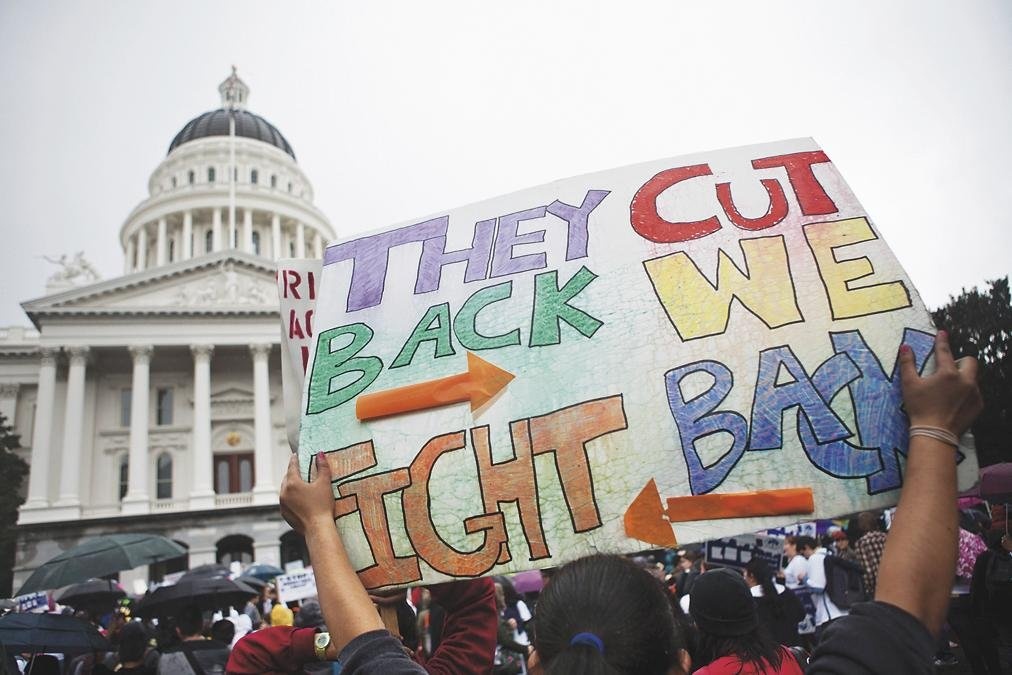
Join together and demand better contract terms. Nonprofits can go to government with one voice and mount a clear public-relations campaign that lays out the financial reality of nonprofit survival in terms that business executives understand. The message could be something like: “Paying less than the cost is a sure formula for bankruptcy—and nonprofits aren’t loading a profit margin on top.” Nonprofits have never done this, and they have little practice in showing a unified front. Some may refuse to collaborate, charging their colleagues with trying to better themselves at the expense of larger government deficits and leaving their clients in the lurch.
None of these are good options, and all have the potential for nonprofits to take all the blame. Nevertheless, moving cautiously ahead with all of these approaches may provide the best way for Americans to get realistic.
Nonprofits must make sure they know what services are key to this mission and which ones might be provided by other nonprofits. They must ensure that the key mission services are the ones they continue to provide even under money-losing contracts. They can concentrate their layoffs or wage reductions on the other programs they offer.
At the same time, every nonprofit should set a goal for the next year to reject at least one money-losing contract, however small, in the next six months. That could start a more productive discussion of the key role nonprofits play in the supply chain of government services.
Nonprofits must also join local associations or create new ones so they can share their financial challenges. Together they can make a concerted push to tell elected officials how much they lose on their government contracts and the impracticality of expecting philanthropy to surge to fill the gap.
Little steps on all fronts will draw some criticism. The alternative for many nonprofits, however, would ultimately be bankruptcy. In either case, taxpayers may finally see that government budget cuts usually mean fewer of the services that citizens believe they have every right to expect.





