Community Foundations Seek Winning Ideas That Are Fresh and Bold

By Suzanne Sataline
Contributor
February 19, 2012 | Read Time: 8 minutes
The leaders of the Rhode Island Foundation think they have a great way to inject some bold thinking into their economically battered region: Next year the foundation will award $100,000 each to two people whose original ideas might “dramatically improve” life in the New England state.
Winners of the Rhode Island Innovation Fellowship aren’t limited to any field or subject and can hail from anywhere—as long as they are willing to live in the nation’s tiniest state and work on their ideas for up to three years. “It’s the seed capital to tap into something unconventional,” says Neil Steinberg, the Providence foundation’s president.
But there’s an unusual twist to this fellowship: The winning ideas don’t have to work.
The point is to award creativity, foundation executives said, even if the projects never fly. “Failure would not be trying,” said Jessica David, the community fund’s vice president for strategy, planning, and special projects.
Great idea? A waste of money? It all depends on one’s notion of “innovation,” a concept that has shaken up the business and technology worlds and now is buzzing around community foundations eager to extend their reach in a tough economy. Some regional grant makers have made changes in subsequent rounds of awards, realizing that they must require more proof that a concept will work.
Out of ‘Left Field’
Some community foundations say that with money still tight in the weak economy, the notion of rewarding concepts, instead of programs, seems smart because it welcomes ideas from more players. Several grant makers say they have become frustrated with tired suggestions from the same sources that did little to fix stubborn problems.
By offering prizes for ideas, and seeking applicants and opinions online, regional foundations have invited strangers, in every part of the world, to weigh in.
“If you ask the same old set of people, you’ll get the same old set of answers,” says Gabriel Kasper, senior consultant at the Monitor Institute, a consulting firm and think tank in San Francisco, who has studied the concept and practice of innovation. “If you open up, you get the possibility of creative, crazy solutions from left field. If you don’t open up, there aren’t the mechanisms in philanthropy to get those ideas otherwise.’’
But, he cautions, even if foundations receive a lot of “innovative” ideas, that doesn’t necessarily mean a community’s problems will get solved. “The crowd is good at coming up with lots of ideas,’’ he says. “The question is: How many of them are good?’’
Philanthropy, like other parts of society, is driven by fads, and innovation is the current one—supplanting previous fashions like “empowerment,” says Dave Beckwith, executive director of the Needmor Fund, a family foundation in Toledo, Ohio, that focuses on social-justice projects. New labels, though, don’t necessarily solve problems any better or faster, he says. And innovation grants too often distribute money to causes or projects selected by donors and leaders, rather than to the “bottom-up needs of those most harmed by hard times,” Mr. Beckwith says.
“It’s all well and good to come up with a great idea, but where is the political will, the sustainable economics, and the effectiveness measures that mean it’s going to work?” he asks. The missing piece in giving, he says, is not the lack of good ideas. “The missing piece is the political will, economic viability, and the base that want it to be done.”
‘Nimble and Creative’
Some foundations have tried to avoid wasting money by defining innovation and requiring proof that proposed ideas work. That’s a requirement for arts innovation grants awarded by the Sacramento Metropolitan Arts Commission and the Sacramento Region Community Foundation. They define innovation, in part, as “any strategic organizational practice that provides new pathways to fulfilling mission.” Winners must show that their ideas create new and marketable products, restructure an organization, or increase revenue, among other possible results.
“I think the economy has dictated so much of the need and the drive to learn what’s innovative out there,’’ says Priscilla Enriquez, the Sacramento foundation’s chief giving officer. “We know that everyone was struggling, but there are some out there who are able to survive and maintain. What are they doing that we could replicate?’’
Sacramento Ballet received $10,000 for cutting the number of theater performances it produced and instead staging in-studio workshops that drew people who had never bought tickets to traditional performances.
“You could sit there within three, four feet away and see the sweat dribbling off their faces,’’ Ms. Enriquez says. “It was eye-opening to us that [company leaders] were thinking quickly and being nimble and creative.’’
In the next round, a scrappy, up-and-coming gallery, Verge Center for the Arts, created residential space in a warehouse for international artists. The $10,000 award prompted two large private donations. The concepts that the arts group came up with can be copied by other charities, allowing other groups to benefit. That leads to more giving, says Ms. Enriquez: “Donors feel confident and will give more.’’
Pilot Programs
The Hawaii Community Foundation also demands some proof of success before awarding up to $100,000 for compelling concepts presented by grant seekers. The Honolulu group created the Island Innovation Fund with a $3-million gift from Pierre Omidyar, the eBay founder, and his wife, Pam. The couple’s Omidyar Network, a hybrid nonprofit and for-profit entity, supports entrepreneurs worldwide.
Winners of the Island fund’s awards have had to show, through a pilot program or prototype, that their concepts could be developed, says Kina Mahi, senior program officer at the Hawaii Community Foundation. “We’re looking for organizations that have done some road testing of their innovative ideas or for-profit entities that use a certain technology that can be applied’’ to other programs, she says.
Applicants were invited to post their ideas online. Among the winners selected in March was the Hawaii chapter of the Nature Conservancy, which wants to use high-resolution photography to map the island of Kauai to promote the conservation of native forests. A network called Community Harvest Hawaii, wants to establish a local harvest day, when extra food could be collected, cooked, and shared. That organization, Ms. Mahi says, has received requests from other rural communities that want to copy the idea.
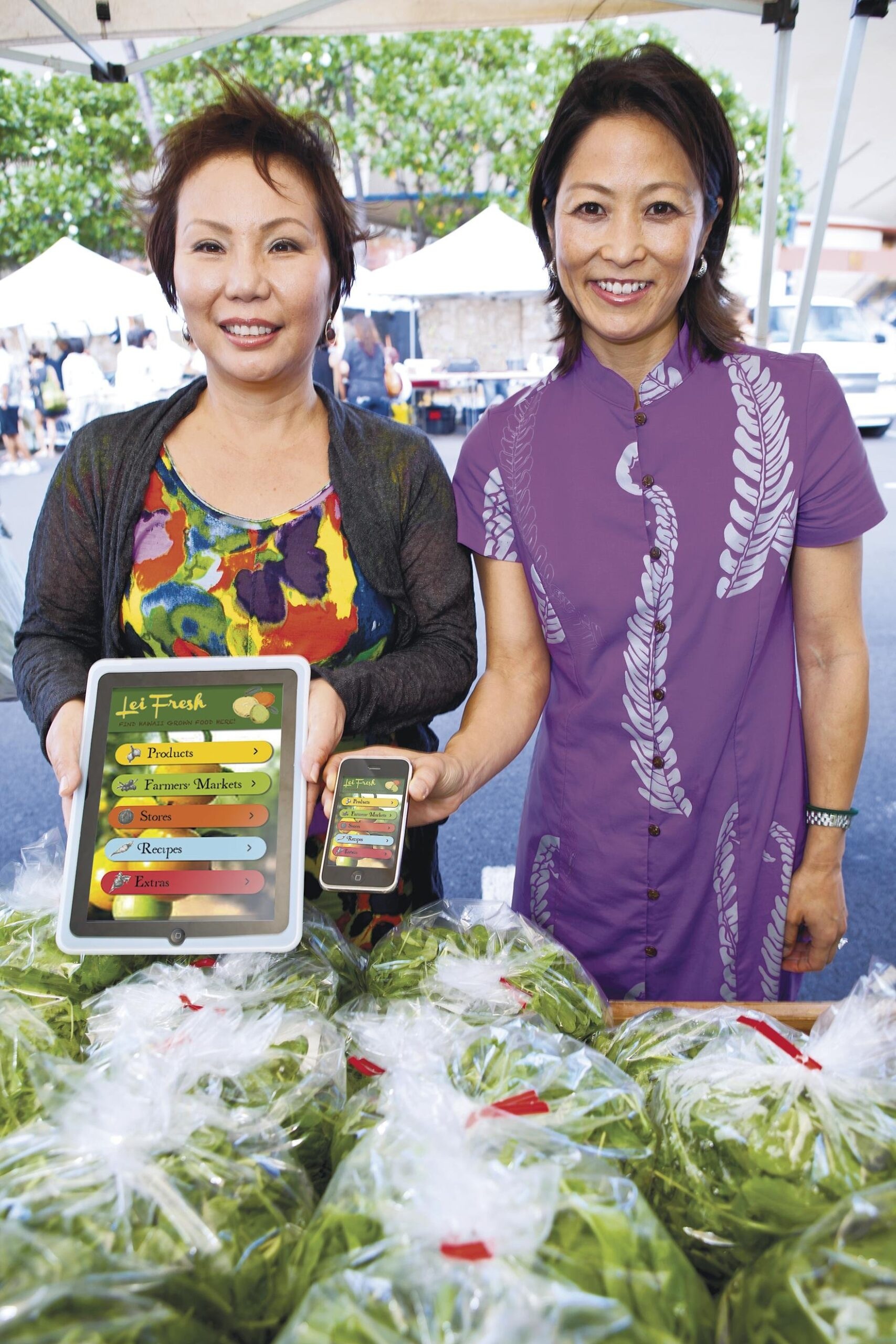
One winning concept has struggled, Ms. Mahi says: an island version of Groupon that would reward socially responsible and environmentally friendly businesses with more customers through online deals. The innovators are changing the platform to a “Hawaii-based Facebook,” she says.
Some foundation leaders have wondered if they have unfairly excluded great ideas by requiring prototypes. The foundation will offer a second round of grants this month and a final round later in 2012, but hasn’t decided if it will continue afterward. It hopes to, says Ms. Mahi, but doesn’t yet have a financial commitment to cover the program beyond the current plans.
Problem-Solving Incentives
Other community funds have decided to offer awards in hopes of solving thorny problems that have bedeviled their communities. The Greater New Orleans Foundation developed “the water challenge’’ in 2010, which will give $50,000 to a business proposal that deals with issues of flooding or environmental harm in the area. One proposal calls for building a filtration system; another would invest in more native plants that absorb water.
“We’ve kept it deliberately general to get as many ideas as we can, anything using water in the cleverest possible way,’’ says Marco Cocito-Monoc, the foundation’s director of regional initiatives.
After many residents of Birmingham, Ala., said they wanted a “cool and vibrant city center,’’ the Community Foundation of Greater Birmingham created Prize 2 the Future, a $50,000 online contest seeking the best way to redevelop a city block.
The organization decided to sponsor a contest because there was no agreement on the best way the foundation could improve city life. “Donors all have their own interests and passions,” says Karen Rolen, vice president of grants and initiatives. “When we tried to focus on something, such as performance space, there were others much more interested in neighborhood safety. We couldn’t come to a consensus on one thing.”
The foundation received 1,113 ideas from around the globe, she says. Several entries called for building a giant Ferris wheel. One called for a green space with wind chimes. The winner—a local developer—proposed a high-tech center, with performance space and a produce market.
The foundation, which has committed $1.6-million to the plan, is working with development teams responsible for obtaining financing. Ms. Rolen says she’s confident the concept will be built.
Mr. Kasper, of the Monitor Institute, says each foundation must decide whether the kind of projects that receive innovation grants are worth the money.
“By running the process you’re getting a whole lot of people thinking about solving problems,” he says. “Having people engaged and working has got to be the path to finding more solutions.”
Mr. Beckwith, of the Needmor Fund, says a community ultimately judges whether a fresh idea matters.
“The missing link in the theory of philanthropy is: Who wants this? Who thinks this is a good idea,” says Mr. Beckwith. “Without the voice of people who want it done, it falls by the wayside.”