

July 9, 2014 | Read Time: 6 minutes
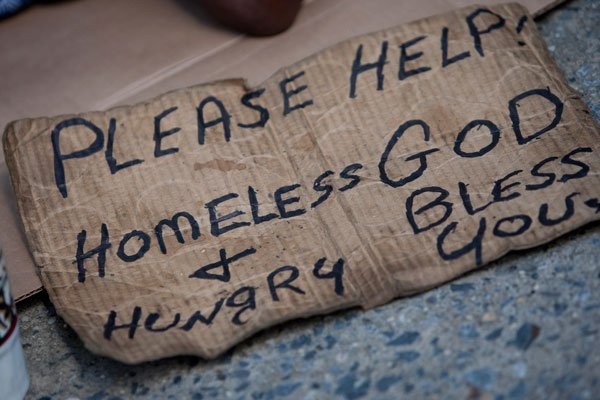
Whatever little remained of the 1980s’ “compassionate conservatism” has evaporated in the heat of today’s Republican extremism. More than three quarters of American conservatives now think that the poor “have it easy,” according to a two-part study released by the Pew Research Center last month.
Conservatives told pollsters they believe that the poor have easy lives because “they get government benefits without doing anything.”
These ideologues are willfully ignorant not only of the severe limits of government aid but also of the burdens the poor face in obtaining food stamps, Medicaid, day care, public housing, and other kinds of government assistance, as well as the hardship of their daily lives. More than 80 percent of conservatives say that the government programs on which the poor so desperately depend do more harm than good.
Such politically motivated blindness should be the source of profound distress for the nation’s nonprofits, even if their missions deal with problems other than poverty. Blaming the victim does not bode well for any nonprofit effort.
After all, most problems charities try to solve are the result of major shortcomings in the economy and in society’s institutions. Putting the onus on those who suffer is uncharitable but it also undermines public willingness to support government programs or to act philanthropically.
There is evidence of such a phenomenon when well more than half of conservatives believe that someone is poor because of a “lack of effort” on his or her part while fewer than 30 percent of them believe that poverty results from “circumstances beyond [people’s] control.”
The new Pew poll also points to a challenge that stymies nonprofit advances on many fronts—the unwillingness of a broad swath of powerful political forces to take the facts into account when shaping their policy views.
In a world of such extremes, nonprofits need to find new ways to aim their arguments at those in the center—those Americans who hold the key to moving the nation forward at a time of serious polarization.
To help nonprofits fight misconceptions about the poor, let’s look at some critical facts: Poverty in the U.S. is higher today than at any other time since the 1960s and includes more than 50 million people. Close to one in four American children lives in poverty, the second highest rate of 35 economically advanced nations, according to the United Nations. And that figure jumps to more than one in two children if we include those whose families have incomes of up to twice the poverty line.
Is poverty these children’s fault? If not, conservatives still want to blame their parents with close to 90 percent of them asserting that “everyone has it in their own power to succeed.” But we have known for a long time that people who grew up in poverty are much more likely to be poor as adults and to be the parents of today’s poor kids.
And although it’s clear that race still matters in America, over 80 percent of conservatives say “blacks who can’t get ahead are responsible for their own condition.”
Rather than blaming the victim or faulting cultural factors or genetics, as would many conservatives, science reveals through neurological and other studies that it is the very condition of living in poverty that reproduces it—as well, of course, as external economic forces and malfunctioning institutions. As Jeff Madick, a Century Foundation fellow wrote in reviewing such studies, parents “can’t get jobs that allow time for them to spend with their children and lack the resources, time, or freedom from anxieties to cope” to fix things for their own kids. Does that sound as if it is their fault?
But conservatives tend to ignore scientific findings that contradict their ideology. For instance, 46 percent of Republicans say that global warming is “just not happening,” and over 70 percent of serious conservatives say that we have already “gone too far to protect environment.” They hold to that position in spite of the fact that 99.9 percent of climate scientists say that it is real and ever more dangerous. According to a recent study, people “resist factual information that threatens their defining values.”
Beyond poverty-focused and environmental charities, such obstinate ideologically driven oblivion ought to matter to all nonprofit organizations. Those who want to build a better world depend on the public’s and policy makers’ willingness to see truth and to operate with compassion even when they don’t.
There’s too little of either among today’s conservatives.
As Pew says, “Republicans and Democrats are more divided along ideological lines—and partisan antipathy is deeper and more extensive—than at any point in the last two decades.” Republicans are significantly more likely than Democrats to see those with opposing views as a “threat to the nation’s well-being.”
This poses a real challenge to charities seeking to improve the way our society operates in service both to the neediest and to the rest of us, as well as to the planet. And we’re not doing too well in those philanthropic efforts.
According to the Social Progress Imperative, which measures social and environmental factors, the U.S. is not even in the top 10th of nations studied. America comes in 16 overall but 23 on a measure of “basic human needs” (nutrition, basic health care, and shelter) and 36 on the foundations of well-being (school enrollment, phone and Internet access, life expectancy, and ecosystem health) in spite of doing a lot better than other countries in protecting the rights, freedoms, choice, and other opportunities available to many U.S. citizens.
America needs to do a lot to make progress, and that requires both nonprofit and government activity. Although about 80 percent of those holding strongly conservative views think regulations do more harm than good, it should be clear to the majority of Americans that our people, communities, and planet need additional safeguards from those who favor private interests over the public good. The voluntary associations, local governments, religious institutions, and family structures so valued by conservatives do not alone have the power to solve the extensive problems we face as a nation.
The good news is that beyond those with extreme and polarizing ideology, there is a large center of about 40 percent of Americans who can be enlisted by charities to help make social progress. Although that percentage has shrunk by about a fifth in the last two decades, it is to them that nonprofits must speak.
Charities need to go beyond providing services and enlist larger numbers of Americans free of ideological myopia to support programs and policies that will solve the problems that bedevil the nation. That requires helping people become more engaged in their communities and in our democracy.
Those on the extremes are more likely to vote and to be involved in political processes. The only way to get past the problems caused by polarization is to activate the people in the middle of the spectrum. Unless charities and foundations turn to that task, the causes, communities, and people they serve will continue to suffer as public discourse, decision making, and action move further away from truth and compassion.







