
Don’t Shut It Down, Bill! Why the Gates Foundation Should Outlive Its Endowment.
Bill Gates is right to accelerate giving but wrong to close one of the most effective private funding institutions on the planet.

By Buzz Schmidt
Contributor
May 22, 2025 | Read Time: 5 minutes
Bill Gates’s announcement this month that he is accelerating grant making and shutting down his foundation in 20 years, while stunning, left me wanting more. Gates is one of history’s most important and insightful philanthropists. His goal of deploying $200 billion over two decades is admirable. But he is also missing a big opportunity.
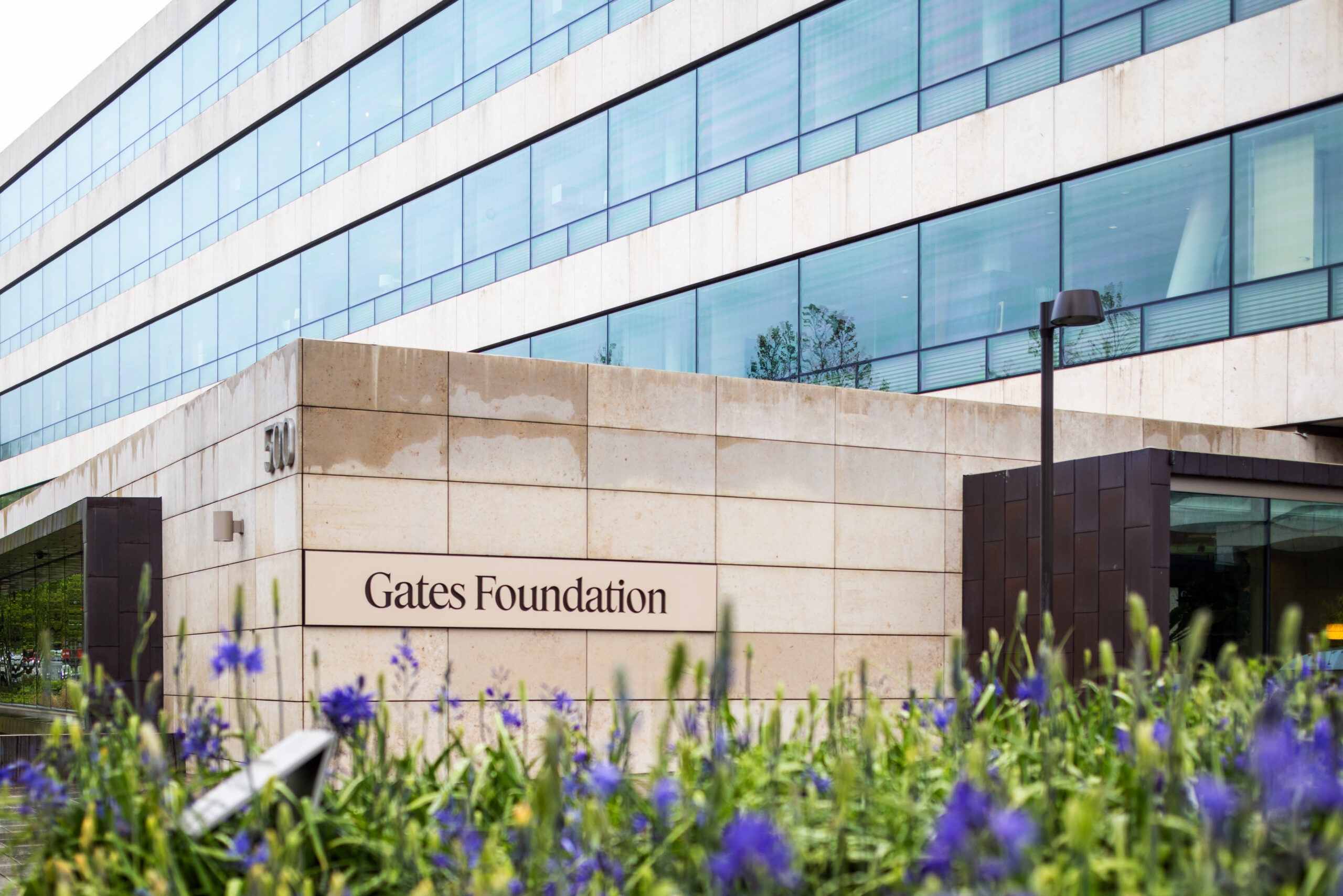
The Gates Foundation

That’s because it isn’t all about the money. Gates has built a foundation with an enormous wellspring of nonfinancial assets that could easily attract significant new funding from others and address the problems that will exist throughout this difficult century.
Over their lifetimes, successful philanthropies develop large stores of this institutional nonfinancial capital, including experienced staff and executive leadership, management systems, impact assessment tools, and critical relationships with investment partners, grantees, governments, academic institutions, and others.
Yet when foundations shutter, their boards rarely consider society’s loss of all the nonmonetary assets that drove their funding and helped make it effective.
Not All About the Founders
The Gates Foundation is already an exemplary institution. As it continues to pour billions into its own operations during the next two decades, it will become an even more formidable enterprise. So why close it just because founder capital will no longer fuel the foundation?
Given the unpredictability of the American government to address accelerating threats to global health and well-being, philanthropy will only grow in importance in the coming decades. This is surely not the time to consider, much less celebrate, the midcentury closure of one of the world’s most impactful private funding juggernauts.
Gates should instead complement his admirable decision to stop preserving the foundation’s endowment by ensuring a longer life for its institutional, operating side.
Admittedly, this would go against sector norms. Like virtually every foundation founder, Gates thinks of his foundation as a singular personal enterprise. When he referred to the grant-making potential of the foundation in his wind-down announcement, it was limited to “the balance of the endowment and my future contributions.”
But that positioning undersells what he has accomplished and its enduring value. Why should the funding that moves through this remarkable global entity come only from Bill Gates and Warren Buffett? Why, for that matter, should any wealthy philanthropist establish a foundation whose long-term viability is limited by their own contributions?
Swan Song – Part 2
Bill Gates can step back and enjoy the well-earned accolades generated by his decision to accelerate his giving. But instead of shutting it all down, I hope he continues to strengthen and preserve this institution, which arguably will be as important to the world as the cumulative impact of his first 45 years of grant making. Here’s my suggestion for a part two of his valedictory essay.
“Over the coming 20 years, as we approach the deployment of the last of the original financial capital that Melinda, Warren, and I contributed to this enterprise, we will broaden and strengthen the Gates Foundation’s capacity to manage and distribute the continuous contributions of new funds from other philanthropists. It is my hope that the foundation remains a leading force in building a healthy future for the inhabitants of our planet throughout the 21st century.
“Our 2,000-strong staff, expert and time-tested, is ready to operate the Gates Foundation of the future. They have proven that our approach, combining deep research, strong global relationships, collaborative public-private engagement, and a commitment to accountability and transparency, can make a significant difference in the world and successfully address otherwise intractable challenges.
“So today we begin the process to ensure that the foundation’s efforts continue well beyond the distribution of its initial financial assets. To this end, we will do the following:
- Catalog critical new global challenges where we believe our approach can be most effective, such as climate change remediation, migration, and addressing AI’s effects on humans.
- Explore dividing the foundation’s existing and prospective work into independent issue-focused funds, such as a Gates Migrant Support Fund, each with the staff and infrastructure to address its respective challenge. This approach will help attract donors interested in particular issues, while drawing on the Gates Foundation’s reputation, global relationships, and operating systems.
- Invite other donors, including individuals, trusts, foundations, and corporations to give to these funds.
- Enlist new funders as well as academics, practitioners, and technical experts to help govern the Gates Foundation and its assets.
“The Gates Foundation will soon be seen as an exemplary connector of philanthropic funds to programs and strategies that address global problems. We will use our reputation and expertise to secure this funding from multiple international sources of wealth. While many challenges will necessitate long-term financial commitments, new funds will be distributed as needed in real time and in no case preserved in perpetuity.
“We will serve as faithful stewards of the new funds entrusted to us and as providers of financial and intellectual capital to address the most arduous global challenges of this century. After 2045, while it won’t be under my control or the control of my heirs, the Gates Foundation will continue on — addressing the global challenges of this century and serving as a valuable model for the conduct of philanthropy generally.”





