
During This Time of Deep Need, How Nonprofits Provide Service Is as Important as the Service Itself

By DONIECE SANDOVAL
Contributor
September 1, 2020 | Read Time: 5 minutes
We are a world in need of an extraordinary level of care right now — and likely for months and even years to come. But are we prepared to give that care in a way that truly changes lives?
The Covid-19 pandemic and simultaneous racial-justice uprisings have revealed the deep and unacceptable fractures running through our society. For instance, even before the pandemic, more than half a million people in the United States lacked permanent housing. Disproportionately, they were people of color. As the health crisis drags on, many more are becoming unmoored. These fellow humans need our help: food, homes, health care, jobs. Like all of us, they deserve to be seen and respected.
Yet this is not the way people typically feel while receiving services from governments and most nonprofits. Instead, they often feel devalued, depersonalized, and disrespected. Underlying most service models, even if indirectly, is a belief that people should feel lucky to get any help at all. The spirit in which that help is given is irrelevant.
That must change.
To truly recover from this pandemic, we will need to rethink the practices and assumptions driving the way nonprofits operate and the way government at all levels formulates and implements policy.
I know from personal experience that it is possible to mean well and serve poorly. It is also possible to push light through the cracks of the darkest experience.
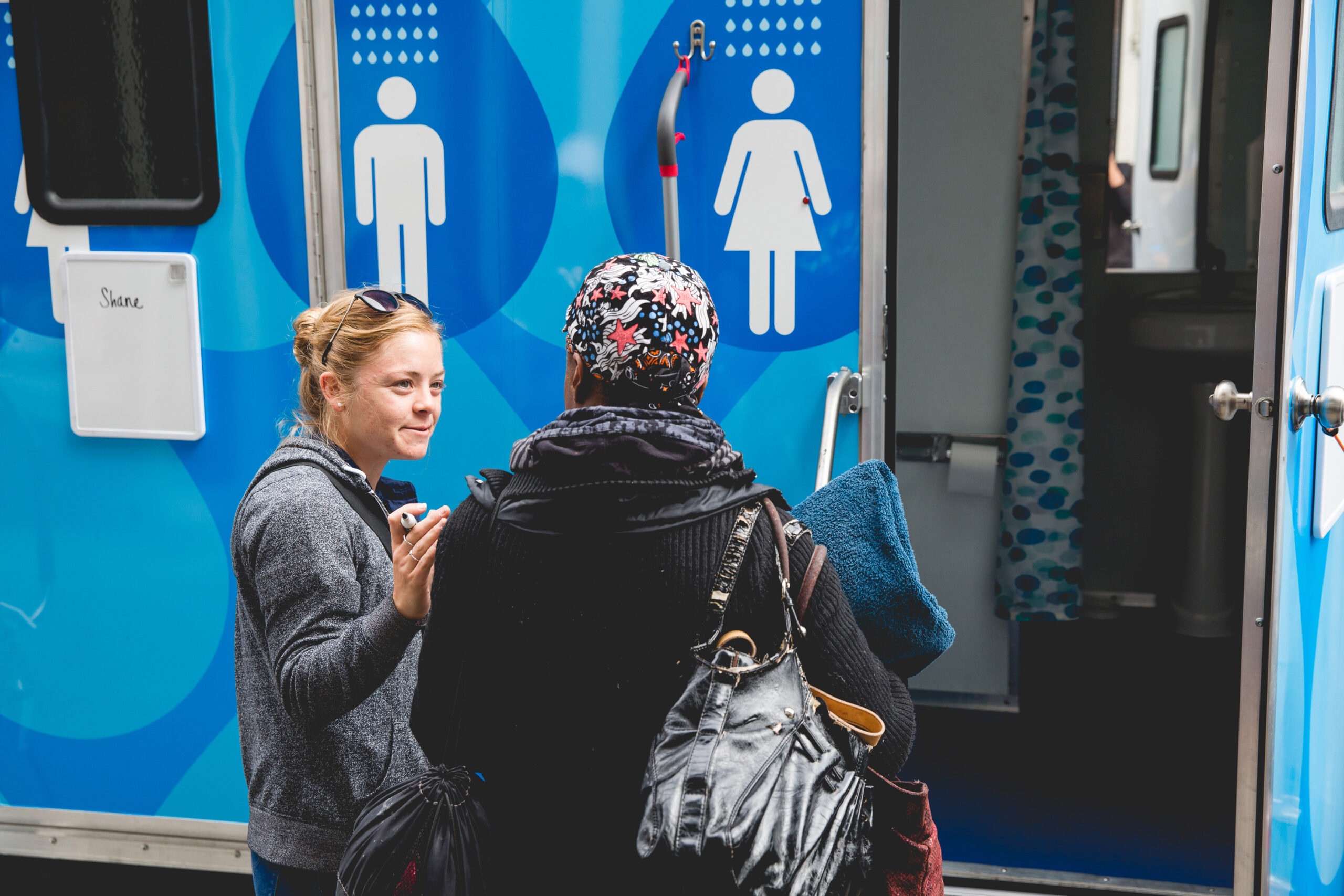
Several years ago, I created the mobile hygiene provider Lava Mae (now LavaMae) to fill the massive gap in access to showers and toilets for the unhoused because I knew that being clean is integral to one’s dignity. What I didn’t understand initially is that the way people treat you, the way a service is delivered, is more important — more transformative — than the service itself.
Within weeks of launching, I noticed that two team members brought a powerful yet nuanced quality of service to those we were helping. I struggled at first to put my finger on what it was exactly. They weren’t just helping people get clean. They were authentically connecting with them, treating them as old friends and cherished neighbors.
That’s not what I was doing. While I was welcoming and friendly, I held a part of myself back. I was conscious of my privilege and concerned that I’d say or do the wrong thing. I felt overwhelmed by the sadness of the circumstances facing the people we served and a deep sense of guilt about my own good fortune. So I hid behind an internal wall. As a result, I found myself taking a beat too long to extend myself to someone, especially if that person was struggling with obvious mental illness or reeking of feces and urine.
Radical Hospitality
As I continued to observe my teammates’ approach, I saw that they had a secret salve that healed our guests. They looked them in the eye, learned their names and stories, wished them well with genuine feeling, generally recognizing our common humanity and need to belong. We call this “radical hospitality” — a level of care that restores dignity, rekindles hope and optimism, and fuels a sense of possibility that’s vital to stopping the vicious cycle of homelessness.
Real healing begins with the experience of being seen as a fellow human being who is equally worthy of love, consideration, and respect. Rather than being an unnecessary “extra,” providing a high level of personalized care is fundamental to helping people tap into their ability to persevere and build resilience. This is how one of our regulars explained it:
“I walk down the streets with my head held high. … Josh and Annie always greet you with a smile, good morning, can I get you anything? How was your day and night? For me, and for a lot of people, seeing them, being able to say hi, that brightens up someone’s day. And that shower? That’s just icing on the cake.
“You make friends with the people who are helping you out. They really want to help you. You realize there’s a lot of people fighting for you, who are there to support you. … It feels like you matter; you can come back and be successful.”
During this uncertain and taxing time when nonprofits, especially those providing social services, are being asked to do much more with less, it’s still possible to embrace an approach that treats every person as a welcome guest. These three practices can help an organization build a culture of authentic connection:
Make the well-being of all who work for the nonprofit a priority. Encourage staff to take care of themselves, and make sure that behavior is modeled by those in leadership positions. The team needs to feel emotionally strong themselves to give effectively to others.
When developing services, seek insight from clients (we call ours guests). At each stage of this process — design, iteration, and evaluation — return to them for feedback about how the approach is working.
When hiring frontline staff, look for the qualities needed to deliver extraordinary care. These, of course, include compassion, thoughtfulness, and responsiveness. But we’ve also found that problem-solving skills and adaptability are essential when serving people with multiple challenges.
The approach I’m calling for works in both directions: choosing to see affects the person being seen and the person who has decided to see. We’ve embraced a myth that we should wall ourselves off to the suffering of others for our own emotional health, but I’ve found that turning away causes more psychic pain than turning toward those in need. Actions that affirm our mutual humanity feed us all.
Imagine what might change if we all turned toward an unhoused neighbor by first turning toward each other in whatever way we can, even if it’s just a nod or a look of understanding — something masks don’t prevent. What if, instead of looking away, we each offered our own small gesture of solidarity and human-to-human connection?
Now imagine that transformation at a national and global scale, in every place we serve others.





