August 8, 2010 | Read Time: 15 minutes
Saying goodbye after a long fund-raising career has rarely been easy.
These days, however, a growing number of fund raisers don’t face that challenge, even when they reach retirement age.
Instead, many older fund raisers are taking part-time jobs or volunteering, often at the institution where they held senior positions. And others are continuing to work full-time in new roles that demand less travel and stress.
The poor economy has accelerated such moves, as fund raisers reach their 60s and 70s with less in savings than they had counted on. And nonprofit groups are welcoming the arrangements because they fear the loss of senior personnel could cause longtime supporters to curb donations at the very time the economy is giving many donors the jitters.
“Having a retiring development officer work at least part-time may be the solution to the current economic times,” says Neil Haney, a former hospital fund raiser in Texas, who retired last year. “It keeps continuity without the costs of a full salary or training someone new or worrying about an abrupt change that shakes up donors.”
But the arrangement may also raise uncomfortable questions about who is in charge—and for how long a retired employee can continue making valuable contributions. In some cases, the retired fund raiser’s successor might feel threatened or annoyed that someone with more experience is still around.
Defining Expectations
To avoid pitfalls—such as clashes with new bosses or overstayed welcomes—deals with retirement-age fund raisers must be well structured and managed, charity officials and observers say. Retired fund raisers who return to work should have a contract with clearly defined work hours, responsibilities, and expectations, experts say.
Edith H. Falk, a fund-raising consultant at Campbell & Company, in Chicago, says those contracts should specify a plan for regular meetings with the chief fund raiser and performance reviews at least once a year, if not every six months.
“You don’t want to end up in the awkward position when at some point the situation is no longer working and there’s no framework to raise the issue with a longtime valued member of the family,” Ms. Falk says.
By the same token, she says, nonprofit organizations must consider whether it makes sense to ask a retiring official to stay at all. Such an arrangement, she says, should not be made just to accommodate a longtime employee’s wishes. If, for example, an employee seems mainly to be interested in a post-retirement position to earn money, the organization might want to offer a bigger retirement package instead of a job.
Nancy Raybin, managing partner at Raybin Associates, a New York consulting company, agrees that nonprofit groups should be very selective when making post-retirement arrangements.
“Plenty of people had lovely 20-year careers at an organization,” Ms. Raybin says, “but are no longer the right people for the job.”
Ties to Major Donors
Fund raisers at organizations that have found a place for retired workers say the biggest advantage is that the veterans provide a critical connection to major donors, many of whom are themselves past retirement age.
The older fund raisers are the ones, they say, who—sometimes over decades—have visited with, corresponded with, and, in many cases, developed friendships with the organization’s key supporters.
Even so, development offices must be agile enough to handle personnel changes, regardless of whether they are caused by retirements or transitions of other kinds.
David R. Dunlop, a fund raiser for Cornell University from 1959 until his retirement in 1997, says he would have considered himself a failure if his departure had meant upsetting any of the relationships between the university and its supporters. The connections cultivated by fund raisers, he says, should be more like a web than a one-to-one link.
Still, longtime donors have reached out to Mr. Dunlop since he left his Cornell job, and he is happy to be in touch. One donor asked Mr. Dunlop for advice about a project he wanted to support at Cornell.
“We had a history, and he knew he’d get my honest opinion,” Mr. Dunlop says. “Fortunately, I thought it was a good idea. We talked about it, and he ultimately gave $15- or $16-million.”
But Mr. Dunlop never represented Cornell in any conversations. “I wasn’t at the meetings,” he says. “I was retired.”
Following are some of retirement-aged fund raisers who continued to help their institutions—and how they made the arrangements work:
‘AN EGO THING’
On 4 Days a Week, a $320-Million Campaign
Four years ago, on his 70th birthday, Frank R. Hall asked the St. Joseph Health System, in Orange, Calif., if he could reduce his workweek to four days. Mr. Hall, who was the chief fund raiser at the time, wanted to ratchet his hours down a bit while seeing through a $265-million, nine-year capital campaign, scheduled to end in 2009.
The campaign ended early last year well over its goal—at $320-million—and, soon after, Mr. Hall announced that he would retire 18 months later.
“Much of the timing decision was an ego thing,” says Mr. Hall, who started at St. Joseph in 1988. “I was already 63, 64 when we got this campaign going, but I wasn’t going to retire before the end of it and have someone else get to announce the totals.”
Giving St. Joseph a year-and-a-half lead time on his retirement, though, was more a professional decision, he says. He especially wanted to help hire new fund raisers, and he wanted to improve how the organization treated donors. He thought, for example, St. Joseph needed a more complete manual spelling out what donors should be told about the tax implications of gifts.
When a longtime department head lays out a retirement date, he says, it’s sort of like setting deadlines for staff members to work on efforts that might otherwise be neglected.
“We had time to get the house in order,” he says.
TWO ON, TWO OFF
A Biweekly Schedule Brings Continuity
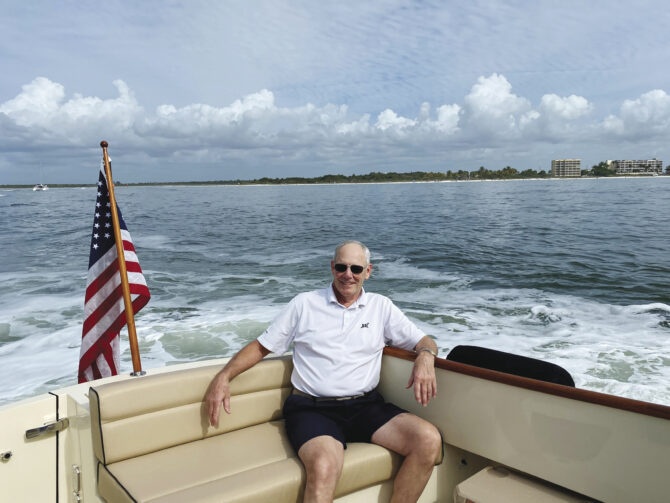
Here’s how Neil Haney ensured that he wouldn’t overstay his welcome when he continued to work at Scott & White Healthcare, a hospital group in Texas, after retiring from a 32-year fund-raising career there: He told the chief development officer who replaced him, “If I’m acting like the old guy, or a distraction, just tell me. Make sure you tell me—and I am out the door.”
Nancy Birdwell, his replacement, remembers the conversation with Mr. Haney.
“Believe me, I said, you’ll be the first to know,” Ms. Birdwell says she replied. “But of course I knew it wouldn’t be a problem, that he’d be productive and an incredible resource.”
Mr. Haney, 71, worked part-time for one year, two weeks on and two weeks off, until he retired completely from Scott & White at the end of 2009. He had considered other part-time arrangements, like working only a few days a week, but he worried those schedules would be too disruptive.
“Going two full weeks at a time meant that when I was in, I was in,” Mr. Haney says. “It was best for me because it gave continuity to what I was working on, and it was best for everyone else because they knew when I was there I wasn’t running out the door or disappearing for part of the week.”
Phasing into retirement in such a way gave continuity, too, to donors with whom Mr. Haney had long and well-established relationships, he says.
In one case, he asked a colleague to take the lead role when a couple, who were longtime supporters, expressed interest in setting up a charitable gift annuity.
“I acted like a consultant on the gift,” Mr. Haney says. “Now she’s the one who maintains the relationship. She’s the one who visits them, and she’s the one they call.”
Sometimes, though, passing the baton is not so simple.
A 90-year-old woman who has given part of her 140-acre ranch to Scott & White recently called Mr. Haney to say she missed him. For years, he had visited the woman a couple times a year, including at Christmastime, and he made plans to go in December again this year. Joining him will be one of the physicians who cared for the donor’s husband before he died. The doctor, too, is retired from Scott & White.
“It may sound funny, the two of us going out there, but these are the kinds of relationships that you establish and that just don’t end on the date you retire,” Mr. Haney says.
But, he cautions, while friendships between donors and fund raisers may continue, fund raisers must always keep in mind that the relationship remains tied to the institution.
“To that person, you are still the face of the organization,” he says. For Mr. Haney, that means not discussing with the woman his recent volunteer work raising money for a seminary in Austin, Tex.
“I wouldn’t want to suggest in any way that she should support the seminary because she has no relationship with it,” he says. “But I would encourage her participation with the hospital.”
Ms. Birdwell says she’s pleased that Mr. Haney continues to act as a kind of Scott & White ambassador.
And he does more than advise her about fund raising: When the two of them visit the 90-year-old donor, she says, “I don’t mind leaving the pecan-pie eating up to him.”
ONE MORE GIG
Finding Spare Time to Raise Money
When Maryanne Heeter retired in 2002 from her post as chief fund raiser at the Pocono Medical Center, in East Stroudsburg, Pa., she finally had the spare time to do what she wanted to do: raise money for charity.
At age 65, Ms. Heeter started volunteering at 16 nonprofit groups, including local chapters of the United Way, the YMCA, and Big Brothers Big Sisters. And four years into her retirement, she added one more volunteer fund-raising gig to her portfolio—at the Pocono Medical Center.
The organization invited Ms. Heeter back to serve on its new major-gifts committee. Members were asked to select as many as 20 donors each to solicit, calling or meeting with them at least once a year. Many of the donors on Ms. Heeter’s list were people she already knew from her working days.
“It made a difference that we could chitchat about the old days,” she says.
Ms. Heeter says she was particularly pleased to have picked one man, a former member of the medical center’s board.
“When I went to see him, he said, ‘Why did you wait so long?’” Ms. Heeter recalls. “He really liked that someone had come in person and, I think, that I was someone with a long connection to the medical center.”
Ms. Heeter says she went just for a visit, but the man insisted on talking about making a donation, and she walked away with a pledge substantial enough to have his name put on a hospital room.
“It’s not always like that, but it’s nice to know I can help out when I can,” Ms. Heeter says.
‘SYMBOL AND SUBSTANCE’
New Office Space and a New Role
When Gerald B. Fischer retired after 18 years as the University of Minnesota Foundation’s chief executive in 2008, he moved into a new office in downtown Minneapolis and kept on raising money for the institution.
The foundation wanted to keep its otherwise retired fund raiser close and on the payroll, but Mr. Fischer says he didn’t want to be too close for comfort.
“It’s important in symbol and substance to be away from the office, from what is your successor’s territory,” says Mr. Fischer, 67, who works part-time with a title created for him: vice president and senior philanthropy adviser. “You don’t want to be seen as encroaching in any way.”
He says his desire to keep working is rooted in his passion for helping the institution he served for so long and for ensuring a smooth transition, especially among longtime donors.
At Indiana University, Curtis R. Simic is playing a similar role, working as president emeritus of the institution’s foundation and making sure to include his successor, Eugene R. Tempel, in his dealings with donors as much as possible. Mr. Tempel says he appreciates being kept in the loop, but he also knows that donors and prospective givers appreciate his interest, too.
“Curt is definitely keeping those relationships going in a critical way, but sometimes it’s important for the donor to know that not just the president emeritus but the president is paying them attention,” Mr. Tempel says.
According to Mr. Tempel, the key to a fruitful relationship with a retired fund-raising chief is regular and direct communication. (He meets every other week with Mr. Simic.) And, he says, it must be spelled out from the start who is in charge.
“The predecessor needs to understand that he or she is working at the discretion of the successor,” Mr. Tempel says. “All work is done in consultation with or at the direction of the successor.”
Mr. Fischer agrees it is critical to stipulate upfront the parameters of the former chief’s new roles and responsibilities. When he moved into his new position, one of the details he and the foundation worked out was exactly which donors Mr. Fischer would continue to shepherd. He says they are revisiting that donor list now that his two-year contract is up, and they are specifying arrangements for another year of part-time work.
“With the right agreements and understandings in place,” Mr. Fischer says, “you can be helpful and responsive and continue to add value.”
CONTRACT WORK
‘It’s in My Blood to Be Here’
Sue H. Schutt celebrated her retirement from the St. Catherine’s School, a private girls school in Richmond, Va., in June. Then she went back to work.
Ms. Schutt, 62, came to St. Catherine’s in 1990 as director of annual giving and was promoted to director of development the same year. In 2008 she gave up the director’s job to run the school’s new, five-year, $35-million capital campaign. Ready to retire, but not ready to set aside her passion for St. Catherine’s, Ms. Schutt is now on a one-year contract to work two days a week on the campaign.
“I didn’t ask; I offered,” she says. “It’s in my blood to be here, and I am especially excited about this phase of the campaign, which is about women in science.”
Much of her time, Ms. Schutt says, will be dedicated to introducing the development director and the new head of the school to the many parents, alumnae, and donors with whom she has close ties.
She will also use her connections to reach out to graduates unhappy with St. Catherine’s recent decision to drop its boarding program and operate as a day school only.
“It’s helpful to have someone who everyone knows lives and breathes this place to reach out and try to repair those boarding-school relationships,” Ms. Schutt says.
She says she is fortunate that her institution recognizes that she can still offer that kind of value. A colleague of hers would like to arrange a similar part-time position after her own retirement from a different school but doesn’t expect that to happen.
“Each institution and person will be positioned differently, so it’s not always the right situation for someone to stay on,” Ms. Schutt says. “In her case, the new head of school is an experienced fund raiser and has his own vision, one that she thinks he’ll want to pursue with new staff.”
MODEL FOR A NEW GEN
‘You Visit, You Call, You Write’
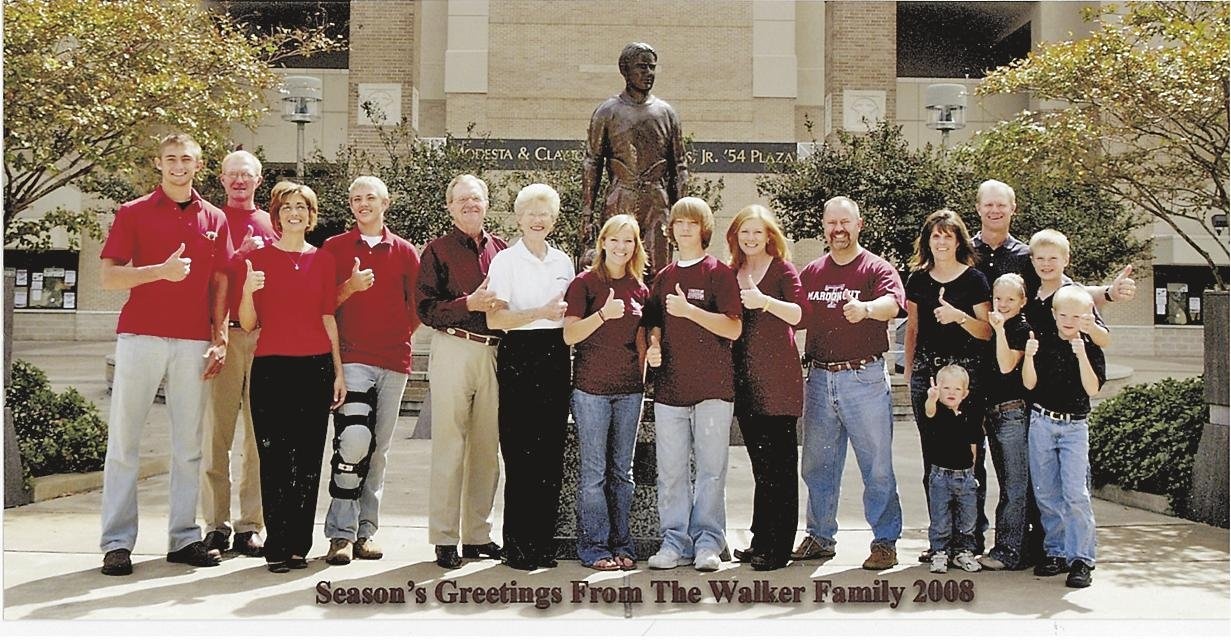
Robert L. Walker graduated from Texas A&M University in 1958. Nine years later he returned to the institution to work in alumni affairs and to raise money.
Forty-two years after that—and two years after retiring as vice president of development—Mr. Walker still works at A&M. Full-time. As the senior executive for development.
At 86 years old, Jim P. Conway continues to work part-time at Case Western Reserve University, 11 years after retiring from a 27-year career in planned giving at the institution.
Both men say they have personal reasons for staying. Mr. Walker’s wife of 52 years died recently, and he appreciates staying busy doing something worthwhile that he enjoys. Mr. Conway has seven children and 15 grandchildren, and he counts on his income to help pay for them to attend private Catholic schools and colleges.
But both men emphasize, too, that they have less-selfish reasons for sticking around.
As experienced fund raisers, they say, they are able to maintain critical ties to longtime donors, who themselves are in their age ranges, and they serve as mentors to younger members of the development staff.
Mr. Walker teaches a graduate-level fund-raising course every spring. And he keeps in close touch with many donors who are 85 or older.
“A lot of the individuals I work with still haven’t made their final major gift,” Mr. Walker says. “Their comfort level with me is high—these are the people who are talking to me about their funeral plans—and they make it clear that they still want me to be there when they do their gift planning.”
Mr. Walker says that the down economy has made it particularly important for older fund raisers to be a model for younger ones, showing them the benefits of traditional donor “stewardship,” which includes writing “snail-mail” letters, making house calls, and doing a lot of hand-holding.
“I try my best not to tell young development officers what to do, but I show them that, especially in hard times, you keep the doors of friendship open—you visit, you write, you call—even when you know someone doesn’t have the means at this point to make a gift,” Mr. Walker says.
Mr. Conway teaches by example, too.
He says he personally has 42 planned gifts, mostly annuities, that will eventually benefit Case Western and a few other nonprofit organizations.
“Most young people don’t intrinsically understand planned giving,” Mr. Conway says.
“They can spend $5,000 on a vacation easily but don’t understand the value of spending that much on a gift annuity,” he adds. “I can demonstrate the benefits, and I can tell the gift officers and the donors how it works, because it works for me.”