

June 4, 2009 | Read Time: 4 minutes
Presumptuous. Arrogant. Orwellian. Such epithets have been hurled at the National Committee for Responsive Philanthropy in response to its report, Criteria for Philanthropy at Its Best. The report was an attempt by the 30-year-old watchdog group to set benchmarks by which foundations could measure their progress in serving minorities, solving social problems, and improving their governance and accountability. (Disclosure: I am a board member of the National Committee for Responsive Philanthropy.)
The near-hysterical reaction by many in the foundation world reflects the arrogance of America’s grant makers. In their responses, many foundations seem to be suggesting that nonprofit groups have no right to publicly express their ideas about how grant makers should perform — and absolutely no right to urge Congress to consider new legislation and regulations.
Not only should nonprofit groups have every right to articulate a vision of how philanthropy should work, but so too should foundations. Why have they not advanced a comprehensive vision for their own transformation? Why haven’t the Council on Foundations and the other philanthropic trade associations started a serious national dialogue about tough questions about how foundations and their trustees operate, the appropriate share of assets foundations should distribute to charity, and other accountability concerns?
Instead of focusing on those issues, foundation leaders have criticized the report because they say it recommends a “one size fits all” approach to grant making. They also say it recommends unreasonable benchmarks for foundations to meet, and misunderstands the need for grant makers to follow the intentions of their donors.
But foundation leaders themselves often take one-size-fits-all views, and set unreasonable standards for charity. For example, the Council on Foundations vigorously opposes efforts to increase the percentage of assets the federal government requires foundations to distribute annually, even though many of its members believe that foundations should be expected to give a bigger share.
Lurking behind all the objections is the fact that foundations are worried that the National Committee for Responsive Philanthropy’s report could prompt Congress to take action and adopt some of its suggestions as regulations.
That is why there was such an outcry about an innocuous paragraph in the draft that was circulated among foundation leaders.
It stated: “Watchdogs like NCRP will use the criteria to praise field leaders and criticize those that do not measure up. Policy makers may find the criteria valuable when considering regulations or legislation that affect institutional grant makers, and the media will find the criteria a helpful resources for reporting on the philanthropic sector.”
While this section was deleted by the committee as a result of the objections from foundation officials, that still did not calm some grant makers. Fred Ali, chief executive of the Weingart Foundation, in Los Angeles, saw fit to demand in a recent letter to The Chronicle of Philanthropy that Aaron Dorfman, executive director of the National Committee for Responsive Philanthropy, publicly state that he will oppose any legislation resulting from the organization’s report.
He then went on to chastise Mr. Dorfman for inviting a Congressman to the news conference announcing the release of the report. Who is he to demand anything from an independent organization? Speaking of arrogance.
Foundations strongly believe that any changes in philanthropy must be the result of their own efforts to alter their practices.
They seem opposed to any ideas imposed by outsiders, even by Congress, which has a legal duty to oversee the nonprofit world. And they definitely do not think nonprofit organizations should ever ask Congress to change the rules governing how foundations behave.
In short, in the response to the watchdog report, what foundations are saying is that it’s permissible for grant makers to approach Congress and lobby, but that it is not appropriate for nonprofit groups to do the same.
The Council on Foundations has long had lobbyists on its staff, and one reason it hired Steve Gunderson as its new chief executive in 2005 was because as a former Congressman, he was expected to be a strong champion of foundations on Capitol Hill.
How much longer will nonprofit groups accept this double standard, under which foundations can protect their own interests in Washington but other nonprofit groups cannot?
The debate that the committee’s report has aroused could well lead to some positive changes in foundation priorities and behavior. Yet it is hard to imagine that foundations will be willing to change course voluntarily on issues they consider important and collectively alter the way they do business.
If foundations don’t move soon to satisfy the concerns of their grantees and the public, they will face a flurry of efforts to influence Congress by nonprofit groups no longer willing to wait for grant makers to make changes on their own.
Foundations should not forget that, while they have the money, nonprofit groups have the power of numbers. Should a showdown between nonprofit groups and foundations eventually occur, foundations will have only themselves to blame.
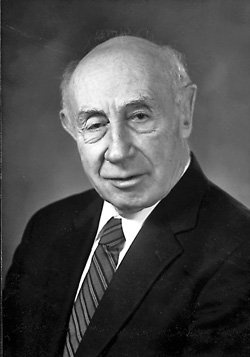
Pablo Eisenberg, a regular contributor to these pages, is a senior fellow at the Georgetown Public Policy Institute. His e-mail address is pseisenberg@verizon.net.





