
Philanthropy in 2030: Leaders Predict the Future
Five leaders on what the sector will look like in five years.

November 12, 2025 | Read Time: 9 minutes
This collection of essays is part of a special package of predictions from sector leaders and thinkers about what lies ahead in 2026 and how to respond to what will likely be another unprecedented year for the nonprofit world. Read more predictions about Major Donor Giving | Foundation Giving | Democracy and Threats to the Sector | Fundraising and AI | Equity Efforts | Nonprofit Operations | Policy Changes | Bridge Building, and Predictions for 2030.
Many Organizations Will Choose Anonymity or Go Underground
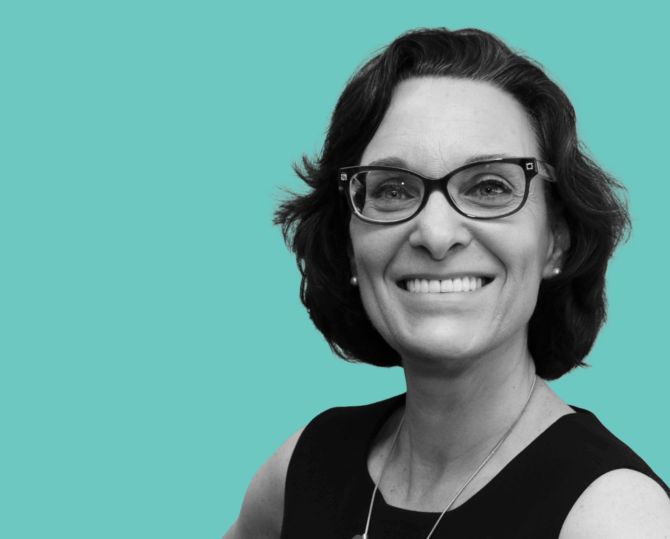
Suzette Brooks Masters
My focus is on the future of American democracy and civil society. I look for signals that presage trends and consider how different scenarios could unfold. While I can’t foretell any particular future, I can imagine one. Here’s my take on 2030.
Extreme inequality amid extraordinary wealth will continue to define America’s Second Gilded Age. At the same time, the country’s authoritarian shift, federal government disinvestment, and ideologically driven attacks will create unprecedented challenges for individuals and organizations working in targeted areas, including climate, democracy, public health, social and racial justice, and reproductive, immigrant, and LGBTQ rights. Their continued effectiveness, even survival, will require transformation.
In 2030, most nonprofits and foundations will have raised their defenses, investing in a range of preparedness and risk-mitigation activities, including physical and cyber protection, and secure communications. As much as possible, many will choose anonymity. A growing number, however, will struggle to advance their missions and be forced underground or abroad to survive.
New intermediary structures, communication vehicles, funding mechanisms, and information sources will support that underground ecosystem. Creative thinkers will devise innovative ways to help these people and causes, such as by using limited liability corporations, donor-advised funds, and non-tax-advantaged dollars. Stealth will replace transparency. Metrics culture will vanish. Individuals will matter more than organizations.
As decentralized networks of individuals or small groups rise in importance, institutions will pivot, shrink, merge with others, or shut down. Fiscal sponsors that provide anonymity and shared overhead will be in high demand but will also come under greater scrutiny. Artificial intelligence and tech will power these disaggregated networks. Paradoxically, as networks grow larger and more diffuse, donors and actors in targeted sectors will act in concert, formally and informally, to increase their impact in a hostile environment. A leaner, more agile, and tightly networked infrastructure will replace the highly visible and branded organizations prevalent today.
Suzette Brooks Masters is a senior fellow and director of the Democracy Innovation Project at the Democracy Funders Network.
A More Independent and Pluralistic Civil Society Is Possible

Daniel Stid
As a political scientist, I know it’s likely that the philanthropic and nonprofit sector in 2030 will look much as it does now, only more so.
The Trump-Vance administration will have continued to attack and undermine the philanthropists and nonprofits it considers enemies. If the Democrats regain power in 2028, it’s not hard to imagine them subjecting the funders and nonprofits behind Project 2025 to similar treatment.
Either way, social media and tech companies — driven by profits and bolstered by artificial intelligence — will transfix growing numbers of Americans, leaving them isolated, cynical, and angry. “Conflict entrepreneurs” will continue to attract ample support from foundations and advocates backing Manichean, all-or-nothing agendas. Caught between zealous ideologues and partisans on the left and right, the “exhausted majority” of Americans will further disengage from civic life.
At the same time, as a citizen dedicated to civic renewal, I realize decline is not destiny. A better future is possible. I’m thus hoping and working for a more independent, engaging, and pluralistic civil society. So are many others:
- The Trust for Civic Life is rallying national, regional, and community-based funders to invest in the civic infrastructure of rural and small-town America.
- Press Forward has marshaled a similar coalition to support local journalism and civic media in communities across the country.
- Up-and-coming governors such as Democrat Wes Moore of Maryland and Republican Spencer Cox of Utah have launched inspiring state-level community-service programs.
- Associations like Braver Angels, BridgeUSA, Future Caucus, Interfaith America, and Mormon Women for Ethical Government are revitalizing pluralism from the ground up.
These efforts may not yet seem like enough to counteract the grim scenario. But they are real and growing — and harbingers of a healthier democracy in America.
Daniel Stid is a senior fellow at the American Enterprise Institute.
The Old Norms Will Give Way to a Sectorwide Rebirth

Dimple Abichandani
The turning point came slowly, and then fast.
They said we were funding ”terrorism” when we were supporting civil society. The old 9/11 infrastructures built to target one community were repurposed to target many, including philanthropy. In a moment of unprecedented need, nonprofits had fewer resources to keep their communities safe. Several closed their doors while philanthropic endowments grew.
Fearful, some funders stepped back and away.
Others stepped up and into formation, finding courage in community.
Not all funders were under attack — just those who in a moment of rising authoritarianism invested in democracy, community voice, and power. These were the foundations and philanthropists who stood with social movements and committed to a shared future where wealth and power are more equitably held.
The attacks were clarifying. For so long, funders had quietly underestimated the transformative power of philanthropy but now they understood that it could be used to move beyond the status quo. With a clearer sense of purpose, the sector became more cohesive and unified. Foundation leaders understood that a new philanthropic era must transform the systems that shape who has wealth and power.
The collapse was followed by a time of rebirth — even as the challenges remained dire. Philanthropy stepped up to partner with communities to rebuild something better. In 2030, the old norms of scarcity, control, and centering donors with the most power and wealth are now artifacts. New funding approaches are rooted in solidarity and our interdependent futures.
Endowments are smaller, because philanthropy funded like we wanted to win — like our democracy depended on it. In fact it did.
Dimple Abichandani is a philanthropy adviser and author of A New Era of Philanthropy.
Funders Will Continue Investing in Favored Progressive Causes

William Schambra
The course of modern American philanthropy was set by the Rockefeller Foundation at its first meeting in 1913. Refusing to be confined to mere charitable purposes, it instead followed John D. Rockefeller’s maxim that “The best philanthropy involves a search for cause, an attempt to cure evils at their source.”
Ever since, the largest American foundations have regarded themselves as the trailblazers of America’s future, governed not by the petty interests of everyday people, but rather by the grand projects of professionally trained experts — those steeped in the natural and social sciences’ quest for root causes. As it has been since that Rockefeller board meeting more than a century ago, so it will be five years from now.
American foundations will arrogantly, if quietly, finance whatever they regard as the preferred future for this nation, which will invariably be cutting-edge progressive causes. They are and will remain above accountability to the American electorate — a fact that, in their view, qualifies them to be “society’s passing gear,” as the Ford Foundation’s Paul Ylvisaker once put it.
There is today a flurry of concern about the future of philanthropy, accompanied by bold pronouncements to resist incipient fascism. Looking back five years from now, however, it will be clear that the only moment of genuine, if minor, peril to philanthropy’s autonomy came when Congress considered imposing a substantial excise tax on foundation earnings. It was derailed, ironically, with help from the conservative philanthropic establishment.
Other sectors — government, corporations, universities, journalism — have been compelled to yield some ground to populist, anti-elitist sentiments. That’s because they are accountable to ordinary voters and customers, to whom conservative activists could appeal. Without any internal pressure for change from conservatives, however, philanthropy will remain what it has always been: the wellspring of progressive thought and action. As it was in 1913, so it will be in 2030.
William Schambra is a co-editor of the Giving Review and a senior fellow emeritus at the Hudson Institute.
The Green Shoots of Civil Society Will Revitalize Democracy

Loren McArthur
After enduring a period of acute state repression, the nonprofit and philanthropic sector will be significantly altered in five years. Targeted attacks on philanthropic institutions will have a chilling effect on many funder priorities, causing some to scale back their commitments to issues that are in the political crosshairs. Donors will shift funding out of traditional grant-making structures such as private foundations and public charities and into limited liability corporations or overseas, compounding nonprofit fundraising challenges and increasing the gatekeeping power of philanthropic advisers. Nonprofits dependent on government funding, as well as those doing vital work for causes that have come under attack, will struggle to secure resources. Many will close their doors.
In the face of these disruptions, I’m also hopeful that civil society will rediscover its democratic purpose. U.S. civil society has grown hollow over the past several decades, fixated on technocratic and tech-enabled solutions rather than the task of fostering civic leadership and mass participation. Americans are increasingly isolated and disconnected from institutions through which they can act collectively and claim a voice in governance. Many have grown cynical about democracy.
These challenges, however, create an opportunity to reshape the sector in the next five years and beyond.
Grassroots groups across the country are leading the way, helping Americans build civic power and influence governance. They include nonprofits such as ISAIAH in Minnesota, which is organizing residents of manufactured-home parks to fight private equity companies that jacked up their rents; Down Home North Carolina, which has built local chapters in rural areas to influence county budget priorities; and Pennsylvania United, which is uniting people across race to reckon with the housing affordability crisis. These organizations and others like them are the green shoots of a civil society that can nurture democratic agency and counter the nihilism fueling our politics. With enough support in the coming years, they can help revitalize our democracy.
Loren McArthur is an independent consultant and philanthropic adviser.
Photos: Suzette Brooks Masters: Courtesy of Suzette Brooks Masters; Daniel Stid: Aaron Clamage Photography © American Enterprise Institute; Dimple Abichandani: Elisa Cicinelli Photography; William Schambra: Tisara Photo / Steven Halperson; Loren McArthur: Ronald J. McCray, RJM Photography LLC.




