

November 12, 2025 | Read Time: 9 minutes
This collection of essays is part of a special package of predictions from sector leaders and thinkers about what lies ahead in 2026 and how to respond to what will likely be another unprecedented year for the nonprofit world. Read more predictions about Major Donor Giving | Foundation Giving | Democracy and Threats to the Sector | Fundraising and AI | Equity Efforts | Nonprofit Operations | Policy Changes | Bridge Building, and Predictions for 2030.
Kathleen Enright Predicts Compassion Will Boost Funding

Kathleen Enright
We’re in a moment of national uncertainty, with needs rising just as federal support is receding. In response, I expect charitable foundations to do what they were made for: give more when times are tough.
Compassion is certainly a driver of this strategic generosity. As nonprofits are grappling with growing demand for essential services, higher operating costs, and a changing relationship with the federal government, foundations are already leaning in: They are creating emergency funds, accelerating commitments to food banks, and ensuring veterans have the support they need.
But importantly, I see giving increasing in turbulent times for the same reason people give in the first place: a personal commitment and a sense of purpose. Neighbors give to the causes that move them, from cancer research to church programs. Foundations dig in to maintain or accelerate progress on their missions, whether protecting public media in small markets or preserving arts and culture programs. At all levels, personal and institutional, philanthropy is often a central support system for causes that would otherwise falter.
With many decisions in our society driven by near-term indicators such as earnings reports and election results, charitable foundations’ ability to take the long view provides a ballast during many storms.
In 2026 and beyond, philanthropy will continue to adapt to meet the moment with compassion and purpose.
Kathleen Enright is the president and CEO of the Council on Foundations
Foundation Giving Poised for Another Record Year

John Seitz
Assuming equity markets remain close to their current levels, my organization, FoundationMark, projects that foundation giving in 2026 will likely increase 5 percent to 7 percent. That translates into approximately $118 billion to $122 billion in total giving, compared with our current 2025 projection of about $112 billion
These numbers are based on research we conducted on the relationship between assets and giving over the past two decades. We found that the most accurate explanation of giving levels wasn’t year-end, beginning, or average assets, but the three-year average asset level. In 2022, for example, foundation assets fell more than 9 percent year-on-year but giving rose 6.6 percent — essentially right in line with the change in the three-year average asset increase of 6.7 percent.
In fact, more than 96 percent of foundation giving was explained by the change in the three-year average, with the range of payouts falling in an extremely tight range, between 6.8 percent and 7.2 percent of the three-year average asset levels.
Applying the performance of public markets to foundations’ reported holdings, we estimate that foundations held slightly more than $1.6 trillion in assets at the end of 2024 and about $1.75 trillion as of Sept. 30, 2025. Clearly, we don’t know where markets will be at the end of this year, or whether 2026 will be an up or down year for investors, but barring a major downturn in the stock market, 2026 should be another record-setting year for giving.
John Seitz is the CEO of FoundationMark.
Philanthropy Will Get More Comfortable With Collective Giving
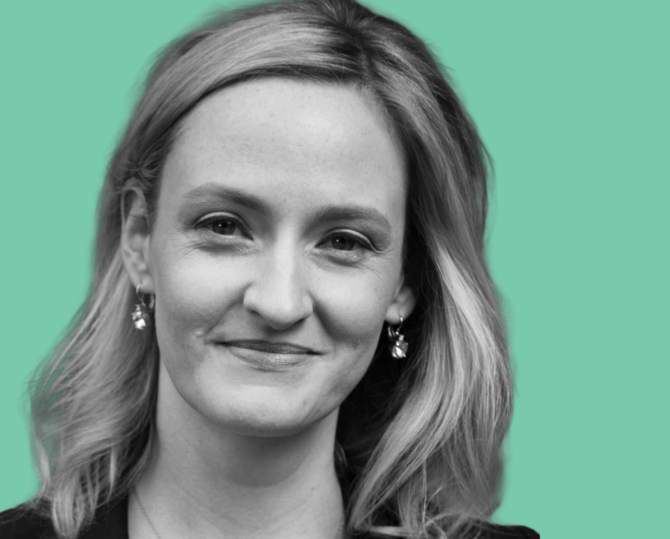
Asha Curran
In 2026, everyday giving will shift away from individual acts of generosity to collective giving. People won’t just give to causes that matter to them alone but will work with their neighbors to determine what to support and how. Local, collective giving of this kind helps bolster civic space in ways individual donating cannot.
This change is already underway. Neighbors are pooling and distributing resources to address local issues together through giving circles, donation drives, mutual aid networks, and giving days. This allows them to strengthen their bonds, share decision-making power, and flex their civic muscles.
Importantly, they also feel less isolated by their differences. They discover that the antidote to fear and division is becoming part of a larger whole, helping others, and knowing they’ll be helped, too. In short, collective giving is a Trojan horse for depolarization.
Philanthropy and nonprofits should accelerate this shift and embrace these modes of giving, rather than overlooking them as they traditionally do. I’ve had countless conversations this year about how the nonprofit sector can prove its value to the public and protect itself from threats and attacks. One way is by supporting people as they become more civically involved so they vigorously defend the civic space they’ve built.
The power to improve communities is in the hands of the very people who live and work in those places. In 2026, everyday giving will reflect that. The sector just needs to get on board.
Asha Curran is the CEO of Giving Tuesday.
After Cuts, a Better Approach to Foreign Aid

Andrew Dunckelman
I expect wealthy donors to give more in 2026, especially to global health and development.
Over the past year, reductions in foreign aid around the world caused many donors to focus more attention and resources on these two areas. While nothing can replace government leadership or funding, several donors I’ve spoken to want to address immediate challenges while helping build systems that last. And after a year of uncertainty and caution, many donors now have a better understanding of where they can make the greatest difference on the ground.
In particular, several donors want to use their money to improve child and maternal health, end preventable infectious diseases, and fight poverty. And they’re doing so through collaborative funding mechanisms such as the Beginnings Fund, The END Fund, and PRO, which can achieve quick results while building long-term capacity — a trend I expect to continue.
I’m also seeing donors adapt their approaches. For example, they trust local leaders more, recognizing that effective giving looks different in different places. Some are mixing grants, impact investments, and other forms of support, such as technical expertise and advocacy, to further stretch resources.
Additionally, the United States’ 250th anniversary next year offers donors a chance to reflect on the country’s long history of private money serving the public good. I expect this milestone will prompt more donations that help strengthen the country’s civic fabric. It will also encourage wealthy donors to look outward and learn from different giving strategies used around the world.
Given current global challenges, the world needs philanthropy’s best days to be ahead. I’m confident they are.
Andrew Dunckelman is the deputy director of philanthropic partnerships at the Gates Foundation.
Expect a Quiet but Growing Embrace of Impact Investing

Antony Bugg-Levine
If current trends continue, 2026 will be the year philanthropists either jump at full speed onto the impact investing train or quietly step off.
On one side, organizations and corporations that hesitatingly became impact investors will continue to retreat. What was in many cases a response to public pressure, especially calls for racial justice and climate action, is increasingly viewed as a political liability. Launching bold impact investing initiatives will also be difficult for large foundations preoccupied with defending against political attacks, responding to funding crises among grantees, and managing a cash crunch as endowment investments in private equity and venture capital fail to produce as expected.
On the other side, philanthropists convinced of the power of impact investing will likely double down. Some traditional foundations plan to expand their programs, while individual donors and family-led philanthropies have become impact investing leaders. Organizations such as Spring Point Partners in Pennsylvania, Gary Community Ventures in Colorado, Sorenson Impact in Utah, and Sobrato in California are integrating grants, investments, and policy advocacy. In just a few years, some have built impact investing portfolios that exceed what traditional foundations built over decades. Many intend to accelerate this work in 2026 and will draw new peers into the fold.
Politically, bipartisan support is growing for policies that can harness private investment to serve the national interest, such as the American Ownership and Resilience Act, which will make financing workers to buy their companies more profitable.
Impact investing could also become embedded into essential national debates in 2026, such as how to make homeownership more accessible and energy more affordable. Impact investing offers answers that could resonate during a year marked by both a milestone 250th national birthday and a divisive midterm election.
Globally, impact investors are working to unlock billions of dollars in financing for ocean restoration, rainforest preservation, and health. They can’t replace government aid, but they can clear paths for others to follow.
While impact investors may not be as public about their work in 2026, for foundations and nonprofits seeking investments to expand their impact, the opportunities should be plentiful — even if the press releases are less frequent.
Antony Bugg-Levine is an impact investing adviser who designed and led the Rockefeller Foundation’s impact investing program and co-founded the Global Impact Investing Network.
Funders Will Get Serious About Closing the AI Knowledge Gap
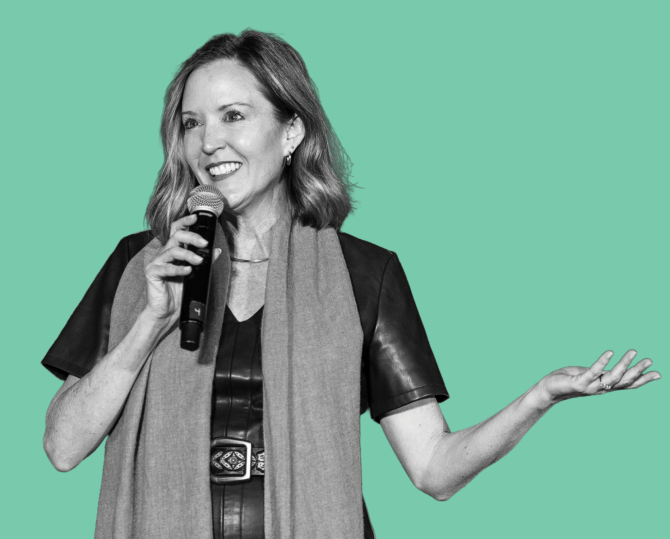
Chantal (Coco) Forster
In 2026, the question won’t be whether foundations are using artificial intelligence. Most already are. The real question will be whether philanthropy leads in the AI era or defers to the private sector.
Historically, philanthropy has lagged in tech strategy, investment, and skills. Indeed, many foundations treated AI as a passing fad in 2024. But some have since changed their tune. A few foundation CEOs asked me this year how they can shape AI’s use in education, climate, and health care. I’ve also seen more grant makers recognize that they must take a leadership role in AI even if they lack deep expertise.
That’s why in 2026 I expect to see several foundations work to close that knowledge gap and help promote responsible, human-centered AI adoption and strategy. This will mean supporting AI infrastructure that promotes the public good, providing funding for nonprofit AI tools and skills, and asking how institutions as a whole should modernize and evolve.
That shift is already beginning. In my work advising foundations on AI, I’ve seen many move from sporadic use of productivity tools toward organizationwide adoption, experimentation, and skill-building. Some program officers, for example, are piloting AI agents that check their own biases in funding decisions.
Other staff members are building tools that analyze internal grant data and make it easy to ask questions such as “How much did we give to reading remediation in the Four Corners region? What were the outcomes? What gaps remain?” Democratizing data in this way redistributes power by ensuring more people can access knowledge.
Philanthropy’s challenge in 2026 isn’t about technology but about courage and humility. The funders who make a difference won’t wait for an AI playbook but will write it themselves.
Chantal (Coco) Forster is an independent AI adviser to philanthropy and former executive director of the Technology Association of Grantmakers.
Photos: Council on Foundations; Courtesy of John Seitz; Grant Slater; Courtesy of Andrew Dunckelman; Elise Campbell Photography; Technology Association of Grantmakers




