July 24, 2008 | Read Time: 13 minutes
Twelve weeks into her job as a consultant to a Hollywood film company, Patty Stonesifer knew she’d made a mistake. Her mind kept wandering to a fledgling foundation started by her former boss at Microsoft, Bill Gates, and his wife, Melinda, to bring computers to public libraries.
Nearly 12 years later, Ms. Stonesifer is stepping down as chief executive of that start-up philanthropy, after overseeing its growth into the nation’s largest and most visible foundation. The Bill & Melinda Gates Foundation, which was formed in 2000 from a merger between the Gates Learning Foundation and a philanthropy run by Mr. Gates’s father, William H. Gates Sr., has $38-billion in assets and will give out more than $3-billion next year. The foundation now has 550 employees, and that number is expected to nearly double in the next few years, to more than 1,000.
But Ms. Stonesifer, the sixth of nine children — whose father started a food pantry to serve the north side of Indianapolis — doesn’t intend to step away from the foundation altogether. She’s considering whether to oversee a new grant-making project at the Gates fund.
Her departure from the top job caps a major transition. Bill Gates retired from full-time work at Microsoft last month to spend more time on philanthropy. And Jeffrey S. Raikes, a Microsoft executive, will take over as chief executive in September.
Ms. Stonesifer has won praise over the years for recruiting talented leaders, maintaining the foundation’s focus as it has grown, and emphasizing ways to ensure its dollars make a difference. What’s more, she brought a sense of humility to the job, says Vartan Gregorian, president of the Carnegie Corporation of New York.
“Gates could easily have become the 800-pound gorilla, but with Patty at the helm there was never any talk of which foundation is the greatest, only how can we speak on behalf of the 1.4 million nonprofits.”
Observers say Ms. Stonesifer’s longstanding relationship with the Gateses — she joined Microsoft in 1987 and oversaw the team on which Ms. Gates worked — has benefited the foundation greatly.
“One of Patty’s biggest strengths has been her knowledge of Bill and Melinda and her ability to, as she used to say, channel them,” says Richard D. Klausner, the foundation’s former director of global health. “That’s enabled the foundation to really evolve to reflect their aspirations.”
Debates About Results
As the Gates foundation has ballooned in size, however, it has increasingly drawn fire from people inside and outside the nonprofit world. Its spending on global health, for example, has been criticized for emphasizing the development of new vaccines at the expense of the delivery of life-saving medicines and building grass-roots support for preventing the spread of diseases.
In February, a senior official at the World Health Organization accused the Gates foundation of stifling competition among malaria researchers and exerting too much influence over the U.N. body.
For her part, Ms. Stonesifer says the foundation has consistently awarded grants designed to make a major difference in solving problems. “I think we’ve made the right choices,” she says.
The long-term nature of the foundation’s goals and the complexity of the problems it has chosen to tackle, however, have made clear-cut successes hard to achieve. “We’re very optimistic about the short-term milestones in some programs, and we’re very sober about the short-term outcomes in others,” she says. “We’d hoped by now that we’d have a microbicide for AIDS, but the early trials have been very disappointing.”
Sitting for an interview in the foundation’s headquarters along Seattle’s Lake Union, Ms. Stonesifer, who took no salary for her work at the Gates fund after earning significant wealth at Microsoft, describes her education in how to use philanthropic dollars effectively. As head of the Gates Learning Foundation until 2000, she oversaw giving to a cause she knew well: using technology to empower people.
But as the Gates’s philanthropy expanded to fight diseases in developing countries and promote widespread changes in America’s public-school system, Ms. Stonesifer says she gained a deeper recognition of the role that the foundation must play in working alongside government leaders, charity officers, corporate leaders, volunteers, activists, and citizens in effecting change.
“I started with what I knew, but if you want to make change beyond those things you know very closely, if you want to learn very rapidly, you need partners,” says Ms. Stonesifer, casually dressed in a bright-green sweater and black pants on a day that 900 employees and their family members would gather for a foundationwide picnic.
During her tenure, the Gates fund has greatly expanded its advocacy work. In 2001, the foundation opened a Washington, D.C., office to influence public policy, and Ms. Stonesifer has encouraged Bill and Melinda Gates to use their voices to bring attention to inequity.
‘Test of Realism’
Even as the foundation has exploded in size, Ms. Stonesifer has maintained its culture and kept it from straying into too many fields, say friends and former colleagues.
When Warren E. Buffett made his $31-billion pledge two years ago, the foundation decided to make grants to spur global development and later created three committees of nonprofit leaders, scholars, and other outside experts to advise its giving.
“She was always the test of realism,” says David Lane, who directed the foundation’s advocacy work before becoming president of ONE: the Campaign to Make Poverty History last year. “I’m sure the temptation to jump into new areas was very strong, but Patty was always the one who would say, Tell me how we’re going to do that while we’re doing these other things.”
Others credit Ms. Stonesifer for emphasizing the importance of critical feedback and of determining the impact of the fund’s dollars.
After Mr. Buffett announced his pledge, Ms. Stonesifer sent an e-mail message asking people in the nonprofit world for advice.
“She always asked for real substance, not adulation,” says Rick Cohen, former head of the National Committee for Responsive Philanthropy who now serves as national correspondent with The Nonprofit Quarterly.
Ms. Stonesifer also stressed that the foundation should remain focused on its beneficiaries — and find ways to incorporate their opinions into the shaping of its programs.
The Gates fund is working with the Center for Effective Philanthropy, an organization that helps foundations evaluate their work, to develop a way to include students’ perspectives into its efforts to overhaul schools. The hope is that tool can eventually be applied to other causes.
Ms. Stonesifer says she’ll spend some time this fall with family and friends and in January will make a decision about her future. She sees some kind of a role with the Gates Foundation as the best way to carry on her commitment to providing greater opportunity to the world’s neediest people. “I’ve said before I hoped I die with my Gates Foundation badge attached, and I still think that’s true,” she says.
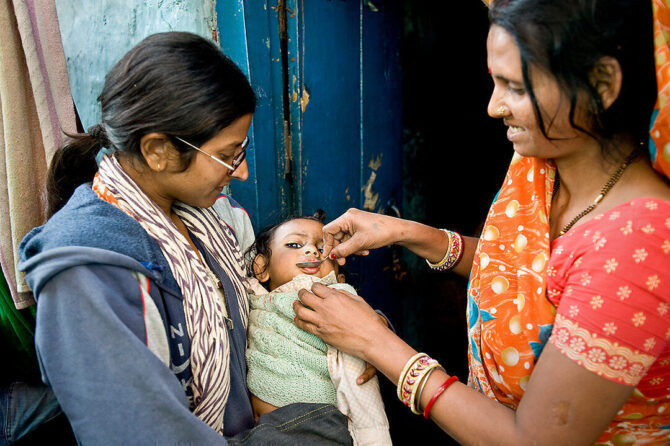
The foundation’s influence, and the web of players needed to help it sustain change, hit home six or seven years ago on a polio-immunization drive in India. Ms. Stonesifer says she listened to a woman explain that she’d taken her grandchild to get vaccinated because she wanted to protect him from polio as she hadn’t been protected from smallpox a generation ago.
“Our shared responsibility really came through,” says Ms. Stonesifer. “We can’t just be concerned about this generation. We need to do this work in a way that we’re the right kind of ancestors, so that the next challenge, the next hill to climb, will be reached in a more responsible way.”
To hear audio of The Chronicle‘s interview with Ms. Stonesifer, go to http://philanthropy/extras.
Following are excerpts from the interview:
Did you have any inkling when you began of the direction in which the job would take you?
It didn’t surprise me at all that Bill held the ambition that it was his responsibility to return his wealth to society. What did surprise me was how rapidly he and Melinda came to a sense of how to do that effectively.
But with every successive quarter, we felt more confident that we understood the role philanthropy might play in addressing inequity. We became even more aware of how big the problems were and the possible solutions and the partners out there and the impact that Bill and Melinda could have with their names and reputations.
How have your views on the foundation’s work and philanthropy changed?
They’ve really changed in two ways. The first would be understanding the importance of working through partnerships. Working through partnerships is critical because after you’re done with your own project, you still want the capacity to be there to continue and sustain the changes.
The second was really the role of governments and of advocacy and policy. In the software business, we put our heads down and created things, and consumers purchased them. Certainly governments created the environment for that. But in the work of addressing inequity and dealing with the poorest people in society, the government has a disproportionate role. Also, most of the funds come from government. The state of California spends almost as much in a year on education as our entire endowment.
What grants are you most proud of?
It depends on the day. If I have my mathematical hat on, I’d certainly be most proud of the ones that are affecting life at scale. And I’d have to start with the Global Alliance for Vaccines and Immunization. This effort to ensure that every child everywhere has access to the basic set of vaccines has already saved, by World Health Organization estimates, millions of lives.
Then you sit next to a Gates Millennium scholar who got a chance to be the first in her generation to go to school, and her belief and optimisim for the future and for future generations of her family causes you to feel like that opportunity to change one person’s life is most meaningful.
How have you managed the need for such rapid growth?
The first challenge was to maintain our sense of values and culture while growing the dollars and the staff. I think we’ve done that pretty well. We took a business unit approach that Bill and Melinda and I had all seen work at Microsoft. It’s about finding leaders and assembling teams around those leaders to address a single opportunity or issue. So we have a director of agriculture and a director of financial services for the poor and a director of the delivery of health technologies.
The challenge is that as we grow rapidly, we probably don’t work across those strategies at the level I’d like to see. That’s been an expense of rapid growth. We’ve developed quality individual teams who work deeply on issues, and we need to move more toward connecting those issues and working horizontally.
Looking back, what might you have handled differently?
There are so many things. The U.S. Libraries initiative was a big success, but because we did it ourselves we didn’t end up with the capacity in the library sector that we needed. I learned the importance of going more slowly to ensure that capacity is built externally, so that libraries are connected not just today but in the future and that they can advocate for more funds in the future.
What program has posed the most challenges?
There’s no question that the work in the United States is very hard. Many things here work well, so the problems that remain are here because they’re complex.
In education, I think we’ve come a long way over the last eight years to identifying what the problem is. Thirty percent of high-school students don’t graduate in a reasonable amount of time, and those that do aren’t ready for college-level work or living-wage work.
The solution is something we’re still working together on. I don’t think you could say that any one of us has solved that problem, and it’s not something that you can put a new bit of technology or new bit of software in the pipeline and hope you can get a new vaccine that will work.
How do you view critics who say the foundation focuses too much on technical fixes and not enough on building grass-roots civil society or on investing in cheaper solutions that can benefit people right away?
It’s a balancing act for any philanthropy to choose where you can have the greatest impact. We believe that the 21st century offers unprecedented opportunity for technology and new knowledge to address these issues.
So we believe investing in an AIDS vaccine and a malaria vaccine and a tuberculosis vaccine is incredibly important.
But we have from the beginning invested in delivery. We’ve committed $1.5-billion to delivering today’s vaccines, not vaccines that we’ve had anything to do with.
We have to rely on the points of most leverage, and delivery often requires many more players to sustain it.
What’s your view on “creative capitalism?” Mr. Gates has championed this idea and your husband, the journalist Michael Kinsley, is editing a book that’s skeptical of it.
My view is that most big problems are solved by governments and markets. Philanthropy can be a catalyst, but we need the market system to join us.
Bill is saying that the needs of the poor will not be met by philanthropy and they won’t be met only by governments. There needs to be a role for markets and capitalism in addressing the needs of the poor.
The question is, what’s the toolkit of ways that can address those needs?
Being a successful capitalist, Bill understands that there are many ways that markets can be harnessed.
What advice will you be giving to Mr. Raikes?
To find many, many ways to listen to your partners. And that it’s all about impact. It isn’t about how big your endowment is, or how big your grant making is per year, or how many strategies you have. It’s really about whether something has changed in terms of people’s health and opportunity, because that’s why we’re here.
ABOUT PATTY STONESIFER, DEPARTING CHIEF EXECUTIVE OF THE BILL & MELINDA GATES FOUNDATION
Education: Ms. Stonesifer received a bachelor’s degree from Indiana University in 1982 and an honorary doctorate last year.
Experience: Hired by Microsoft in 1987, Ms. Stonesifer left as senior vice president of its Interactive Media division nine years later. She worked briefly as a management consultant before the Gates family hired her to lead the Gates Library Foundation in 1997. That fund, later renamed the Gates Learning Foundation, merged with a second Gates philanthropy in 2000 to become the Bill & Melinda Gates Foundation.
Most influential book she’s read: A dog-eared autobiography of Abraham Flexner, an educator who transformed how doctors are taught, that Warren E. Buffett gave the Gates family a decade ago. Mr. Buffett saw Mr. Flexner as one of the world’s most important agents of social change because he worked with foundations such as Rockefeller and Carnegie to bring philanthropic resources to bear on overhauling medical education.