
GOP and Democrats Take Strong Stances on Political Activity

By Suzanne Garment and LESLIE LENKOWSKY
July 28, 2016 | Read Time: 6 minutes
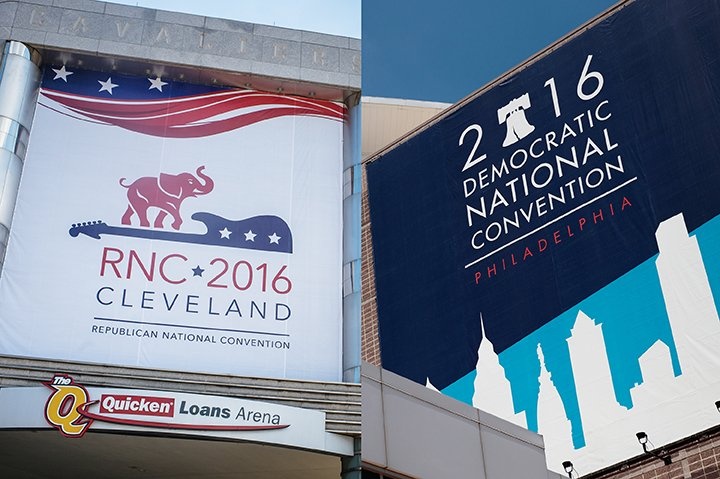
At the Republican and Democratic presidential conventions, one of the parties pledged to eliminate restrictions on nonprofit participation in elections while the other vowed to tighten them.
However, if you thought it was the Hillary Clinton-led Democrats that were doing the loosening and the Donald Trump-led Republicans trying to make electioneering harder for advocacy groups, you would be wrong.
In fact, the Republican Party platform urges the repeal of the Johnson Amendment, which bars charities and foundations from spending money in election campaigns.
The Democratic Party platform, on the other hand, calls for a constitutional amendment to overturn Citizens United, the 2010 U.S. Supreme Court case that allowed advocacy groups to raise and spend unlimited amounts of money on behalf of candidates in elections.
The parties have thus taken opposing sides in the latest round of the debate over the proper balance between public authority and private resources in American elections.
People concerned about the long-term health of America’s nonprofits should think hard before deciding whether to support either team, whose proposals, if enacted, could weaken the ability of politically active nonprofits to support controversial causes.
Making sense of what is going on requires understanding two sets of intersecting questions. One involves what kinds of political activities nonprofits should pursue and what they must disclose about their donors — whether they are classified as charities under Section 501(c)(3) of the tax code or as advocacy groups under Section 501(c)(4). The other deals with how much money businesses and wealthy people may spend in political campaigns and how they may use nonprofit organizations unaffiliated with particular candidates in spending it.
A Matter of Security
Congress began worrying about the involvement of nonprofits in politics more than 80 years ago. Legislation passed in 1934 denied tax-exempt status to nonprofits that used their funds to “influence legislation,” a provision subsequently modified to allow an “insubstantial” amount of their annual budgets to be used for lobbying. The 1954 Johnson Amendment — introduced by then-Senator Lyndon Johnson to shore up his chances of re-election — also denied tax exemptions to groups that “participated in or intervened in … any political campaign on behalf of (or in opposition to) any candidate for public office.”
Two years later another issue about politicking reared its head. In an attempt to intimidate the NAACP from its civil-rights work, the State of Alabama subpoenaed the NAACP’s membership records. Given the racial climate of the time, the threat of exposing donors’ names could have caused contributions to drop — and put the security of donors at risk.
Fortunately, the Supreme Court ruled in 1958 that the NAACP’s right to withhold the identities of its members was a vital part of its constitutionally protected freedom of association.
At the time, it is safe to say, most people thought the right balance had been struck. Nonprofits got to protect the privacy of donors supporting potentially controversial advocacy efforts, and charities that received tax subsidies thought it was fair that they sacrificed their ability to become strenuous players in partisan politics.
But that was the world before Watergate.
Stricter Limits
In 1974, Congress took action to impose stricter limits on all groups involved in campaigns — and that led to decades of efforts by parties and wealthy donors to come up with other ways to funnel money into politics (some of it by using nonprofits, especially those that were registered as 501(c)(4)’s, meaning that they could participate in advocacy but couldn’t offer their donors a chance to get a tax deduction for their gifts).
Much confusion abounded about just what was legal for advocacy groups and others until the Supreme Court’s 2010 decision on Citizens United v. Federal Election Commission, which held that the federal government couldn’t limit how much companies spend on advertising on political issues.
Even after Citizens United, 501(c)(3) groups were still prohibited from spending money on election campaigns. Since they were legally permitted to establish affiliated 501(c)(4) organizations, this barrier was more procedural than real; but calls for changing the Johnson Amendment limits on politicking were coming from both liberals and conservative groups, which felt it unfairly curtailed their ability to advance their interests effectively.
At the same time, however, some public-interest advocacy groups and members of Congress pressed the IRS to start cracking down on nonprofits that were actively politicking but claiming charity status because they didn’t want to be forced to disclose the identities of their donors. With encouragement from the White House, the IRS stepped up its scrutiny of organizations applying for section 501(c)(3) and 501(c)(4) exemptions, searching for suspicious politicking.
The groups that got special scrutiny and had their applications held up for extended periods of time were overwhelmingly those with conservative-sounding words in their names. The result was the IRS scandal of 2013, which left the agency in a seriously weakened moral position and energized those calling for removal of the limits on nonprofits’ campaigning altogether.
Two Viewpoints
That brings us to the positions of the two major political parties in this election year. Democrats want to “undo” Citizens United; Republicans want to repeal the Johnson Amendment.
If the Democrats’ proposal were enacted, nonprofits, especially 501(c)(4)s, would return to the uncertain pre-Citizens United legal regime that allowed them to participate in campaigns but exposed them to potential regulation and disclosure of their contributors. The IRS has already tried to fashion a set of bright-line rules to mitigate the uncertainty, but that proposal was withdrawn amid controversy. Meanwhile, Congress has explicitly limited the agency’s ability to issue such regulations for the rest of the fiscal year.
In other words, the trends that have altered the campaign spending landscape over the past 15 years and more may have made “undoing” Citizens United unlikely.
Eliminating the Johnson Amendment — the Republican idea — may be more momentous. But here, too, the practical consequences of a repeal would be uncertain. It is by no means clear that many charitable organizations want to be more directly involved in politics than they already are. Some churches and other nonprofits would be delighted to plunge into election activity, but at least as many will miss the protection from political pressure and donor disclosure that they enjoyed when the Johnson Amendment kept them on the sidelines of the electoral arena.
The Republicans, in other words, may have offered a poisoned chalice to nonprofits that want to keep doing the things they were set up to do.
Leslie Lenkowsky is an Indiana University expert on philanthropy and public affairs and a regular contributor to these pages. He and Suzanne Garment, a visiting fellow at Indiana University, write frequently on philanthropy and public policy.





