April 23, 2009 | Read Time: 6 minutes
If the foundation watchdog group National Committee for Responsive Philanthropy intended its new report “Criteria for Philanthropy at Its Best” to stir vigorous debate about the means and ends of grant making, it has succeeded beyond its wildest dreams.
The major philanthropy associations, foundation presidents, and philanthropy blogs have all weighed in, many taking issue with its benchmarks, which include recommendations that at least 50 percent of a foundation’s grant dollars go to the poor and disadvantaged, and that in all their grant making, foundations reserve 50 percent of grants for general operating support and 25 percent for advocacy efforts.
Amid the welcome debate the report precipitated was one sour note: The California Wellness Foundation chose to rescind its $10,000 grant to the watchdog group, as well as its membership listing.
Remaining a member of the committee, the foundation’s president, Gary L. Yates, explained in an e-mail message to The Chronicle, “implies endorsement of its report,” while in fact his foundation does “not endorse a ‘one-size-fits-all approach’ or benchmarks for all foundations.”
In a phone interview, Mr. Yates stressed that the foundation was not rescinding a grant but canceling a membership.
Technically, it’s difficult to sustain that distinction, since Mr. Yates’s letter to Aaron Dorfman, executive director of the National Committee for Responsive Philanthropy, notes that the California Wellness Foundation is not only “canceling its membership” in the organization but also “rescinding grant #2009-009″ and asking for the return of “any remaining funds from the grant.” But such technicalities are beside the point. There’s no quibbling with the broader characterization of the grant maker’s action. A major national foundation chose to express its dissatisfaction with a grant recipient’s point of view about the proper role of philanthropy in America by abruptly withdrawing financial support.
I would argue that this response to the report is disproportionate and inappropriate, and threatens to chill the very interest in advocacy by its grantees that the foundation otherwise pledges to support.
I should make clear that I have spent my entire professional career working for presidential administrations, think tanks, and foundations that have been favorite targets for the National Committee for Responsive Philanthropy’s sharp and sustained criticism, some of it thoughtful and soundly argued, some not.
Furthermore, I am not at all in sympathy with the committee’s report.
Its sensible parts are too easily obscured by what seems to be an ideologically charged call for all foundations to move decisively toward liberal or progressive “social justice” grant making. I would, conversely, like to see more foundations support conservative projects, but it would not occur to me to insist that 50 percent of foundation grants should go to bolster free-market ideology or orthodox religious evangelization.
Nonetheless, the committee plays a critical role in the philanthropic universe.
In a field obsessed with arcane technical discussions about designing, monitoring, and measuring grants, it reminds us that foundations must pay attention as well to the ultimate ends or purposes they serve, and how they promote the public interest.
In a professional discourse choked with ethereal, obscurantist cant, it speaks clearly and forcefully, in plain words, about philanthropy’s obligations to the smallest grass-roots groups in the most forgotten neighborhoods.
And in a world where everyone speaks in hushed tones for fear of offending the panjandrums of philanthropy, it is unafraid to call even the largest foundations to account, naming names if necessary.
Mr. Yates’s decision to withdraw money from the committee reminds us why that sort of clear, forceful, and honest appraisal is in such short supply within philanthropy.
The decision is particularly startling, given the California Wellness Foundation’s professed desire to be particularly flexible and generous toward grantees.
Judging from its public pronouncements, the foundation prides itself on its efforts to move away from the sort of imperiousness that typifies many foundations.
With its goal of serving “the particular health needs of traditionally underserved populations, including low-income individuals, people of color, youth, and residents of rural areas,” the foundation realized early on that the usual top-down, foundation-designed strategic efforts tended to serve the purposes of researchers more than poor neighborhoods.
And so it set out to be more receptive to projects people design themselves to serve local needs, to attend to nonprofit groups’ long-term sustainability by making more multiyear grants for general operating support, to provide recognition and training for their leaders, and to support their active participation in public-policy making.
Summing up this approach in an article prepared for Independent Sector in 2003, Mr. Yates argued that foundations should get away from the belief “that we know a better way than those who actually do the work,” and that after making a grant, “foundations would be wise to get out of the way and let the nonprofits do the work.”
The withdrawal of the National Committee for Responsive Philanthropy membership grant suggests that the foundation doesn’t follow its own advice.
While it says it supports robust nonprofit engagement in public policy, that support apparently extends only to narrowly tailored political forays serving purposes amenable to the foundation. If a nonprofit group should instead engage in freewheeling and unfettered deliberation about public policy and arrive at conclusions at variance with the foundation’s preferences, as did the committee, enthusiasm for advocacy suddenly abates.
This sort of behavior leaves nonprofit groups deeply distrustful of philanthropic rhetoric about wishing to alleviate the power imbalance between grant maker and grantee by becoming partners, co-producers, or collaborators rather than puppet masters.
But doesn’t Mr. Yates have the right, if not the responsibility, to put distance between himself and the committee’s report if he disagrees with it? Of course. But it could have been done without such a high-handed yank on the money strings.
Paul Brest, president of the William and Flora Hewlett Foundation, took to the Huffington Post Web site to write a five-part criticism of “Criteria for Philanthropy at Its Best,” describing it as “breathtakingly arrogant,” “a tendentious one-sided brief,” and “bordering on the intellectually dishonest.”
Hewlett was and remains a supporter of the committee, but Mr. Brest leaves us with little doubt that this doesn’t “imply endorsement” of its report.
Mr. Yates similarly would have done philanthropy a great favor by joining the public debate over the report. It would have been valuable to hear more of his thoughtful arguments about the need to “respect the diversity in the philanthropic sector and the independence of private foundations to honor donor intent, mission and strategy,” as he noted in his e-mail message to The Chronicle. (Mr. Yates offers his views in a letter to the editor he sent in his response to this column.)
As it was, we heard his voice only after it inadvertently came to light that his foundation had quietly resorted — with very little substantive argument or explanation — to the philanthropic nuclear option: the withdrawal of money.
A step taken in the name of preserving diverse points of view in the foundation world ironically makes clear that the degree of diversity to be tolerated will be dictated by the foundations themselves. Their grantees, by contrast, would be well-advised to attend carefully to the philanthropically imposed limits of diversity, however much they are otherwise encouraged to become free and vigorous participants in public-policy discussions.
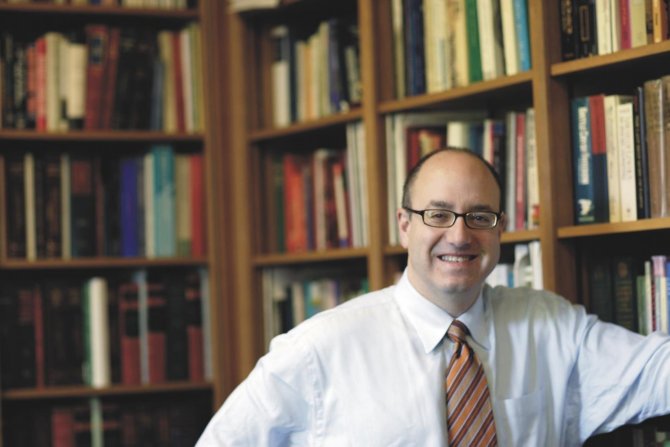
William A. Schambra is director of the Bradley Center for Philanthropy and Civic Renewal at the Hudson Institute, in Washington.