
Grant Makers Should Take Aim at Curbing Gun Violence
February 2, 2011 | Read Time: 5 minutes
The shootings in Tucson that left six people dead and 13 wounded, including Rep. Gabrielle Giffords, shocked the country and prompted calls from all quarters to reduce the rhetoric of violence and embrace greater civility.
But the attacks should not have surprised anyone. Death by gunfire has become a common phenomenon in our society, unhinging the lives of rich and poor, young and old, in cities, suburbs, and rural areas alike.
Just last month, 13 people were gunned down in Prince George’s County, a Washington suburb, in 13 days.
No place seems immune from the scourge of guns. The number of weapons has grown almost exponentially, fueled by the greed of gun manufacturers, the money and power of the National Rifle Association, the infatuation of many Americans with what they believe is their constitutional right to own guns—any guns—and the cowardice and reluctance of our politicians to take any action.
It is also a sign of the failure of nonprofits and grant makers to mobilize the kind of gun-control advocacy movement that could prevent mass shootings.
The nonprofit world has the capacity and the troops to organize a successful, massive opposition on behalf of tighter gun controls. Every constituency that nonprofits serve is adversely affected by gun violence.
The harm done by guns is not only a justice issue but also a problem for our health-care and education systems as well as for our democratic values. Guns are holding all of us hostage to a relatively small band of “true believers” who think that possessing guns, no matter what type, is at the heart of our Constitution and national well-being.
While organizations like Independent Sector are calling for nonprofit leaders to respond to Tucson by promoting efforts to get citizens to speak in civil, nonviolent ways, charities and foundations must recognize that it will take much more to remove the canker of violence embedded in our nation. The only way to remedy gun violence is to organize an opposition force that has more voices, power, and money than the National Rifle Association.
To people outside the United States, it must seem strange that some 4 million members of the National Rifle Association can exercise this much influence over a country with a population of 308 million. The answer, of course, is that this dominance is the result of public apathy and inaction, large amounts of money, and politicians only too willing to be bought off by the gun lobby.
Al Gore attributed his defeat in the 2000 presidential campaign to anti-gun-control advocates, and since then it has become fashionable among Democratic party leaders and consultants to claim that better gun control is an unwinnable political issue. That is not the case.
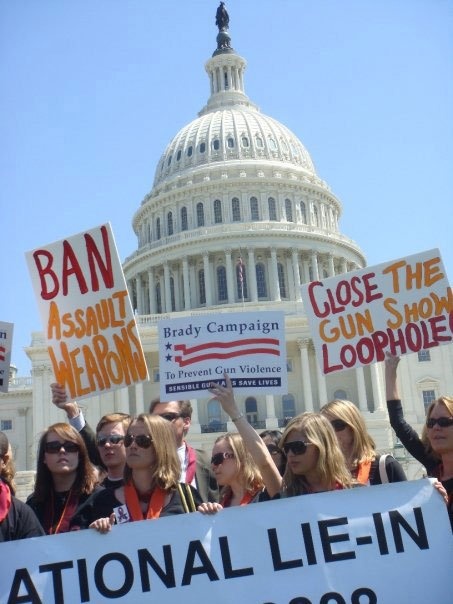
The time is ripe for the mobilization of a huge national coalition, bankrolled by America’s foundations, that would fight to renew the ban on assault weapons. Such a coalition could call for strict limits on high-capacity ammunition magazines like the one used in the Arizona shooting, tougher background checks on gun purchasers, and more-effective screenings to prevent people who are mentally ill or who have criminal records from purchasing guns.
Soon after President Reagan was shot in 1981, the Brady Center to Prevent Gun Violence was formed and pushed successfully for greater gun control.
Grant makers led by the Joyce Foundation, in Chicago, poured a good deal of money into support for research on gun-safety issues and to support a loose national coalition and several state coalitions working to expand measures against gun violence. But for some reason, the national coalition never really amounted to much of a force, partly because of leadership problems and a lack of organizing skills, while the state coalitions, some of which still exist and do good work, never became a dominant source of influence.
Three decades of building coalitions to fight other problems—like racial and sex bias and a lack of attention to the environment and health care—have taught us the simple ingredients of successful organizing:
*Major nonprofit leaders must be willing to invest their organizations, their resources, and their time in such an effort.
*Effective coalitions are not outlets for nonprofit egos; coalitions must have strong, independent staff members to manage the coalitions’ affairs.
*Sufficient funds must be available to ensure the long-run success of the coalition enterprise. The national coalition to promote an overhaul of the health-care system, financed with more than $26-million from the Atlantic Philanthropies and other foundations, is a recent example of strong coalition-building that made a difference. However, the battle against gun violence is a much tougher challenge, requiring a broader, longer-term effort with a much greater amount of money.
It must combine community organizing with efforts to mobilize the people who have the most at stake if gun violence continues unabated. It should include labor unions; groups that represent older people, such as AARP; civic organizations like the American Association of University Women, Common Cause, and the League of Women Voters; organizations that represent minorities such as the NAACP and the National Council of La Raza; organizations of mayors and other government officials; and groups that already organize on behalf of low-income people, women, and people with disabilities.
And what better cause is there for America’s large foundations than the issue of guns, whose proliferation undermines so many of their grant-making priorities? Gates, Ford, the Open Society Institute, MacArthur, Rockefeller, and others could easily support a national effort with hundreds of millions of dollars.
This is not a time to dawdle or hesitate. It is a time for action. It is time to confront the NRA directly with every tool and resource needed to muster a decisive force, as Gen. Colin Powell said in explaining what it takes to ensure a military victory.
It is the power of numbers and money that will convince Congress and the president to muster the will to overhaul gun-control laws and strengthen enforcement. It is, indeed, a winnable issue.
All it takes is some tenacity and courage by nonprofits. But isn’t that what leadership should be about?
Pablo Eisenberg, a regular contributor to The Chronicle’s opinion section, is a senior fellow at the Georgetown Public Policy Institute. His e-mail address is pseisenberg@verizon.net.




