
Growth of Philanthropy Continues in China, Despite Government Dominance

By LESLIE LENKOWSKY
Contributor
March 7, 2010 | Read Time: 5 minutes
The Chinese government last month announced it was banning Oxfam, an international network of charities that seeks to end poverty and promote social justice, from recruiting volunteers on Chinese college and university campuses. It said that the group was really a political movement opposed to the government, not a charitable one.
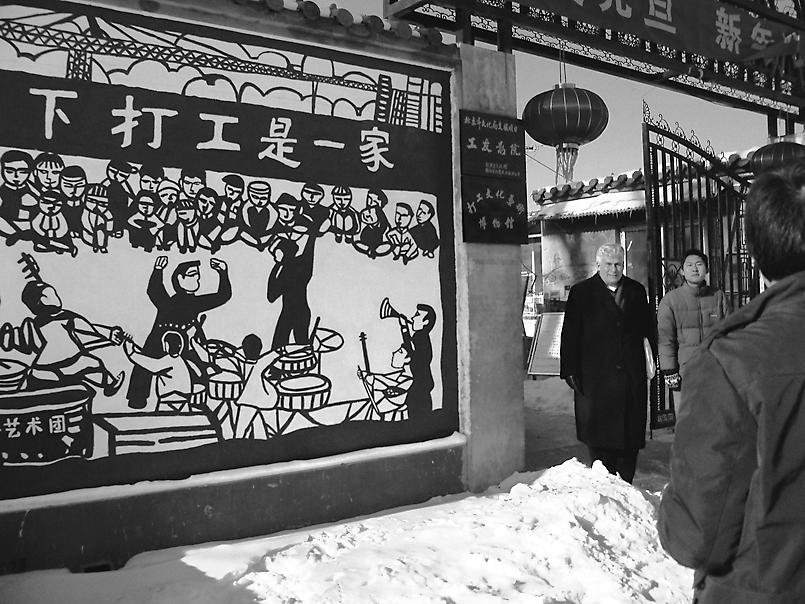
This action was of more than passing interest to me. In January I visited a nonprofit organization on the outskirts of Beijing called the Home of Workers. It sought to provide assistance to the large number of migrant workers in Beijing—people who have moved to the city from the impoverished countryside in search of better jobs. They perform most of the heavy labor in major Chinese cities, ranging from construction to domestic work, but have few legal protections and little access to social and health services. Unless families pay large fees, their children often cannot attend public schools.
Oxfam’s Hong Kong chapter played an important role in establishing and supporting this organization, as well as recruiting volunteers for it, such as the recent graduate of one of China’s aeronautics schools who showed me around. Last month’s action by the Chinese government puts its ability to continue doing so in doubt. And it also typifies the precariousness of China’s rapidly expanding civil society.
I was in China to meet with university faculty members and students in several new philanthropic studies and nonprofit-management programs that were created in response to the growth of the country’s nonprofit organizations. Although reliable statistics are difficult to find, the best estimates suggest the growth of these organizations has been rapid since the 1990s. More than 400,000 nonprofit groups are now registered, and many more unregistered ones are now thought to be operating in the country.
As the Chinese economy has prospered, philanthropy has increased, too. In 2008 giving in China reached the equivalent of $15.7-billion, according to a Chinese government study, three times the amount in the previous year, with donations to aid victims of the Wenchuan earthquake accounting for much of this growth. Moreover, a larger share came from Chinese-owned businesses and entrepreneurs, rather than foreign sources that dominated giving in the past.
Even though donation levels appear to have moved back to their pre-earthquake levels last year, many Chinese have called 2009 “the year of philanthropy” (along with its official title, “year of the ox”), reflecting the more pronounced awareness of the importance of giving and volunteering throughout China, especially on the part of its young professionals and students.
Yet the Chinese government appears to regard these developments with ambivalence, so it is unclear what the future may hold for Chinese philanthropy.
On the one hand, the government recognizes that it needs nonprofit groups to provide a wide range of services to the public. Spending on health and welfare programs in China has historically been low, while poverty and disease have been widespread. Not coincidentally, the growth of civil society has accompanied other changes designed to make the Chinese economy more competitive and reduce the influence over business by Communist Party officials in Beijing, making the efforts of philanthropic groups to assist the needy more urgent.
But on the other hand, the Chinese government also recognizes civil society’s potential to challenge its control over the country. Organizations like the Home of Workers not only deliver social services but also advocate changes in public policies toward those they are helping, providing Chinese citizens with rare opportunities to question the actions of their country’s leadership. The 1989 student protests in Tiananmen Square showed Community Party officials how dangerous such questioning can be and since then, they have tried to maintain control over nonprofit organizations, while reaping benefits from their activity.
Chinese law, for example, requires philanthropic groups not only to register with a government ministry but also to be supervised by government-sponsored organizations, called—not affectionately—“mothers-in-law.”
Chinese officials can also refuse to recognize a charity if they conclude that the services it wants to offer are already being provided by other groups in its area. As for the outpouring of giving after the Wenchuan earthquake, a study showed that 80 percent of the money actually went to projects suggested by government agencies.
Because of the difficulty of complying with those rules, a substantial portion of a Chinese civil society either does not try to register or does so as social-purpose businesses (for example, as “nongovernmental, noncommercial enterprises”), which the Home of Workers has done.
The director of a Beijing think tank devoted to advancing classically liberal ideas about economic policy explained the appeal of this approach to us.
The Chinese government, he observed, could readily appreciate why people would act on behalf of their own personal interests. As a result, it has little difficulty creating legal and policy frameworks that enable them to do so. Indeed, improvements in Chinese corporate law, including protections for private ownership of property, have been crucial for the economic growth (and foreign investment) that has transformed the country during the past decade.
But, he added, China’s leaders have much more difficulty understanding why people would act on behalf of the public interest. That is why they are willing to attribute personal motives, such as the desire to obtain power or money, to the efforts of nonprofit groups. It is also the reason the laws on civil society in China are less developed than corporate laws (including those that apply to social-purpose companies) and still permit the kinds of administrative controls—or seemingly arbitrary bans, as happened to Oxfam—that are no longer acceptable practices toward businesses.
Some also believe this outlook is deeply rooted in Chinese culture. The country’s Confucian ethic—valuing social harmony and deference toward authority—reinforces the idea that public concerns should mostly be left to government. As many Chinese see it, civil society in the West grows out of its individualism, a philosophy at odds with Chinese familial and collectivist traditions.
Yet as China continues to develop, signs exist that this outlook is changing. The growth of scholarly and professional interest in civil society is one indicator, but perhaps even more telling is the response the guide at the Home of Workers gave when asked why he volunteered there: “It is the responsible thing to do.”
If young Chinese citizens are starting to ask themselves what their own responsibilities to migrant workers are, the “year of philanthropy” may be just starting.





